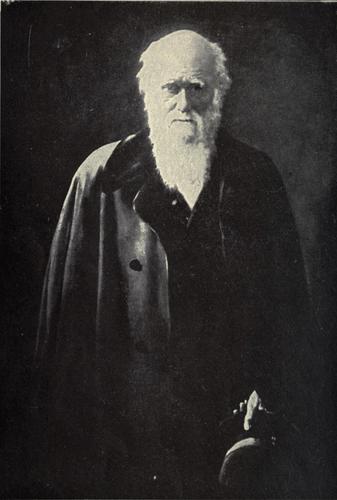
Charles Darwin
Personal Information
Description
The Darwin–Wedgwood family are members of two connected families, each noted for particular prominent 18th-century figures: Erasmus Darwin FRS, a physician and natural philosopher, and Josiah Wedgwood FRS, a noted potter and founder of the eponymous Josiah Wedgwood & Sons pottery company. The Darwin and Wedgwood families were on friendly terms for much of their history and members intermarried, notably Charles Darwin, who married Emma Wedgwood. The most notable member of the family was Charles Darwin, a grandson of both Erasmus Darwin and Josiah Wedgwood. The family also included at least ten Fellows of the Royal Society, and several artists and poets (among whom was the 20th-century composer Ralph Vaughan Williams). Presented below are brief biographical descriptions and genealogical information, and mentions of some notable descendants.
Books
Gesammelte Werke
Autobiography
Journal of Researches Into the Geology & Natural History of the Various Countries Visited During ..
Charles Darwin
Describes the life and work of the renowned nineteenth-century biologist who transformed conventional Western thought with his theory of natural evolution.
The Life and Letters of Charles Darwin: Including an Autobiographical Chapter
Darwinism Stated by Darwin Himself: Characteristic Passages from the Writings
Geological observations on South America. Being the third part of the Geology of the voyage of the Beagle, under the command of Capt. Fitzroy, R.N. during the years 1832 to 1836
The Variation of Animals and Plants under Domestication Volume 1
The object of this work is not to describe all the many races of animals which have been domesticated by man, and of the plants which have been cultivated by him; even if I possessed the requisite knowledge, so gigantic an undertaking would be here superfluous. It is my intention to give under the head of each species only such facts as I have been able to collect or observe, showing the amount and nature of the changes which animals and plants have undergone whilst under man's dominion, or which bear on the general principles of variation. In one case alone, namely in that of the domestic pigeon, I will describe fully all the chief races, their history, the amount and nature of their differences, and the probable steps by which they have been formed. I have selected this case, because, as we shall hereafter see, the materials are better than in any other; and one case fully described will in fact illustrate all others. But I shall also describe domesticated rabbits, fowls, and ducks, with considerable fulness.
