Discover

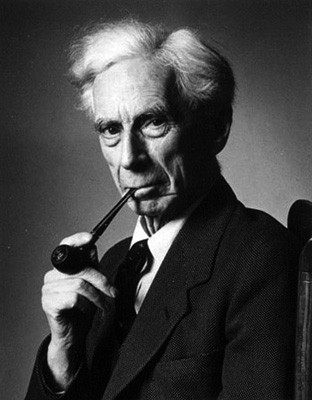
Bertrand Russell

Personal Information

Born May 18, 1872
Died February 7, 1970 (97 years old)
Trellech, United Kingdom of Great Britain and Ireland
Also known as: Bertrand Arthur William Russell, 3rd Earl Russell, Bertrand A. W. Russell
149 books
4.0 (52)
799 readers

Description

Bertrand Arthur William Russell (18 May 1872 – 2 February 1970) was a British philosopher, logician, mathematician, historian, and social critic.

Books

Newest First

Divorce

0.0 (0)
0

"This comprehensive book provides a balanced overview of the current research on divorce. The authors examine the scientific evidence to uncover what can be said with certainty about divorce and what remains to be learned about this socially and politically charged issue. Accessible to parents and teachers as well as clinicians and researchers, the volume examines the impact of marital breakup on children, adults, and society." "Alison Clarke-Stewart and Cornelia Brentano synthesize the most up-to-date information on divorce from a variety of disciplinary perspectives with thoughtful analysis of psychological issues. They convey the real-life consequences of divorce with excerpts from autobiographies by young people, and they also include guidelines for social policies that would help to diminish the detrimental effects of divorce."--Jacket.

Religion and science

3.0 (1)
0

"In this timely work, Russell, philosopher, agnostic, mathematician, and renowned peace advocate, offers a brief yet insightful study of the conflicts between science and traditional religion during the last four centuries. Examining accounts in which scientific advances clashed with Christian doctrine or biblical interpretations of the day, from Galileo and the Copernican Revolution, to the medical breakthroughs of anesthesia and inoculation, Russell points to the constant upheaval and reevaluation of our systems of belief throughout history. In turn, he identifies where similar debates between modern science and the Church still exist today. Michael Ruse's new introduction brings these conflicts between science and theology up to date, focusing on issues arising after World War II."--BOOK JACKET.

History of Western Philosophy

0.0 (0)
2

First published in 1946, History of Western Philosophy went on to become the best-selling philosophy book of the twentieth century. A dazzlingly ambitious project, it remains unchallenged to this day as the ultimate introduction to Western philosophy. Providing a sophisticated overview of the ideas that have perplexed people from time immemorial, it is 'long on wit, intelligence and curmudgeonly scepticism', as the New York Times noted, and it is this, coupled with the sheer brilliance of its scholarship, that has made Russell's History of Western Philosophy one of the most important philosophical works of all time.

A pacifist at war

0.0 (0)
0

The outbreak of the First World War in August 1914 dramatically changed almost everything in Bertrand Russell's life. It was the War that made him a public figure and ensured that henceforth philosophy would only occasionally prevail over politics for his attention ... Unlike so many who went enthusiastically to war in the summer of 1914, Russell knew the War would be a disaster. Nor did he share the general British opinion that Germany was entirely responsible. He thought the secret diplomacy of the Liberal administration under Sir Edward Grey, which had entangled Britain in a series of alliances to defend continental countries against aggression, shared a good deal of the responsibility. He had, moreover, no doubts at all that it was his public duty to oppose the War ... The War made him a popular figure among pacifists and those on the Left who were opposed to it, but it made him persona non grata with the Government, including many of his erstwhile allies in the Liberal establishment...

My Philosophical Development

0.0 (0)
16

Russell gives an account of his philosophical development. He describes his Hegelian period and includes hitherto unpublished notes for a Hegelian philosophy of science. He deals next with the two-fold revolution involved with his abandonment of idealism and adoption of a mathematical logic founded upon that of Giuseppe Peano. After two chapters on Principia Mathematica (1910-1913), he passes to the problems of perception as dealt with in Our Knowledge of the External World (1914). In a chapter on ‘The Impact of Wittgenstein’, Russell examines what he now thinks must be accepted and what rejected in that philosopher's work. He notes the changes from earlier theories required by the adoption of William James's view that sensation is not essentially relational and is not per se a form of knowledge. In an explanatory chapter, he endeavours to remove misconceptions of and objections to his theories as to the relation of perception to scientific knowledge. Russell concludes with a reprint of some articles on modern Oxford philosophy.
