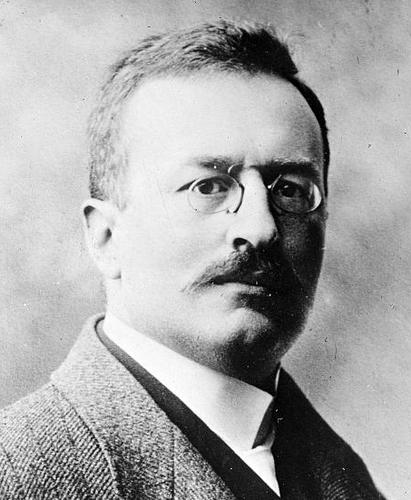
Sven Hedin
Personal Information
Description
Swedish geographer, explorer and writer.
Books
W. A. Unkrig
Die Korrespondenz des Mongolisten und russisch-orthodoxen Theologen Unkrig gibt ein anschauliches Bild seiner wissenschaftlichen Arbeit und seiner Unterstutzung des Volkerkundlers und Nordsibirienspezialisten Findeisen (1903-1968), soweit es um mongolische, tungusische und russische Inte-ressen ging. Unkrigs detailliert-miniaturhafter Stil gibt zugleich einen prazisen Eindruck vom wissenschaftlichen und sozialen Umfeld der Jahre 1930-1955 in Deutschland. Erganzend sind Unkrigs Briefwechsel mit der Britischen Bibelgesellschaft aus der Zeit seines Studiums in Russland und seine Korrespondenz mit dem Sven Hedin-Institut fur Zentralasienforschung (Stiftung Ahnenerbe) 1943-1945 beigegeben, wahrend zwei Briefe des Mongolisten B. Baradijn sowie der Monche S. Umaldinov und S. Menochov Unkrigs Kontakte nach Russland und ins russische Exil belegen. Im Zentrum dieser Dokumente stehen die Mongolen und der Lamaismus, denen Unkrigs Schaffen gewidmet war, auch wenn seine Brotberufe als Bibliothekar des China-Instituts und als Hilfskraft am Orient-Institut in Frankfurt gewichtigen Raum einnahmen. Das Buch wird durch ein Register abgerundet.
The Silk Road
In The Silk Road, Valerie Hansen describes the archeological finds that revolutionize our understanding of these trade routes. Hansen explores seven oases along the road, from Xi'an to Samarkand, where merchants, envoys, pilgrims, and travelers mixed in cosmopolitan communities, tolerant of religions from Buddhism to Zoroastrianism. There was no single, continuous road, but a chain of markets that traded between east and west. China's main partners were the peoples of modern-day Iran, whose tombs in China reveal much about their Zoroastrian beliefs. Silk was not the most important good on the road; paper had a bigger impact in Europe, while metals, spices, and glass were just as important as silk. Perhaps most significant of all was the road's transmission of ideas, technologies, and artistic motifs. --from publisher description
My life as an explorer
Before the early 20th century Central Asia, the Silk Road, Outer Mongolia, and mysterious Tibet were little know to Western minds and mostly 'terra incognita' on a Western map. However, over three decades, Swedish explorer/traveler, Sven Hedin, did more than anyone to bring light to the mystery and splendors of the unknown East. His book 'My Life As An Explorer' describes five major and many minor expeditions he mounted into the Eastern 'terra incognita'. His book is everything you'd hope for in an adventure memoir. Exotic locales and strange peoples, lost expeditions in the desert, death in the mountains, gun battles with brigands and robber bands, and of course, incredible scenery. 'My Life As An Explorer' was a runaway bestseller around the world in the 1920s. His adventures, his lecture tours, his books all brought Hedin world wide acclaim and recognition. Strangely, one hundred years later and he is barely remembered despite his incredible book.
Jerusalem
In 1187, during the last years of the Crusader Kingdom of Jerusalem, a Knight of the Temple is drawn into the councils of the leper-king of Jerusalem as he does battle with the Sultan.
Big horse's flight
"Sven Hedin tells the story of a remarkable expedition he made to the remote Chinese province of Xinjiang. Commissioned by the Chinese to map a road through one of the most inhospitable regions in the world, Hedin set out on a journey that saw him become entangled in a bloody war for independence that was raging in the province." -- BOOK COVER.
Riddles of the Gobi desert
On travel of author through Gobi desert in China and Mongolia.
The wandering lake
The lake of Lop Nur, the "Heart of the heart of Asia," is one of the world's strangest phenomena. Situated in the wild Chinese province of Xinjiang, Lop Nur - "The wandering lake"--Has for millennia been in a perpetual state of flux, drifting north to south, often tens of kilometres in as many years. It was once the lifeblood of the great Silk Road kingdom of Loulan, which flourished in this otherwise barren region 2,000 years ago and its peculiar movements confused even Ptolemy, who marked the lake twice on his map of Asia. Sven Hedin became captivated by the Lop Nur's peripatetic movements and for forty years his destiny was inextricably linked with that of this mysterious lake and the region surrounding it. His last journey to Lop Nur was in 1934. Travelling the length of the Konche-daria and Kum-daria rivers by canoe, Hedin embarked on his last Central Asian expedition and proved what he had always suspected - that Lop Nur did indeed shift position - and why. When he camped on its vast banks at night, Lop Nur was deep and full. Today, this once great lake - a a mighty reservoir in the desert - is nothing but windblown sand and salty marsh. The third in Sven Hedin's Central Asia trilogy, The Wandering Lake is a gripping story of adventure and discovery but it is also a rare account of a now-vanished world; a masterpiece by one of history's last great explorers.