
UNITED KINGDOM AUTHOR · HISTORY · BIOGRAPHY
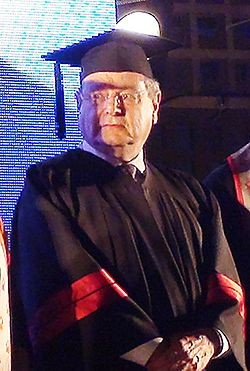
Martin Gilbert
Martin John Gilbert was a British historian and honorary Fellow of Merton College, University of Oxford. He was the author of eighty-eight books, including works on Winston Churchill, the 20th century, and Jewish history. He was a member of the Chilcot Inquiry into the UK's role in the Iraq War. - Wikipedia
WE KNOW NOTHING about the people who first settled in the hill and valleys that would eventually become the city of Jerusalem.
— from Jerusalem
Most acclaimed

Jerusalem
Jerusalem is the universal city, the capital of two peoples, the shrine of three faiths; it is the prize of empires, the site of Judgement Day and the battlefield of today's clash of civilizations. From King David to Barack Obama, from the birth of Judaism, Christianity and Islam to the Israel-Palestine conflict, this is the epic history of three thousand years of faith, slaughter, fanaticism and coexistence. How did this small, remote town become the Holy City, the "center of the world" and now the key to peace in the Middle East? In a gripping narrative, Simon Sebag Montefiore reveals this ever-changing city in its many incarnations, bringing every epoch and character blazingly to life. Jerusalem's biography is told through the wars, love affairs and revelations of the men and women -- kings, empresses, prophets, poets, saints, conquerors and whores -- who created, destroyed, chronicled and believed in Jerusalem. As well as the many ordinary Jerusalemites who have left their mark on the city, its cast varies from Solomon, Saladin and Suleiman the Magnificent to Cleopatra, Caligula and Churchill; from Abraham to Jesus and Muhammad; from the ancient world of Jezebel, Nebuchadnezzar, Herod and Nero to the modern times of the Kaiser, Disraeli, Mark Twain, Lincoln, Rasputin, Lawrence of Arabia and Moshe Dayan. Drawing on new archives, current scholarship, his own family papers and a lifetime's study, Montefiore illuminates the essence of sanctity and mysticism, identity and empire in a unique chronicle of the city that many believe will be the setting for the Apocalypse. This is how Jerusalem became Jerusalem, and the only city that exists twice -- in heaven and on earth. - Publisher.
Kristallnacht
1988
"Kristallnacht - the night of broken glass - saw the destruction in a single night of more than a thousand synagogues, the ransacking of tens of thousands of Jewish shops and homes, and more than 30,000 Jewish men rounded up and taken to concentration camps. No other attack on Jews during the course of the Second World War was as widely reported by contemporary observers. Drawing on personal correspondence with more than fifty eyewitnesses and on vivid newspaper and diplomatic reports, pre-eminent historian Martin Gilbert has produced a meticulously researched account of the event."--BOOK JACKET.
IN ISHMAEL'S HOUSE
This work reflects upon the historical relationship between Jews and Muslims in the Middle East, from the origins to the present day, exploring the impact of Zionism, clashing nationalisms, and the Six-Day War. The relationship between Jews and Muslims has been a flashpoint that affects stability in the Middle East and has consequences around the globe. In this book the author challenges the standard media portrayal and presents a fascinating account of hope, opportunity, fear, and terror that have characterized these two peoples through the 1,400 years of their intertwined history. Harking back to the Biblical story of Ishmael and Isaac, he takes the reader from the origins of the fraught relationship, the refusal of Medina's Jews to accept Mohammed as a prophet, through the ages of the Crusader reconquest of the Holy Land and the great Muslim sultanates to the present day. He explores the impact of Zionism in the first half of the twentieth century, the clash of nationalisms during the Second World War, the mass expulsions and exodus of 800,000 Jews from Muslim lands following the birth of Israel, the Six-Day War and its aftermath, and the political sensitivities of the current Middle East. This book sheds light on a time of prosperity and opportunity for Jews in Muslim lands stretching from Morocco to Afghanistan, with many instances of Muslim openness, support, and courage. Drawing on Jewish, Christian, and Muslim sources, the author uses archived material, poems, letters, memoirs, and personal testimony to uncover the human voice of this centuries-old conflict. Ultimately this account of mutual tolerance between Muslims and Jews provides a perspective on current events and a template for the future.