
UNITED KINGDOM AUTHOR · HISTORY · BIOGRAPHY
Karen Armstrong
Also known as: KAREN ARMSTRONG, karen-armstrong
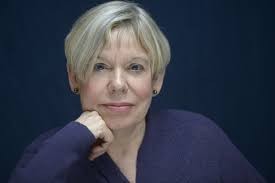
Karen Armstrong is a British author and commentator known for her books on comparative religion. A former Roman Catholic religious sister, she went from a conservative to a more liberal and mystical Christian faith. - Wikipedia
IN THE BEGINNING, human beings created a God who was the First Cause of all things and Ruler of heaven and earth.
— from A history of God, 1993
Most acclaimed

The Spiral Staircase
Helen Capel is hired as a live-in lady-help to the Warren family in the countryside. She enjoys the eccentric household and her duties, but her peaceful and simple life is soon disturbed by a series of mysterious murders in the isolated community. As Helen’s employer, Professor Sebastian Warren, battens down the hatches and locks all the doors of their remote country house, the eight residents begin to feel safe. But somewhere out there lurks a murderer of young girls. As the murders crawl closer to home, Helen starts to wonder if there really is safety in numbers—and what happens when those numbers start to dwindle?
A history of God
1993
As soon as they became recognizably human, men and women - in their hunger to understand their own presence on earth and the mysteries within and around them - began to worship gods. Karen Armstrong's masterly and illuminating book explores the ways in which the idea and experience of God evolved among the monotheists - Jews, Christians and Muslims. Weaving a multicolored fabric of historical, philosophical, intellectual and social developments and insights, Armstrong shows how, at various times through the centuries, each of the monotheistic religions has held a subtly different concept of God. At the same time she draws our attention to the basic and profound similarities among them, making it clear that in all of them God has been and is experienced intensely, passionately and often - especially in the West - traumatically. Some monotheists have seen darkness, desolation and terror, where others have seen light and transfiguration; the reasons for these inherent differences are examined, and the people behind them are brought to life. We look first at the gradual move away from the pagan gods to the full-fledged monotheism of the Jews during the exile in Babylon. Next considered is the development of parallel, yet different, perceptions and beliefs among Christians and Muslims. The book then moves "generationally" through time to examine the God of the philosophers and mystics in all three traditions, the God of the Reformation, the God of the Enlightenment and finally the nineteenth- and twentieth-century challenges of skeptics and atheists, as well as the fiercely reductive faith of the fundamentalists of our own day. Armstrong suggests that any particular idea of God must - if it is to survive - work for the people who develop it, and that ideas of God change when they cease to be effective. She argues that the concept of a personal God who behaves like a larger version of ourselves was suited to mankind at a certain stage but no longer works for an increasing number of people. Understanding the ever-changing ideas of God in the past and their relevance and usefulness in their time, she says, is a way to begin the search for a new concept for the twenty-first century. Her book shows that such a development is virtually inevitable, in spite of the despair of our increasingly "Godless" world, because it is a natural aspect of our humanity to seek a symbol for the ineffable reality that is universally perceived.
Sacred
1997
Sacred is the lush official catalog of the groundbreaking British Library exhibit bearing the same name, which presents many of the worldʹs most beautiful religious texts for the first time. Illustrations from rare and exquisite examples of Jewish, Christian, and Muslim sacred texts from the Libraryʹs collections, along with unique treasures on loan from other institutions, are showcased and accompanied by essays from three of todayʹs leading religious scholars that explore aspects of the three faiths, including their historical development and contemporary meaning. Stunning full-color illustrations of many previously unreproduced manuscripts from the shared history of the three major religions are paired and brought into compellingly modern context by perceptive writers on religion such as Karen Armstrong, Everett Fox, Frank Peters, and Kathleen Doyle. -- Description from (May 10, 2012).