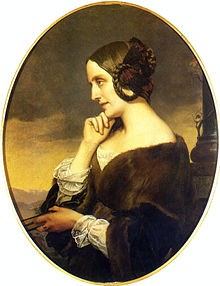
Stern, Daniel
Personal Information
Description
Marie Catherine Sophie, Comtesse d'Agoult, was a French romantic author, known also by her pen name, Daniel Stern.
Books
The suicide academy
Imagine a place where you can go to decide whether you wish to live or die. And you have exactly twenty-four hours to decide. Through one devastating, snowy New Year's Day, Wolf Walker, the director of The Suicide Academy, struggles to survive - goaded by his black, subtly anti-Semitic assistant Gilliatt, and thrown by the arrival of Jewel, his beautiful gentile ex-wife, and her lover. It is a story the San Francisco Chronicle calls "so free of the obvious, so profoundly amusing and amusingly profound".
Twice-Told Tales
Twice upon a time
Twice Upon a Time is author Daniel Stern's second literary adventure in weaving fresh modern tales from the thematic threads of great texts of the past. His new collection focuses on some classic favorites - "Bartleby the Scrivener" by Herman Melville and "A Hunger Artist" by Franz Kafka - and turns them upside down with enchanting results. Pushing the boundaries even further, two famous poems by Wallace Stevens, "Sunday Morning" and "The Man with the Blue Guitar," draw. Forth stories both rueful and comic. And, as Eastern Europe was crumbling, Stern was inspired to write a novella of youth and lost illusions called "A Communist Manifesto by Karl Marx and Friedrich Engels." Several years ago, Daniel Stern began this brilliantly inventive literary journey with the acclaimed Twice Told Tales. Now, these new, half-dozen, bold and witty variations prove once again that there are no real boundaries where books, ideas, lives, and loves are. Concerned.
The rose rabbi
Wolf Walker (the hero of Stern's previous novel The Suicide Academy) is now an ethical adviser to the Lester & French Advertising Agency. He survives in a mad world - a few years into the future - where the Pope has resigned, the Chateau Wars are raging in Europe, and the thousands of hunger strikes ravage the streets of America's cities. Convinced that his faulty memory is a kind of continuing suicide, Wolf sets out to recover a past for himself that will redeem his present. On his fortieth birthday, he searches out and confronts the dramatis personae of his life and forces them into wild, funny, and touching reconstructions: an experiment in combining life and art. The Rose Rabbi is a dramatic and comic meditation on the nature of art and the struggle between ethical life and raw daily experience.
One day's perfect weather
"In "Duet for Past and Future," inspired by Robert Frost's "The Road Not Taken," Reubenfine, a lawyer in Indianapolis, having lost his musical career (along with his wife and child), thinks he recognizes the very cello he had sold to finance his legal education and new life. He and the young woman who plays that cello become involved in a relationship that threatens to tie them together for a moment or forever."--BOOK JACKET. "In "A Man of Sorrows and Acquainted with Grief," inspired by Johann Sebastian Bach's "The Passion According to St. John," Kraft, an exiled New Yorker and a Jew, is the conductor of a high school orchestra in a small Texas town. He talks his way out of a traffic ticket by telling the born-again state trooper of his own special relationship with Jesus; Kraft tells the credulous lawman that the reason he exceeded the speed limit was that he'd been carried away by Bach's "Passion" on the car radio. The resulting comic - and serious - imbroglio turns Kraft's life upside down."--BOOK JACKET. "In the title story, inspired by another poem by Robert Frost, a dying stage director and his new Russian-born wife, who has acute but temporary arthritis, are confined to a sickroom from which only one of them will ultimately emerge (alive). Determined to escape their fate, if only for one perfect spring day, they make a comic and touching game of weighing their mutual and personal woes."--BOOK JACKET.
Final cut
Studio sleuths When Frank and Joe visit a local movie and TV studio they stumble across a real-life drama - someone has murdered screenwriter Bennet Fairburn. To track the killer the brother detectives go undercover as gofers at the studio. From the start it's clear the Hardys have been cast as victims in a sinister plot. A series of deadly "accidents" stalk the brother team, and while shooting a TV series Frank and Joe find themselves on the wrong end of some lethal stunts. The clues they need are buried in the script, but unless they uncover the villain fast, the brothers Hardy will be show biz history.