
UNITED STATES AUTHOR · AFRICAN AMERICANS · HISTORY
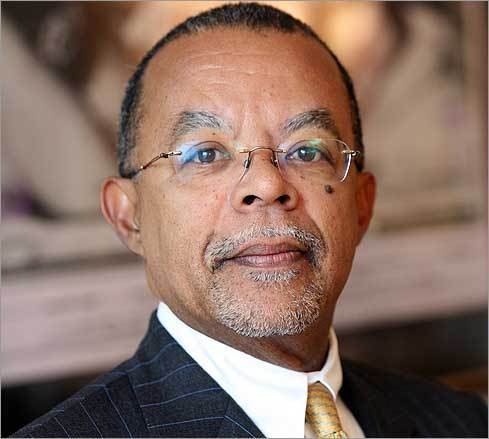
Henry Louis Gates, Jr.
Also known as: Henry Louis Gates, Skip Gates
Henry Louis "Skip" Gates Jr. is an American literary critic, teacher, historian, filmmaker and public intellectual who currently serves as the Alphonse Fletcher University Professor and Director of the Hutchins Center for African and African American Research at Harvard University. He has discovered what are considered the first books by African-American writers, both of them women, and has published extensively on appreciating African-American literature as part of the Western canon. - Wikipedia
THE TUCKAHOE is a quiet creek.
— from Frederick Douglass, 1970
Most acclaimed

To Make Their Own Way in the World
"To Make Their Own Way in the World is a profound consideration of some of the most challenging images in the early history of photography. The fifteen daguerreotypes-made in 1850 by photographer Joseph T. Zealy portray Alfred, Delia, Drana, Fassena, Jack, Jem, and Renty, men and women of African descent who were enslaved in South Carolina. Since 1976, when the daguerreotypes were rediscovered at Harvard University's Peabody Museum, the photographs have been the subject of intense and widespread study. To Make Their Own Way in the World features essays by prominent scholars who explore topics ranging from the photographs' historical context and the "science" of race to the ways in which photography created a visual narrative of slavery and its effects. Multidisciplinary, deeply collaborative, and with more than two hundred illustrations, including new photography by contemporary artist Carrie Mae Weems, this book frames the Zealy daguerreotypes as works of urgent engagement"--
Frederick Douglass
1970
"We are deeply honored to announce that Thornwillow Press is working with renowned literary critic, historian, filmmaker, and Harvard University professor Henry Louis Gates Jr. to publish an exquisite letterpress, hand-bound edition: Frederick Douglass: Portrait of a Free Man. This exciting publication brings together the powerful Narrative of the Life of Frederick Douglass, with two monographs by Professor Gates, which offer readers new and profound insights. In many ways, Henry Louis Gates Jr.'s scholarship has defined the field of African American studies. He is one of the foremost public intellectuals of our day. "As any biographer of Douglass knows," says Gates, "there was not a Frederick Douglass; there were many Douglasses. And that, for him, was his ultimate claim on being fully and equally and complexly human." In Frederick Douglass: Portrait of a Free Man, Gates brings us the monograph "Binary Opposition in Douglass' Narrative", which explores the literary conventions and binary oppositions Douglass used, and gives the reader a deeper insight into the narrative. Gates second monograph, "Camera Obscura", examines the vital power photos have on public opinion, both in terms of abolition and contemporary society, and brings to light the fact that Frederick Douglass was the most photographed American of the 19th century. In a time when caricatures in mainstream media portrayed Black people as naturally subjugated and unintelligent, Douglass knew that art, in the hands of racist whites, did not depict reality. Photography, on the other hand, gave a true "likeness" and as a tool for social change, could be key in altering long-held stereotypes and prejudices about Black people. Douglass posed for 160 photographs over the course of his lifetime, and in doing so, gave people a new image: that of a dignified, intelligent, free Black man. Because how we see things, says Henry Louis Gates Jr. in Frederick Douglass: Portrait of a Free Man is how we view them. The edition contains fine art photographs throughout to illustrate this salient point. The timing of the publication of Frederick Douglass: Portrait of a Free Man is particularly poignant because Thornwillow Press calls Newburgh, NY home, and in 1870, Frederick Douglass visited our city to commemorate the passage of the Civil Rights Act that enforced the terms of the 15th Amendment. In honor of his visit to Newburgh and his legacy of voter rights, a city-wide commemoration is being planned for 2020. We are exceptionally pleased to bring this publication into being at such an auspicious moment."--Publisher's kickstarter prospectus (viewed 2019 May 13).
The Trials of Phillis Wheatley
In 1773, the slave Phillis Wheatley literally wrote her way to freedom. The first person of African descent to publish a book of poems in English, she was emancipated by her owners in recognition of her literary achievement. For a time, Wheatley was the most famous black woman in the West. But Thomas Jefferson, unlike his contemporaries Ben Franklin and George Washington, refused to acknowledge her gifts as a writer—a repudiation that eventually inspired generations of black writers to build an extraordinary body of literature in their efforts to prove him wrong. In the Trials of Phillis Wheatley, Henry Louis Gates, Jr. explores the pivotal roles that Wheatley and Jefferson played in shaping the black literary tradition. Writing with all the lyricism and critical skill that place him at the forefront of American letters, Gates brings to life the characters, debates, and controversy that surrounded Wheatley in her day and ours.