
UNITED STATES AUTHOR · SCIENCE FICTION · FICTION
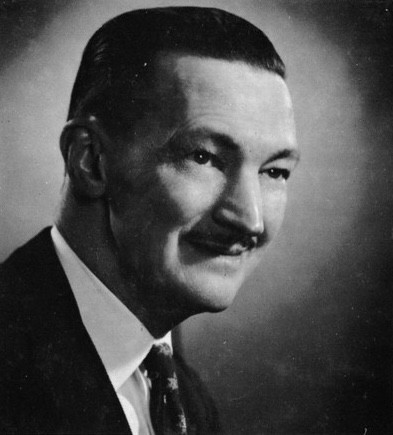
H. Beam Piper
Also known as: H. Beam, H. Piper
Henry Beam Piper was born in Altoona, Pennsylvania, in 1904, and died, an apparent suicide, in Williamsport, Pennsylvania, in 1964. Piper's first published story, "Time and Time Again" (Astounding Science Fiction, April 1947), was adapted for radio and aired on the NBC program Dimension X on 12 July, 1951, and again on the NBC program X Minus One on 11 January, 1956. His historical essay "Rebel Raider," published in True: The Men's Magazine in 1950, inspired the fictional teleplay Willie and the Yank, a three-part mini-series which aired on Walt Disney's Wonderful World of Color in January 1967 (and was later released theatrically as Mosby's Marauders). His first novel was the 1953 mystery Murder in the Gunroom and his science-fiction novel Little Fuzzywas nominated for a Hugo Award in 1963. Piper made his living working for the Pennsylvania Railroad and was a member of the National Rifle Association (NRA), the New York Authors' Club, and the Hydra Club. Piper occasionally attended the annual World Science Fiction Convention, attending the 1957 WorldCon in London with his wife. He also attended the 1962 WorldCon in Chicago and the 1963 WorldCon in Washington, DC. After Piper's death, the intellectual property rights to his fiction were acquired by Ace Books (now an imprint owned by Penguin Random House). The late author Jerry Pournelle was granted the right by Piper himself (and acknowledged by Ace) to publish stories set in Piper's fictional settings but, despite decades-long rumors of a sequel to Space Viking, apparently decided not to take advantage of this opportunity. In the early 1980's, Ace commissioned two sequels to Piper's Fuzzy novels, William Tuning's Fuzzy Bones and Ardath Mayhar's Golden Dream: A Fuzzy Odyssey, before Piper's own unpublished sequel, Fuzzies and Other People, was discovered (by Piper's protegé of sorts, Mike Knerr) and published (by Ace) in 1984. More recently, John Scalzi wrote Fuzzy Nation, an officially-authorized "reboot" of Little Fuzzy. Author and Piper biographer John F. Carr, who edited four collections of Piper's short stories also published by Ace in the 1980's, has authored several sequels to Piper's Paratime novel Lord Kalvan of Otherwhen and more recently has written other novels set both in Piper's Paratime and Terro-human Future History settings. Carr has also edited The Rise of the Terran Federation, an anthology of Piper's early Terro-human Future History yarns and new, Piper-inspired stories of the same era written by others. Source
In a small ceremony in the year 1492 at the university city of Salamanca, in north central Spain, Queen Isabella of Castile was presented with the first copy, just off the press, of the humanist Antonio de Nebrija's Grammar of the Castilian language.
— from EMPIRE!
Most acclaimed

Little Fuzzy
Little Fuzzy is the name of a 1962 science fiction novel by H. Beam Piper, and is now in public domain. Synopsis: One day Jack Holloway, prospector on the planet Zarathustra, finds what seems to be a small monkey with golden fur; these new introductions (for the first brings a family) are tiny hunters, and prove to be curious and capable tool users. Why is this so important to the new human settlers? - Because a planet inhabited by a sapient race cannot be monopolized by the Zarathustra Company. Little Fuzzy is generally seen as a work of juvenile fiction. It was nominated for the 1963 Hugo Award for Best Novel. More on Wikipedia at
Junkyard Planet
This novel had its genesis in a much shorter story called "Graveyard of Dreams" (Galaxy, 1958) Piper expanded it to book length, and it appeared in 1963 as Junkyard Planet. Ace later renamed the book The Cosmic Computer for its paperback appearance. This edition returns the book to Piper's original title, Junkyard Planet.Conn Maxwell returns from Terra to his home world of Poictesme, dubbed "The Junkyard Planet" because of all the military equipment left behind after the last war. Conn claims he has found the location of Merlin, a military super-computer rumored to have been left behind. But is Merlin real, or just a myth? And will Conn’s knowledge of the computer save Poictesme -- or tear his world apart?
EMPIRE!
"How did a barren, thinly populated country, somewhat isolated from the rest of Europe, establish itself as the world's first superpower? Henry Kamen's impressive new book offers a fresh and highly original answer. Empire is a global survey of the two and a half centuries, from the late fifteenth to the mid-eighteenth, in which the Spaniards established the most extensive empire the world had ever known, ranging from Naples and the Netherlands to the Philippines. Unlike previous accounts, which have presented the empire as a direct consequence of Spanish power, this provocative work of history emphasizes the inability of Spain to run an imperial enterprise by itself. The role of conquest was deceptive. Spain's rise to power was actually made possible by the collaboration of international business interests, including Italian financiers, German technicians and Dutch traders, in the task of setting up networks of contact ranging across the oceans. At the height of its apparent power, the Spanish empire was in reality a global enterprise in which non-Spaniards-Portuguese, Basque, Aztec, Genoese, Chinese, Flemish, West African, Incan and Neapolitan-played an essential role. It is this vast diversity of resources and people, which included many of its greatest adventurers and soldiers, that made Spain's power so overwhelming. There is no better account in English of this time. Henry Kamen's book provides a highly relevant analysis of the origins and nature of imperial power, and of global economic activity. Challenging, persuasive and unique in its thesis, Empire explores Spain's complex impact on world history with admirable clarity and intelligence."--Jacket.