Discover

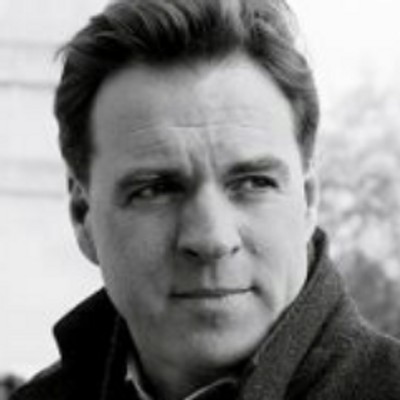
Niall Ferguson

Personal Information

Born April 18, 1964 (62 years old)
Glasgow, United Kingdom
22 books
3.8 (22)
352 readers

Description

Niall Campbell Ferguson is a British historian from Scotland. He is the Laurence A. Tisch Professor of History at Harvard University. He is also a Senior Research Fellow of Jesus College, University of Oxford, a Senior Fellow of the Hoover Institution, Stanford University and visiting professor at the New College of the Humanities. His specialties are international history, economic and financial history, and British and American imperialism. He is known for his provocative, contrarian views. - Wikipedia

Books

Newest First

Paper and Iron

0.0 (0)
1

Few economic events have had a more profound or enduring impact than the German hyperinflation of 1923, still remembered popularly as a root cause of Hitler's rise to power. Yet in recent years many historians have argued that inflationary policies were, on balance, advantageous to post-1918 Germany, both boosting growth and helping to reduce reparations. The scholarly consensus is that there was no viable alternative to inflation. In Paper and iron Niall Ferguson takes a different view. Focusing on the influential Hamburg business community, he exposes the flaws in the contemporary justifications for inflationary policies. The inflation, he argues, did severe damage to the German economy by eroding the foundations of bourgeois society and discrediting Weimar's welfare state. Above all, it did nothing whatever to reduce reparations. Alternative policies might in fact have stabilised the German currency in 1920. To explain why such policies were not adopted, the author points to long-term defects in the political economy of the Reich. He suggests that there was a thirty-year 'era of inflation' after 1897 in which the inadequacy of the Reich's fiscal and monetary institutions allowed economic interest groups to wield excessive power. This internal imbalance of power was reversed only in the 1930s. Thus Paper and iron reveals not only the Wilhelmine origins of Weimar's failure; it also casts new light upon the origins of the Third Reich.

The cash nexus

0.0 (0)
5

"The cash nexus is the crucial point where money and power meet. But does money make the political world go round? Does the success of democracy depend on economic growth? Does victory always go to the richest of the great powers? Or are financial markets the true 'masters' of the modern world?". "With the analytical boldness and the grasp of dazzling detail for which he is now famous, Ferguson offers a fascinating account of the evolution of today's economic and political landscape, from 'sleaze' to the single currency. Far from being driven by iron economic laws, he argues, modern history is the product of unpredictable political conflicts; and it is their impact on volatile financial markets that can make or break an empire."--BOOK JACKET.

The House of Rothschild, Vol. 1 & 2

0.0 (0)
3

Volume 1 & 2. Founded in the late 18th century by expatriate German Jews, the London-based House of Rothschild was within decades the largest banking enterprise in the world. Its principals controlled a vast portion of the industrial world's wealth--more so, Oxford historian Niall Ferguson writes, than any family has since--and as a result enjoyed tremendous political influence in the major capitals of Europe, counting as allies such important figures as Metternich and Wellington. That influence would provoke countless anti-Semitic tracts fulminating against Jewish usury and against the power of "Eastern potentates" in the empires of England and France. Although the Rothschilds were well aware of their power and not reluctant to use it, they operated fairly, Ferguson notes. For example, whereas lending rates in the textile industry, in which the Rothschilds got their start, were often 20 percent, the fledgling house charged 5 to 9 percent. Through shrewd, complex negotiations they helped promote peace and the beginnings of economic union throughout Europe.

The House of Rothschild, Vol. 1

5.0 (1)
18

This second volume of Niall Ferguson's acclaimed, landmark history of the legendary Rothschild banking dynasty concludes his myth-breaking portrait of one of the most powerful and fascinating families of modern times. With all the depth, clarity and drama with which he traced the Rothschild's ascent, Ferguson shows how their power waned as conflicts from Crimea to the Second World War repeatedly threatened the stability of their worldwide empire, and how their failure to establish themselves successfully in the United States would prove fateful. At once a classic family saga and a major work of economic, social and political history, this is the definitive biography of some of the most powerful financiers of recent times.

Virtual History

0.0 (0)
8

Speculates what may have happened if nine major events did not occur, asking such questions as, "What if there had been no American Revoultion?" and "What if John F. Kennedy had lived?"

Does The 21st Century Belong To China Kissinger And Zakaria Vs Ferguson And Li The Munk Debate On China

0.0 (0)
0

Summary:On June 17, 2011, former U.S. Secretary of State Henry Kissinger and CNN's Fareed Zakaria squared off against leading historian Niall Ferguson and world-renowned Chinese economist David Daokui Li to debate the biggest geopolitical issue of our time: Does the 21st century belong to China?-WorldCat

The shock of the global

0.0 (0)
0

"From the vantage point of the United States or Western Europe, the 1970s was a time of troubles: economic "stagflation," political scandal, and global turmoil. Yet from an international perspective it was a seminal decade, one that brought the reintegration of the world after the great divisions of the mid-twentieth century. It was the 1970s that introduced the world to the phenomenon of "globalization," as networks of interdependence bound peoples and societies in new and original ways." "The 1970s saw the breakdown of the postwar economic order and the advent of floating currencies and free capital movements. Non-state actors rose to prominence while the authority of the superpowers diminished. Transnational issues such as environmental protection, population control, and human rights attracted unprecedented attention. The decade transformed international politics, ending the era of bipolarity and launching two great revolutions that would have repercussions in the twenty-first century: the Iranian theocratic revolution and the Chinese market revolution." "The Shock of the Global examines the large-scale structural upheaval of the 1970s by transcending the standard frameworks of national borders and superpower relations. It reveals for the first time an international system in the throes of enduring transformations."--Jacket.

Square and the Tower

3.0 (3)
17

A "recasting of the turning points in world history, including the one we're living through, as a struggle between old power hierarchies and new social networks"--Dust jacket.

The World's Banker

0.0 (0)
2

1st complete history of the Rothschild banking dynasty with full access to worldwide archives. Ever since the Rothschild's spectacular rise to preeminence in European finance during the last, turbulent years of the Napoleonicwars, a mythology has grown up around the family and it's firms. It is no exaggeration to say that the Rothschilds became 1 of theliving legends of the 19th century: the personfication of a new era in which money determined status and power, an era in which 5 Jewish brothers born into the wretchedness of the Frnakfurt Ghetto could rise by their own ingenuity to become ' the worlds bankers' - dominating the international financial markets, rubbing shoulders with the social elite, patronising the great artists and architects of the era and above all exerting a decisive, if veiled, influence over the world's monarchs and statesmen. Using a wealth of archival sources as well as a vast amount of little known contemporary and more recent secondary literature, Niall Ferguson's definitive study will finally hold the mirror of reality up to the face of myth. The result promises not only to do justice to the history of Rothschilds, but to revolutionise the history of the years of their rise and preeminence, and to reveal fascinating continuities from the 19th century to our own time.

The House of Rothschild, Vol. 2

0.0 (0)
12

"This is the first of two volumes of The house of Rothschild"--T.p. verso."In Great Britain The house of Rothschild was published as one volume by Weidenfeld & Nicolson as The world's banker"--T.p. verso. Includes bibliographical references and index. [v. 1]. Money's prophet, 1798-1848 -- [v. 2.] The world's banker, 1849-1999.

The War of the World

0.0 (0)
20

Historian Fergusson provides a revolutionary reinterpretation of the modern era that resolves its central paradox: why unprecedented progress coincided with unprecedented violence, and why the seeming triumph of the West bore the seeds of its undoing. From the conflicts that presaged the First World War to the aftershocks of the Cold War, the twentieth century was by far the bloodiest in all of human history. How can we explain the astonishing scale and intensity of its violence when, thanks to the advances of science and economics, most people were better off than ever before? Wherever one looked, the world in 1900 offered the happy prospect of ever-greater interconnection. Why, then, did global progress descend into internecine war and genocide? Drawing on a pioneering combination of history, economics, and evolutionary theory, Ferguson examines what he calls the age of hatred and sets out to explain what went wrong with modernity. --From publisher description.

High Financier

4.0 (1)
6

Bestselling author Niall Ferguson reveals for the first time the true extent of Siegmund Warburg's influence and the lessons we can learn in a time of crisis from the last of the high financiers. "Success from the financial and from the prestige point of view . . . is not enough; what matters even more is . . . adherence to high moral and aesthetic standards." -Siegmund Warburg, 1959. In this pathbreaking new biography, based on more than ten thousand hitherto unavailable letters and diary entries, bestselling author Niall Ferguson returns to his roots as a financial historian to tell the story of Siegmund Warburg, an extraordinary man whose austere philosophy of finance offers much insight today. A refugee from Hitler's Germany, Warburg rose to become the dominant figure in postwar City of London and one of the architects of European financial integration. Seared by the nearcollapse and then "Aryanization" of his family's long-established bank in the 1930s and then frustrated by the stagnation of its Wall Street sister, Kuhn Loeb, in the 1950s, Warburg resolved that his own firm of S. G. Warburg (founded in 1946) would be different. An obsessive perfectionist with an aversion to excessive risk, Warburg came to embody the ideals of the haute banquet-high finance- always eschewing the fast buck in favor of gilt-edged advice. He was not only the master of the modern merger and founder of the eurobond; he was also a key behind-the-scenes adviser to governments in London, Tokyo, and Jerusalem-to his critics, a "financial Rasputin." Like a character from a Thomas Mann novel, Warburg was a complex and ambivalent man, as much a psychologist, politician, and actor-manager as he was a banker. In High Financier Niall Ferguson shares the first book-length examination of a man whose life and work suggest an alternative to the troubled business principles that helped shape our current financial landscape. - Publisher.

The great degeneration

0.0 (0)
3

"What causes rich countries to lose their way? Symptoms of decline are all around us today: slowing growth, crushing debts, increasing inequality, aging populations, antisocial behavior. But what exactly has gone wrong? The answer, Niall Ferguson argues ... is that our institutions--the intricate frameworks within which a society can flourish or fail--are degenerating"--Dust cover flap.

Civilization

1.0 (1)
1

What was it about the civilization of Western Europe that allowed it to trump the outwardly superior empires of the Orient? The answer, Niall Ferguson argues, was that the West developed six "killer applications"?that the Rest lacked: competition, science, democracy, medicine, consumerism and the work ethic. The key question today is whether or not the West has lost its monopoly on these six things. If so, Ferguson warns, we may be living through the end of Western ascendancy.

The Pity of War

4.0 (1)
59

In The Pity of War, Niall Ferguson explodes the myths of 1914-18. He argues that the fatal conflict between Britain and Germany was far from inevitable. It was Britain's declaration of war that needlessly turned a continental conflict into a world war, and it was Britain's economic mismanagement and military inferiority that necessitated American involvement, forever altering the global balance of power. Ferguson vividly brings back to life one of the seminal catastrophes of the century, not through a dry citation of chronological chapter and verse, but through a series of chapters that answer the key questions: Why did the war start? Why did it continue? And why did it stop? How did the Germans manage to kill more soldiers than they lost but still end up defeated in November 1918? Above all, why did men fight?
