
UNITED STATES AUTHOR · SCIENCE FICTION · FICTION
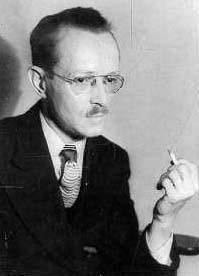
Fredric Brown
Also known as: A. McFail, Felix Graham, Frederic Brown, FREDRIC BROWN
Fredric Brown was born in Cincinnati. He wrote science fiction and mystery fiction. His first novel, What Mad Universe, a popular parody of pulp science fiction, was published in 1949.
Most acclaimed

Microcosmic Tales
The Last Answer - short story by Isaac Asimov Package Deal - short story by Donald Franson Lycanthrope - short story by Norm Hartman [as by Norman E. Hartman] Gemini 74 - short story by Jack Ritchie Geever's Flight - short story by Charles E. Fritch Lost and Found - short story by Phyllis Eisenstein Pattern - short story by Fredric Brown Discovering a New Earth - short story by Robert Mattingly Varieties of Technological Experience - short story by Barry N. Malzberg Listen, Love - short story by Jack Dann and George Zebrowski That Strain Again - short story by Charles Sheffield Take Me to Your Leader - short story by George H. Smith [as by George Henry Smith] Put Your Head Upon My Knee - short story by Jack Ritchie The Big Fix - short story by Robert F. Decker Speed of the Cheetah, Roar of the Lion - short story by Harry Harrison Just Call Me Irish - short story by Richard Wilson Renaissance Man - short story by T. E. D. Klein Pulpworld - short story by Richard K. Lyon [as by R. K. Lyon] The Other Tiger - short story by Arthur C. Clarke Little William - short story by Patricia Matthews Steel - short story by Alan Brennert Appointment on the Barge - short story by Jack Ritchie And So On, and So On - short story by James Tiptree, Jr. Nellthu - short story by Anthony Boucher Taste of Battle - short story by Donald Franson Deflation 2001 - short story by Bob Shaw Do Androids Dream of Electric Love? - short story by Walt Liebscher Dog Star - short story by Mack Reynolds The Great Judge - short story by A. E. van Vogt 2001: A Love Story - short story by Paul Dellinger Answer - short story by Fredric Brown Hadj - short story by Harlan Ellison Good Morning! This Is the Future - short story by Henry Slesar A Shape in Time - short story by Anthony Boucher Linkage - short story by Barry N. Malzberg Murder in the Nth Degree - short story by Ron Montana [as by R. A. Montana] Useful Phrases for the Tourist - short story by Joanna Russ The Burning - short story by Theodore R. Cogswell One Small Step - short story by Marcia Martin and Eric Vinicoff Dead End - short story by Mack Reynolds Paths - short story by Edward Bryant Woman's Work - short story by Garen Drussaï? Death Double - short story by William F. Nolan Tag - short story by Helen M. Urban [as by Helen Urban] Nightmare in Time - short story by Fredric Brown (variant of The End 1961) The Nature of the Place - short story by Robert Silverberg True Love - short story by Isaac Asimov The Game of the Name - short story by Alice Laurance Down the Digestive Tract - short story by Robert Sheckley (variant of Down the Digestive Tract and Into the Cosmos with Mantra, Tantra, and Specklebang) Upon My Soul - short story by Jack Ritchie Drawing Board - short story by Charles A. Spano, Jr. Shell Shock - short story by Donald Franson Speak - short story by Henry Slesar Your Cruel Face - short story by Craig Strete The Best-Laid Plans... - short story by Rick Conley Devil to Pay - short story by Mack Reynolds Who Else Could I Count On? - short story by Manly Wade Wellman (variant of Who Else Could I Count On 1962) The Rat and the Snake - short story by A. E. van Vogt The Finest Hunter in the World - short story by Harry Harrison Life - short story by Dennis R. Caro Love Story - short story by Eric Frank Russell Exile in Lakehurst - short story by Robert Payes The Bait - short story by Fritz Leiber The Humanic Complex - short story by Ray Russell Friends? - short story by Roberta Ghidalia Take a Deep Breath - short story by Arthur C. Clarke The Quest of the Infidel - short story by Sherwood Springer Legal Rights for Germs? - short story by Joseph F. Patrouch, Jr. [as by Joe Patrouch] Blood - short story by Fredric Brown The Diana Syndrome - short story by Ron Montana [as by R. A. Montana] Emergency Rations - short story by Theodore R. Cogswell Buy Jupiter! - short story by Isaac Asimov The Old Man - short story by Henry Slesar Exile's Greeting - short story by Roland J. Green The Biography Project - short story by H. L. Gold [as by Dudley Dell] The Grapes of the Rath - short story by Jan Howard Finder Mr. Lupescu - short story by Anthony Boucher What I Did During My Park Vacation - short story by Ruth Berman A Fragment of Manuscript - short story by Harry Harrison The Boy with Five Fingers - short story by James E. Gunn [as by James Gunn] The King of Beasts - short story by Philip José Farmer (variant of The King of the Beasts) Displaced Person - short story by Eric Frank Russell A Clone at Last - short story by Barry N. Malzberg and Bill Pronzini X Marks the Pedwalk - short story by Fritz Leiber The Mission - short story by Arthur Tofte Proof - short story by F. M. Busby Dreamworld - short story by Isaac Asimov The Reunion - short story by Paul J. Nahin The Futile Flight of John Arthur Benn - short story by Richard Wilson [as by Edward Halibut] Servants of the Lord - short story by James A. Stevens [as by James Stevens] Mattie Harris, Galactic Spy - short story by Rachel Cosgrove Payes Changeover - short story by Juleen Brantingham Hometown - short story by Richard Wilson The Penalty - short story by Henry Slesar The Pill - short story by Maggie Nadler The Final Battle - short story by Harry Harrison Earthbound - short story by Lester del Rey Rotating Cylinders and the Possibility of Global Causality Violation - short story by Larry Niven The Voice in the Garden - short story by Harlan Ellison If Eve Had Failed to Conceive - short story by Edward Wellen
The Fabulous Clipjoint
Fredric Brown's The Fabulous Clipjoint comes from a now-vanished world of crime fiction that once satisfied the same appetites in the audience that are now fed by television programming. Neatly crafted and loaded with atmosphere and humor, The Fabulous Clipjoint, published in 1947, follows the exploits of an unlikely pair of amateur sleuths -- a teenaged boy and his uncle, who follows the carnival -- in solving a disturbing murder.The victim is a drunk, who seems to have gotten rolled and winds up lying dead in an alley. A cop discovers the body, and a routine inquiry turns up nothing more than sad and pitiful evidence -- another blasted life that ends in another random murder. But the victim has a son, 18-year-old Ed Hunter, who is not willing to let his father's death be dismissed so quickly. He has no one to help him, so he turns to the only person he can trust, his Uncle Ambrose, a carny he has not seen in years. Ambrose agrees to help Ed, and the two set out on a most unlikely murder investigation. It takes them down dark and abandoned Chicago streets, confronting a gallery of unsavory characters in the underworld, armed only with a crazy kind of courage and an ever-growing determination to discover the truth.The Fabulous Clipjoint was Fredric Brown's first full-length novel, though its assured skill comes from the author's experience in turning out hundreds of detective stories for magazines in the 1930s and 1940s. Ed and Ambrose are an couple of offbeat heroes, foolish enough to get themselves in extraordinary situations. Brown creates a rollicking world for them to explore, filled with vivid characters and plenty of danger -- a sleek, suspenseful read.