Discover

Freeman Wills Crofts

Personal Information

Born June 1, 1879
Died April 11, 1957 (77 years old)
Dublin, Ireland
Also known as: Freeman Wills CROFTS, FREEMAN WILLS CROFTS
39 books
3.7 (19)
340 readers
Categories

Description

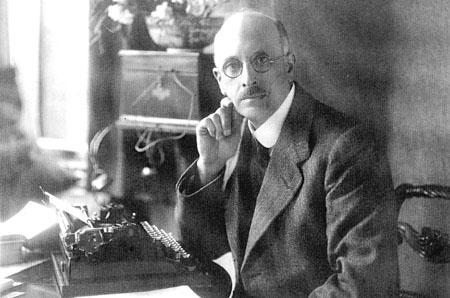
Freeman Wills Crofts was born in Dublin, the son of a deceased Army Medical Service surgeon-lieutenant. His mother re-married Jonathan Harding, the Vicar of Gilford, and Crofts spent his childhood in the Gilford vicarage. He attended Methodist College and Campbell College in Belfast. At age eighteen, he was apprenticed to his uncle, Berkeley Deane Wise, who was chief engineer of the Belfast and Northern Counties Railway. He eventually became Chief Assistant Engineer at the Railway. In 1919, during an illness-induced absence from work, he wrote his first novel, The Cask (1920), which established him as a new master of detective fiction. Crofts continued to write steadily, producing a book almost every year for thirty years, in addition to a number of short stories and plays.

Books

Newest First

The Scoop / Behind the Screen

0.0 (0)
28

"The Scoop" first appeared as a serial in the Listener in 1931. "Behind the Screen" first appeared as a serial in the Listener in 1930. The two serials were first published in book form in the UK by Victor Gollancz Ltd in 1983 and in the US by Harper & Row in 1984. It was another foggy night in London when the members of the world-renowned Detection Club gathered to repeat the success of their jointly authored book, The Floating Admiral. Each writer worked on the mysteries without knowing the solutions the others had planned. When the creators of Miss Marple, Lord Peter Wimsey and other sleuths get together, you can be sure the mysteries will be monumental, the detection delightful, and the results exciting!

The Pit-Prop Syndicate

3.0 (2)
7

The Pit-Prop Syndicate is a story from the beginning of the golden age of crime fiction. Seymour Merriman, a British wine merchant on business in France, happens upon a syndicate manufacturing pit-props—beams used to prop up mine tunnels—but his eye is caught by one odd detail: their lorry’s numberplate mysteriously changes. With the help of his friend Hilliard from the Excise department they dig deeper and uncover a dangerous conspiracy. Freeman Wills Crofts was a civil engineer, turned author of crime fiction. Though somewhat forgotten today, his style was widely appreciated at the time, and still finds fans of those who like a puzzle where all the loose ends are tied up. During his career he wrote over thirty crime novels; The Pit-Prop Syndicate, published in 1922, was his third.

The End of Andrew Harrison

0.0 (0)
1

> Becoming the social secretary for millionaire financier Andrew Harrison sounded like the dream job: just writing a few letters and making amiable conversation, with luxurious accommodation thrown in. But Markham Crewe had not reckoned on the unpopularity of his employer, especially within his own household, where animosity bordered on sheer hatred. When Harrison is found dead on his Henley houseboat, Crewe is not the only one to doubt the verdict of suicide. Inspector French is another....

A Losing Game

0.0 (0)
1

>Moneylender Albert Reeve has cottage burns down and he perishes within the flames, his death comes as a shock to one of his victims and Tony Meadows finds himself accused of murder. Luckily for him, his sister remembers Inspector French and asks him to help. French fears a miscarriage of justice and agrees to commence one of his most challenging investigations.

Anything to Declare?

0.0 (0)
5

A foolproof method for earning a fortune in a short space of time is discovered by some enterprising young men. But they haven't bargained on finding themselves involved in blackmail and then murder. It falls to Inspector French to unravel the threads with his usual flair.

Sudden death

4.0 (1)
3

> Anne Day is the new housekeeper at Frayle, the home of Mr Grinsmead and his invalid wife. To Anne’s horror, her intuition that something is very wrong in the house is proven right by an unexpected death. With the police jumping to devastating conclusions, Inspector French arrives to investigate. With the narrative switching between Anne’s and French’s perspectives, giving alternately the outside and inside track of an ingenious and elaborate investigation, will tragedy strike a second time before the mystery is solved?

The cask

4.0 (1)
14

A strange container is found on the London docks, and its contents point to murder The cask from Paris is bigger than the rest, its sides reinforced to hold the extraordinary weight within. As the longshoremen are bringing it onto the London docks, the cask slips, cracks, and spills some of its treasure: a wealth of gold sovereigns. As the workmen cram the spilled gold into their pockets, an official digs through the opened box, which is supposed to contain a statue. Beneath the gold he finds a woman’s hand—as cold as marble, but made of flesh. He reports the body to his superiors, but when he returns, the cask has vanished. The case is given to Inspector Burnley, a methodical detective of Scotland Yard, who will confront a baffling array of clues and red herrings, alibis and outright lies as he attempts to identify the woman in the cask—and catch the man who killed her.

Inspector French's greatest case

3.0 (1)
11

> THE FIRST INSPECTOR FRENCH MYSTERY >At the offices of the Hatton Garden diamond merchant Duke & Peabody, the body of old Mr Gething is discovered beside a now-empty safe. With multiple suspects, the robbery and murder are clearly the work of a master criminal and require a master detective to solve them. Meticulous as ever, Inspector Joseph French of Scotland Yard embarks on an investigation that takes him from the streets of London to Holland, France, and Spain, and finally to a ship bound for South America...

Mystery in the channel

4.3 (3)
22

The cross-channel steamer Chichester suddenly stopped half way to France. Right in her course lay a yacht, motionless and apparently crewless. A boat was lowered and drew along side the derelict, while a party from the Chichester climbed aboard. On the deck was a trail of blood and at its end the body of a man. Down below, in a wildly disordered cabin, lay another man with a bullet hole in his forehead; and not a living soul was aboard. Mackintosh, the Chichester's third officer, and two men navigated the Nymph back to Newhaven, where Chief Constable Turnbull took charge. But there was more in this baffling mystery than he cared to tackle. Fortunately, like every one who has met him, Turnbull remembered Inspector French. He took the mystery to him. Needless to say, French solved it; and in what brilliant manner every experienced reader of detective fiction must already anticipate. Mystery in the Channel more than justifies our confidence in the Inspector, and in his creator, Freeman Wills Crofts.

The Loss of the Jane Vosper

0.0 (0)
3

AN INSPECTOR FRENCH MYSTERY >"Explosions in ships' holds are not uncommon. But it's extremely uncommon not to be able to explain them." The freight liner Jane Vosper is plunged to the bottom of the Atlantic by a series of explosions in her hold. It is clear that something is wrong, as there is no innocent explanation of the cause. The only possibility appears to be that someone has sunk the ship for the insurance money (either for the goods on board or the ship itself). The loss of the goods will cause a problem for The Land and Sea Insurance Co., and they decide to look into matters themselves. When their private detective goes missing, Inspector French of Scotland Yard is called in and he decides that the only way to solve the missing person case is to solve the mystery of the Jane Vosper as well. But even he is baffled, until his hard work and assiduous following of the clues leads him to the correct conclusion. - from Goodreads

Murder Most Foul

0.0 (0)
29

The fruit at the bottom of the bowl / Ray Bradbury Murder! / Arnold Bennett The kennel / Maurice Level We knows you're busy writing / Edmund Crispin A thousand deaths / Jack London Back for Christmas / John Collier Before the party / W. Somerset Maugham [Tell-tale Heart]( / Edgar Allan Poe The evidence of the alter-boy / Georges Simenon The hand / Guy de Maupassant Tickled to death / Simon Brett Miss Marple tells a story / Agatha Christie Browdean Farm / A.M. Burrage A nice touch / Mann Rubin Light verse / Isaac Asimov Composed of cobwebs / Eddy C. Bertin [The Boscombe Valley mystery]( / Sir Arthur Conan Doyle The man who knew how / Dorothy L. Sayers The hands of Mr. Ottermole / Thomas Burke You got to have brains / Robert Bloch How the third floor knew the Potteries / Amelia B. Edwards The invisible man / G.K. Chesterton The hound / William Faulkner Three is a lucky number / Margery Allingham First hate / Algernon Blackwood The victim / P.D. James The mistery of the sleeping-car express / Freeman Wills Crofts Moxon's master / Ambrose Bierce The basket chair / Winston Graham The drop of blood / Mor Jokai

The Box Office Murders

2.0 (1)
4

>A girl employed in the box office of a London cinema falls into the power of a mysterious trio of crooks. A solicitor, learning of her predicament, sends her to the Yard. There she tells French the story of the man with a scar like a purple sickle. That night she disappears, and next day her body is found floating in Southampton Water. Inquiries reveal the fact that other similar murders have taken place, and the further French goes into the affair the more girls he finds involved. Finally, after almost superhuman efforts, he learns the secret of the trio and runs them to earth. (review).

The Ponson Case

0.0 (0)
7

The forgotten second novel by Freeman Wills Crofts, once dubbed ‘The King of Detective Story Writers’. When the body of Sir William Ponson is found in the Cranshaw River near his home of Luce Manor, it is assumed to be an accident – until the evidence points to murder. Inspector Tanner of Scotland Yard discovers that those who would benefit most from Sir William’s death seem to have unbreakable alibis, and a mysterious fifth man whose footprints were found at the crime scene is nowhere to be found . . .

Antidote to venom

0.0 (0)
4

George Surridge, director of the Birmington Zoo, is a man with many worries: his marriage is collapsing; his finances are insecure; and an outbreak of disease threatens the animals in his care. As Surridge's debts mount and the pressure on him increases, he begins to dream of miracle solutions. But is he cunning enough to turn his dreams into reality - and could he commit the most devious murder in pursuit of his goals? This ingenious crime novel, with its unusual 'inverted' structure and sympathetic portrait of a man on the edge, is one of the greatest works by this highly respected author.

Six Against the Yard

0.0 (0)
19

A unique anthology for crime aficionados - six 'perfect murder' stories written by the most accomplished crime writers of the 1930s, designed to fox real-life Scotland Yard Superintendent Cornish, who comments on whether or not these crimes could have genuinely been solved. Is the 'perfect murder' possible? Can that crime be committed with such consummate care, with such exacting skill, that it is unsolvable - even to the most astute investigator? In this unique collection, legendary crime writers Margery Allingham, Anthony Berkeley, Freeman Wills Crofts, Ronald Knox, Dorothy L. Sayers and Russell Thorndike each attempt to create the unsolvable murder, which Superintendent Cornish of the CID then attempts to unravel. This clever literary battle of wits from the archives of the Detection Club joins The Floating Admiral and Ask a Policeman in showing some of the experts from the Golden Age of detective fiction at their most ingenious.
