Discover

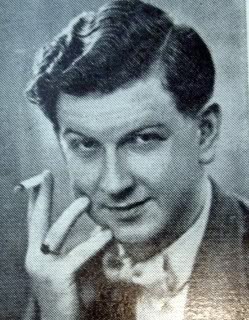
Edmund Crispin

Personal Information

Born October 2, 1921
Died September 15, 1978 (56 years old)
Chesham Bois, United Kingdom
Also known as: Edmund Crispin, Bruce Montgomery
19 books
3.6 (16)
235 readers

Description

Edmund Crispin was the pseudonym of Robert Bruce Montgomery (usually credited as Bruce Montgomery), an English crime writer and composer. Montgomery wrote nine detective novels and two collections of short stories under the pseudonym Edmund Crispin. Montgomery's output of music and fiction all but ceased after the 1950s, but he continued to write reviews of crime novels and science fiction works for The Sunday Times. Source: Wikipedia

Books

Newest First

Beware of the Trains

4.0 (1)
14

These sixteen short stories are classic examples of Fen's mastery of his art solving the most insoluble crimes where even the best brains in the police force are frankly baffled. They also allow you to flex your own crime-solving muscles: each story contains all the clues needed to anticipate the outcome, using logic and common sense with a bit of ingenuity thrown in! Do you dare to take them on?

Frequent Hearses

3.0 (2)
16

From the blog Crime Fiction Lover: "Between 1944 and 1977, Robert Bruce Montgomery wrote a string of novels under the name Edmund Crispin. Today he is considered to be one of the underappreciated masters of the Golden Age of crime fiction. His novels featuring eccentric Oxford professor Gervase Fen were always witty and literate, and Frequent Hearses is one of the picks of the bunch. In this, the seventh in the series, Fen visits a film studio to advise on the production of a biopic of poet Alexander Pope. It may be difficult to conceive of a Pope biopic being produced in 1950s London, but it does allow for some of Crispin’s trademark humour and literary knowledge to flourish. The novel’s title is from one of Pope’s poems about people dying left right and centre. While Fen is advising on the production, young starlet Gloria Scott throws herself to her death from Waterloo Bridge. Fen has no reason to suspect anything other than suicide, until it becomes clear that Gloria Scott was just a stage name, that she was pregnant and that someone has searched the young actress’ apartment and tampered with the corpse to remove any hints as to her real identity. A lecherous cameraman is then found poisoned, and tests confirm it was murder. But what, if anything, links the two deaths? Of course, Fen is the man to find out."

Bodies from the Library 4

0.0 (0)
2

This annual anthology of rare stories of crime and suspense brings together tales from the Golden Age of Detective Fiction for the first time in book form, including full-length novellas by Christianna Brand and Julian Symons. Mystery stories have been around for centuries—there are whodunits, whydunits and howdunits, including locked-room puzzles, detective stories without detectives, and crimes with a limited choice of suspects. Countless volumes of such stories have been published, but some are still impossible to find: stories that appeared in a newspaper, magazine or an anthology that has long been out of print; ephemeral works such as plays not aired, staged or screened for decades; and unpublished stories that were absorbed into an author's archive when they died . . . Here for the first time are three never-before-published mysteries by Edmund Crispin, Ngaio Marsh and Leo Bruce, and two pieces written for radio by Gladys Mitchell and H. C. Bailey—the latter featuring Reggie Fortune. Together with a newly unearthed short story by Ethel Lina White that inspired Hitchcock’s The Lady Vanishes, and a complete short novel by Christianna Brand, this diverse mix of tales by some of the world’s most popular classic crime writers contains something for everyone. Complete with indispensable biographies by Tony Medawar of all the featured authors, the fourth volume in the series Bodies from the Library once again brings into the daylight the forgotten, the lost and the unknown.

Murder Most Foul

0.0 (0)
29

The fruit at the bottom of the bowl / Ray Bradbury Murder! / Arnold Bennett The kennel / Maurice Level We knows you're busy writing / Edmund Crispin A thousand deaths / Jack London Back for Christmas / John Collier Before the party / W. Somerset Maugham [Tell-tale Heart]( / Edgar Allan Poe The evidence of the alter-boy / Georges Simenon The hand / Guy de Maupassant Tickled to death / Simon Brett Miss Marple tells a story / Agatha Christie Browdean Farm / A.M. Burrage A nice touch / Mann Rubin Light verse / Isaac Asimov Composed of cobwebs / Eddy C. Bertin [The Boscombe Valley mystery]( / Sir Arthur Conan Doyle The man who knew how / Dorothy L. Sayers The hands of Mr. Ottermole / Thomas Burke You got to have brains / Robert Bloch How the third floor knew the Potteries / Amelia B. Edwards The invisible man / G.K. Chesterton The hound / William Faulkner Three is a lucky number / Margery Allingham First hate / Algernon Blackwood The victim / P.D. James The mistery of the sleeping-car express / Freeman Wills Crofts Moxon's master / Ambrose Bierce The basket chair / Winston Graham The drop of blood / Mor Jokai

Glimpses of the Moon

0.0 (0)
0

Set amid the whirl of 1922 Manhattan society, this sparkling comedy features a jazzy danceable score and a timeless romantic story. With plenty of friends but little money, Susy Branch and her friend Nick Lansing devise a clever scheme to live beyond their means. They'll marry and live off the wedding gifts, while they help one another secure more suitable millionaire spouses. The plan works perfectly - until they fall in love.

The Moving Toyshop

3.7 (3)
46

Named by P.D. James as one of the best five mysteries of all time. Richard Cadogan is at loose ends in Oxford, very late at night. Charmed by the window display of an old-fashioned toyshop, he is worried to find the door unlocked; surely the owner should be alerted. And so Cadogan slips into the darkened store and up the narrow stairway to the apartment above. But rather than a snoring toyman, he finds a very dead old lady, the marks of murder still livid on her neck. But when Cadogan returns with the coppers, the toyshop...has disappeared. This, it seems, is a matter for Gervase Fen.

The Case of the Gilded Fly (Gervase Fen #1)

4.0 (3)
40

From Bloomsbury.com: "It is October 1940 and at Oxford the Full Term has just begun. Robert Warner, up and coming playwright known for his experimental approach, has chosen an Oxford repertory theater for the premiere of his latest play, Metromania. Together with his cast he comes to Oxford to rehearse a week before the opening, but Warner's troupe is a motley group of actors among whom is the beautiful but promiscuously dangerous Yseut Haskell . She causes quite a stir with her plots, intrigues and love triangles. When she is found shot dead in the college room of a young man who is infatuated with her, everyone is puzzled and worried –most of the actors have had a reason to get rid of the femme fatale and few have alibis. The police are at loss for answers and are ready to proclaim the incident as suicide, but Gervase Fen, an Oxford don and professor of literature, who thrives off solving mysteries, is ready to help. The Case of the Gilded Fly, first published in 1944, is Edmund Crispin's debut novel and also the first Gervase Fen Mystery."
Buried for Pleasure

4.0 (1)
18

In the sleepy English village of Sanford Angelorum, Oxford professor and amateur detective Gervase Fen is taking a break from his books to run for Parliament. At first glance, the village he's come to canvass appears perfectly peaceful, but Fen soon discovers that appearances can be deceiving: someone in the village has discovered a dark secret and is using it for blackmail. Anyone who comes close to uncovering the blackmailer's identity is swiftly dispatched. As the joys of politics wear off, Fen sets his mind to the mystery—but finds himself caught up in a tangled tale of eccentric psychiatrists, escaped lunatics, beautiful women, and lost heirs . . . [amazon.com] First published in 1948.

Fen Country

3.0 (1)
12

Here's riches! Twenty-six detective stories by the great Edmund Crispin—a splendid hoard, if sadly posthumous. Most of them feature his don-detective, Gervase Fen, and/or his almost equally sharp-witted friend and (unofficial) colleague, Inspector Humbleby of Scotland Yard. And all of the stories are as taut as a highly strung bow, and score a remarkable series of bull's-eyes. They turn upon a fine assortment of clues—dandelions and hearing aids, Sunday pub closing in Wales, a bloodstained cat, a Leonardo drawing. There are devices and tricks of extraordinary ingenuity—murder by letter, a circular literary forgery. And cleverest of all, perhaps, there are the many variations on faked alibis and switched victims—the alibied corpse that gives the killer an alibi, or the faked alibi that breaks an alibi. There seems no limit to the intricacy of Edmund Crispin's invention or the sparkle of his wit. And certainly none to the sheer delight that his puzzles provide.

Holy Disorders

3.7 (3)
23

The seemingly simple investigation of the death of a cathedral organist leads Professor Gervase Fen, idiosyncratic Oxford don and amateur detective, into a complicated case involving butterfly collecting, international espionage, witchcraft and a Nazi plot.

The long divorce

0.0 (0)
18

From the blog Classic Mysteries: "The little English town of Cotten Abbas is being plagued by someone who is sending anonymous poisoned pen letters to people in the town. Letters of this type usually accuse the recipient either of some crime or of some major breach of morality. If there is any degree of truth in the letters, they can be deadly, and they would appear to be the reason behind at least one death in Cotten Abbas. The mysterious Mr. Datchery, newly arrived in Cotten Abbas, rather clearly knows more than he is saying about the letters and their source. But it will become a case of murder that will puzzle Crispin’s detective, Oxford Professor Gervase Fen, though he’s not even mentioned to us by name until more than two thirds of the way into the novel. It's a good thing that he’s on hand too, as the evidence looks remarkably black against one of the town's two doctors, Dr. Helen Downing, the sympathetic heroine of the book. It would appear that someone is trying to frame her for a murder that is most likely connected to the poisoned pen letters. And that someone is doing so quite effectively until Fen comes along. I don’t want to say much more about the plot – it’s quite typical of Crispin, enormously complicated, between the poisoned pen letters, the suicide by a recipient of those letters, and the murder of a young teacher which – according to the evidence – could only have been committed by Helen Downing. And the facts seem to be so damning that even the investigating police officer – who has fallen in love with Helen Downing – finds himself suspecting her of murder."
