Discover

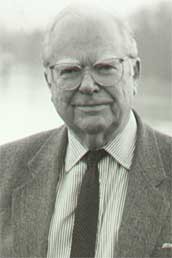
Christopher Hibbert

Personal Information

Born March 5, 1924
Died December 21, 2008 (84 years old)
Enderby, United Kingdom
Also known as: Hibbert Christopher, Christopher (1924-2008) Hibbert
81 books
3.9 (11)
241 readers

Description

There is no description yet, we will add it soon.

Books

Newest First

The House of Medici, its rise and fall

0.0 (0)
21

An account of the fortunes and influences of the great Florentine banking family, covering over three hundred years of soldiers, art patrons, collectors, builders, popes, statesmen, and scholars.

Versailles

0.0 (0)
0

Historical detail of the building of Versailles beginning with the original hunting lodge to the current "attraction," as a museum. Includes letters written from attendees at high court, includes many pictures - some of poor quality. A good perusal prior to visiting.

The Pen and the Sword

0.0 (0)
0

Traces milestones in history from the plays of Shakespeare in 1601 to the westernization of Russia under Peter the Great in 1698.

Africa Explored

0.0 (0)
4

Many outstanding men -- €”James Bruce, Richard Francis Burton, David Livingstone, Henry Morton Stanley, and others -- €”won lasting fame from their African journeys. Africa Explored collects their amazing tales of treks into the unknown. These tales of Europeans in Africa before the wave of colonialism mix exotic sights and startling customs with sympathetic meetings of Africa's people and scenes of sublime beauty. Africa Explored relates Mungo Park's being robbed and left for dead in the West African desert, then saved by repeated acts of kindness; Burton and Speke's search for the legendary Mountains of the Moon that fed the Nile; Alexander Laing's fatal voyage to Timbuktu; Livingston's journeys up the Zambezi River; German missionary Johannes Rebmann's astonishment at beholding the snow-capped peak of Kilimanjaro; and other incredible encounters with strange animals, the slave trade, crippling diseases, and desert nomads.

Wellington

0.0 (0)
1

This sequel to Longford's well-received Wellington: Years of the Sword (1970) begins right after the Waterloo triumph, when the Duke, for reasons that are never made clear, retired in his prime from fighting and, after negotiations and pacifications in occupied Paris, came home to England to launch a vexed career as the highest of High Tory politicians in a time of great social upheaval, with a Prime Ministership ""killed by the [Reform] Bill."" Wellington's fears of Jacobinism and his opposition to Reform emerge without a sufficient grasp of the general disintegration of the Tory Party; but Longford is emphatic in her sympathies and makes a spirited and detailed defense, for example, of the Duke's role in suppressing the ""Captain Swing"" riots in Hampshire. For politically-minded readers there are theatrical accounts of each parliamentary crisis; for the rest there is a loving reconstruction of the Duke's private life. Longford, a descendant of Wellington's dowdy, neglected, inhospitable but virtuous and devoted wife, has done a great deal of research into the semi-love affairs, estate-building and family strains of this period of ""Arthur's"" life, and makes them alive and moving. For all its fullness, the book falls short as a political biography, and students of personality may protest that the Duke's austere, half-canny character has been over-tempered by granddaughterly reverence; but Longford's enthusiasm is engaging and should win the book its appropriate readership.

Duce

0.0 (0)
4

Benito Mussolini, the son of a peasant, held absolute rule over the Italian nation for the best part of a generation, and played a leading role in high world drama. What happened to Italy was therefore in the fullest sense his personal responsibly, and by this history whose ultimate verdict was his constant self-conscious preoccupation must judge him. The clue to his character as revealed in this remarkable detailed biography is to be found in a web almost pathological contradictions.

Redcoats and rebels

0.0 (0)
6

From Amazon.com: "Outstanding....Hibbert has an eye for character and a gift for bringing to life the impact of small-minded incompetents on the wide sweep of history."— Associated Press The story of this war has usually been told in terms of a conflict between blundering British generals and their rigidly disciplined red-coated troops on the one side and heroic American patriots in their homespun shirts and coonskin caps on the other. In this fresh, compelling narrative, Christopher Hibbert portrays the realities of a war that raged the length of an entire continent—a war that thousands of George Washington's fellow countrymen condemned and that he came close to losing. Based on a wide variety of sources and alive with astute character sketches and eyewitness accounts, Redcoats and Rebels presents a vivid and convincing picture of the "cruel, accursed" war that changed the world forever. 16 pages of illustrations. "Hibbert combines impeccable scholarship with a liveliness of style that lures the reader from page to page."—Sunday Telegraph

The Battle of Arnhem

0.0 (0)
6

"On September 17, 1944, General Kurt Student, the founder of Nazi Germany's parachute forces, heard the groaning roar of airplane engines. He went out onto his balcony above the flat landscape of southern Holland to watch the air armada of Dakotas and gliders, carrying the legendary American 101st and 82nd Airborne Divisions and the British 1st Airborne Division. Operation Market Garden, the plan to end the war by capturing the bridges leading to the Lower Rhine and beyond, was a bold concept, but could it have ever worked? The cost of failure was horrendous, above all for the Dutch who risked everything to help. German reprisals were pitiless and cruel, and lasted until the end of the war. Antony Beevor, using often overlooked sources from Dutch, American, British, Polish, and German archives, has reconstructed the terrible reality of the fighting, which General Student called "The Last German Victory." Yet The Battle of Arnhem, written with Beevor's inimitable style and gripping narrative, is about much more than a single dramatic battle--it looks into the very heart of war."--Inside jacket flap.

The Destruction of Lord Raglan

0.0 (0)
1

In March 1854, a British army of 30,000 men sailed for the Crimea to defend the crumbling Turkish empire from Russia. It was led by Lord Raglan, a verteran of Waterloo. The campaign quickly degenerated into a series of military disasters caused by incompetence at the highest level, bitter personal rivalries among the divisional commanders and inadequacies of transport, clothing and military and medical supplies. To enable to the British government to survive, Raglan was made the scapegoat. This text presents the story of the tragic campaign.
