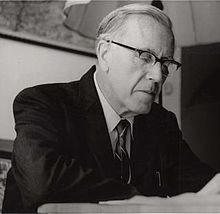
Dietrich Von Hildebrand
Personal Information
Description
Hildebrand was called "the twentieth-century Doctor of the Church" by Pope Pius XII. Pope John Paul II also greatly admired the work of Hildebrand, remarking once to his widow, Alice von Hildebrand, "Your husband is one of the great ethicists of the twentieth century." Benedict XVI also has a particular admiration and regard for Hildebrand, whom he knew as a young priest in Munich. The degree of Pope Benedict's esteem is expressed in one of his statements about Hildebrand: "When the intellectual history of the Catholic Church in the twentieth century is written, the name of Dietrich von Hildebrand will be most prominent among the figures of our time." A vocal critic of the changes in the church brought by the Second Vatican Council, Hildebrand became vice director of Luigi Villa's Chiesa viva and especially resented the new liturgy: "Truly, if one of the devils in C. S. Lewis's The Screwtape Letters had been entrusted with the ruin of the liturgy, he could not have done it better."
Books
Gesammelte Werke
The Encyclical Humanae Vitae
Dietrich von Hildebrand’s The Encyclical Humanae Vitae: A Sign of Contradiction was published mere months after Pope Paul VI promulgated the eponymous encyclical. The much-anticipated encyclical quickly proved to be among the most contentious papal documents ever published; the uproar against it was immediate, intense, and widespread—even, perhaps especially, among Catholic intellectuals and clergy in Western countries. It was in this milieu that Dietrich von Hildebrand published his The Encyclical Humanae Vitae: A Sign of Contradiction, and in doing so, became one of the first Catholic intellectuals of public stature to defend the encyclical. “To read The Encyclical Humanae Vitae: A Sign of Contradiction by Dietrich von Hildebrand some five decades later is a very consoling experience,” writes Tracey Rowland, in her foreword to the book. “It bears testimony to the fact that at least one Catholic married man had the necessary spiritual and intellectual capital to make the right judgment call and explain it within the broader context of the Church’s understanding of the sacrament of marriage and the work of the human conscience.”
Trojan Horse in the City of God
When Trojan Horse in the City of God is the principal defense of conservative Catholicism and an indictment of "progressive" or "liberal" Catholicism. Dietrich von Hildebrand exposes the "progressive" Catholic agenda, its modus operandi and the dangerous heresies it promotes, contrary to traditional Catholic truth including the two main factors contributing to the deterioration of the Church, why true renewal in the church requires reaffirmation (not denigration) of tradition, why translating scripture into "everyday" language undermines faith and trivializes Christ's message, the war against beauty in Catholic art, architecture, and worship, the fundamental error in the "new theologies", the stark contrast between what Vatican II actually said and how it's been interpreted, why heresy must be condemned (and even punished), how relativism supplanted belief in objective truth, tricks progressive theologians play with language, three types of contemporary Catholic philosophers and where they go wrong, and much, much more.
