Discover

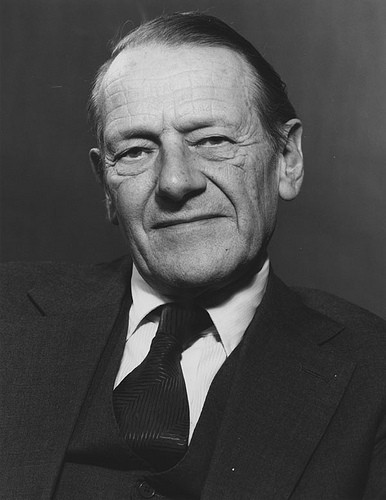
Maurice Cranston

Personal Information

Born May 8, 1920
Died November 5, 1993 (73 years old)
Harringay, United Kingdom of Great Britain and Ireland
Also known as: Maurice Cranston, Maurice William Cranston
18 books
3.0 (1)
43 readers

Description

English philosopher, professor and author

Books

Newest First

The solitary self

0.0 (0)
2

In this third and final volume of his masterly biography, Maurice Cranston traces the last tempestuous years of Jean-Jacques Rousseau's life. From his brilliant authorship of the Confessions, the Dialogues, and the Reveries to his controversial religious views, from his notorious public quarrel with David Hume in England to his clandestine return to France, from his unsettled wanderings to his death in 1778 - these and other critical events in Rousseau's most embattled years are detailed in this sympathetic yet balanced portrait. In 1762, with the condemnation of Emile and The Social Contract harried by both church and state, Rousseau fled Paris, seeking refuge in Neuchatel and England. Deemed a social outcast and beset by feelings of persecution and abuse, not wholly unwarranted, the philosopher turned in despair to the production of autobiographical works intended to reveal his essential innocence and integrity. Through this bitter introspection, Rousseau transformed his solitude into some of the most enduring literature of his time.

Jean-Jacques

0.0 (0)
4

In the first volume of his trilogy, noted political philosopher Maurice Cranston draws from original manuscript sources to trace Rousseau's life from his birth in provincial obscurity in Geneva, through his youthful wanderings, to his return to Geneva in 1754 as a celebrated writer and composer.

John Locke

0.0 (0)
1

"John Locke (1632-1704) was a prolific correspondent and he left behind him over 3,600 letters, a collection almost unmatched in pre-modern times. A man of insatiable curiosity and wide social connections, his letters open up the cultural, social, intellectual, and political worlds of the later Stuart age. Spanning half a century, they mark the transition from the era of revolutionary Puritanism to the dawn of the Enlightenment. This book brings together 244 of the most important and revealing letters. Half of them are letters written by Locke (12 per cent of the total number surviving), the other half are letters written to him. If Locke's place is already secure among those who explore philosophy and political ideas, these letters will give Locke a new presence among those who are interested in the social and cultural worlds of seventeenth-century Britain."--Jacket.

A dialogue on anarchy

0.0 (0)
0

Fictional dialogue between Karl Marx und Mikhail Bakunin about anarchism. Part of a series of eight conversations created by the author based on the writings of 18 individuals. First presented on the B.B.C. Third Programme in October 1962. First published as text in magazine [Anarchy, Freedom Press, London, 1962, vol. II, p. 353–371]( The whole series was presented on the B.B.C. Third Programme from 1953 to 1967 and published as book [Political dialogues]( in 1968.

The romantic movement

0.0 (0)
2

The Romantic Movement in Europe was both a revolt and a revival, a philosophy of life as well as of art. In the earliest expressions of romantic theory by Rousseau and Diderot, it is seen as a revolt against rationalism. In Great Britain and Italy it appears as a revolt against classicism, in Spain as a revival of the tradition of the Moorish courts, and in Germany, where it excited the greatest enthusiasm, as both a revolt against rationalism and a revival of the Gothic and Germanic. Despite the differences of aim and emphasis across Europe, Professor Cranston argues that romanticism was a European phenomenon, as universal as the Renaissance. He isolates its common features - liberty, introspection, and the importance of love; truth in the expression of feeling as much as of thought; nature seen as an object of devotion rather than scientific study; a tolerance of the grotesque coupled with an interest in the exotic, the primitive and the medieval; a concern for the value of intuition over ratiocination; and a preference for audacity over prudence. The Romantic Movement is part of the common European heritage, and its influence is by no means at an end. This book is the first to describe its philosophy, history, and cultural and artistic manifestations, and the ways these varied across the countries of Europe.

Freedom

0.0 (0)
5

Paluten ist ein echter Abenteurer und kann schon gar nicht mehr zählen, wie oft er Freedom nun schon gerettet hat. Professor Entes Klonmaschine hat sich dabei in der Vergangenheit als besonders hilfreich erwiesen. Doch ausgerechnet die geht jetzt kaputt. Für die Reparatur benötigt er ein besonders seltenes Metall, welches es nur auf dem Gipfel des höchsten und gefährlichsten Berg Freedoms gibt: Mount Schmeverest. Paluten und Edgar machen sich natürlich sofort auf den Weg, um das seltene Metall zu besorgen, stoßen dabei allerdings auf unerwartete Gefahren und unvorhergesehene Hindernisse. Schaffen sie es, diesen Widrigkeiten zu trotzen und das Metall zu bekommen?
