Discover

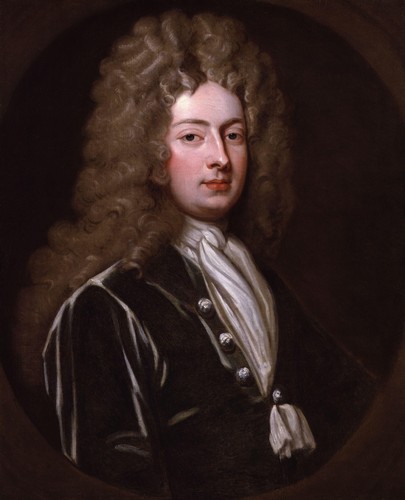
William Congreve

Personal Information

Born January 1, 1670
Died January 1, 1729 (59 years old)
Leeds, Kingdom of Great Britain
Also known as: Congreve, William, 1670-1729., William, Congreve
19 books
3.5 (6)
36 readers

Description

British playwright, poet and author

Books

Newest First

Love for Love

4.0 (2)
28

Valentine, Sir Sampson's dissolute eldest son, finds himself at a standstill; the only way out of his financial difficulties is to give in to his father's pressure to renounce his right of inheritance. While this suggestion immediately increases the chances of his bluff younger brother Ben on the marriage mart, Valentine's own chances with his beloved Angelica would proportionally decrease. To avoid having to sign the renunciation Valentine puts on an 'antic disposition' and pretends to be mad. Angelica, seeing through him, provokes him back into sanity by pretending to agree to marry his father. Valentine recovers, the lovers reunite, and Ben, too, has meanwhile found the girl of his heart. More successful in its day than The Way of the World, which is now accounted Congreve's best play, Love for Love (1695) is a comical farce manifesting the verbal polish and the theatrical wit that audiences so enjoy in Congreve.

The Way of the World and Other Plays

0.0 (0)
0

"Intrigue and deception abound in The Way of the World, as Mirabell must overcome the hatred of Lady Wishfort if he is to marry her niece with fortune intact. Congreve's first play, The Old Bachelor, depicts the chaos caused by the rakish Bellmour, who poses as a parson in order to pursue his mistress. In The Double Dealer, the schemes of Maskwell threaten the marriage of Mellefont and Cynthia, while in Love for Love the extravagant Valentine is forced to choose between his inheritance and his beloved Angelica."--Back cover.

Restoration and eighteenth-century comedy

0.0 (0)
0

Presents authoritative texts of six Restoration and 18th century English comedies, accompanied by historical background and critical essays from past and present.

The Way of the World

3.3 (4)
2

How did we get here? David Fromkin provides arresting and dramatic answers to the questions we ask ourselves as we approach the new millennium. He maps and illuminates the paths by which humanity came to its current state, giving coherence and meaning to the main turning points along the way by relating them to a vision of things to come. His unconventional approach to narrating universal history is to focus on the relevant past and to single out the eight critical evolutions that brought the world from the Big Bang to the eve of the twenty-first century. He describes how human beings survived by adapting to a world they had not yet begun to make their own, and how they created and developed organized society, religion, and warfare. He emphasizes the transformative forces of art and the written word, and the explosive effects of scientific discoveries. He traces the course of commerce, exploration, the growth of law, and the quest for freedom, and details how their convergence led to the world of today. - Jacket flap.