Discover
Jan 1, 1946 — —· 80 yrs

UNITED STATES AUTHOR · HISTORY · PICTORIAL WORKS

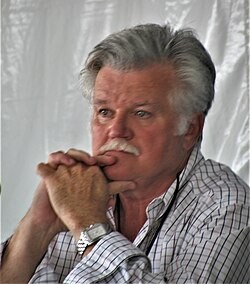
William C. Davis

Also known as: William Charles Davis

47
BOOKS
4.4
AVG RATING (10)
0
READERS

William Charles "Jack" Davis (born 1946) is an American historian who was a professor of history at Virginia Tech and the former director of programs at that school's Virginia Center for Civil War Studies. Specializing in the American Civil War, Davis has written more than 40 books on that subject and other aspects of early southern U.S. history, such as the Texas Revolution.

Independence, United States
Wikipedia

The Gettysburg Campaign began on June 3, 1863, as units of Gen. Robert E. Lee's Army of Northern Virginia began to leave their positions near Fredericksburg, Virginia, and march toward the Shenandoah Valley.

— from Gettysburg, 2003

Most acclaimed

#2

Gettysburg

2003

0.0 (0)

"On July 2, 1863, the second day of fighting at Gettysburg, Maj. Gen. Daniel E. Sickles, in an ill-conceived interpretation of his orders, advanced his men beyond the established Union line and exposed his flanks to a potentially devastating Confederate attack. Shortly after being reprimanded by his commander, Maj. Gen. George G. Meade, for endangering the entire Union Army. Sickles was hit by a cannonball. He returned to Washington with his leg amputated and his pride badly wounded." "A politician and lawyer prior to the war, Sickles was already notorious for being the first person in U.S. history acquitted of murder by pleading temporary insanity. During his recuperation in the nation's capital, Sickles defended his actions at Gettysburg to anyone who would listen, including President Lincoln, and criticized Meade before Congress's Committee on the Conduct of the War. He continued defending himself for years after the war, while Meade remained mostly silent on the subject." "Now, historian Richard A. Sauers destroys many commonly accepted myths about the controversy by examining the evidence in detail. In this fascinating analysis, he highlights the personality conflicts among military leaders that complicate combat. He also demonstrates that distortions, such as Sickles's version of Gettysburg, are frequently accepted as fact by historians and repeated for generations to come. Sauers shows that Sickles's unjust manipulations harmed Meade's reputation for years after the war."--Jacket.
#1

The Greatest Fury

0.0 (0)

In the waning days of 1814, a fleet of Royal Navy warships closed in on the waters below New Orleans. The gateway of the Mississippi River and America's heartland, it was defended by General Andrew Jackson with an 'army' of farmers, merchants, backwoodsmen, smugglers, slaves, and Choctaw Indians, many of them unarmed. Davis tells the story of one of the most impactful battles ever fought on American soil-- a tale of resilience, bravery, and uncommon heroism -- adapted from jacket.

#3

The West

0.0 (0)

This vivid narrative history -- magnificently illustrated with more than 400 photographs, many of them never before published -- takes us on a gripping journey through the turbulent history of the region that has come to symbolize America around the world. Drawing on hundreds of letters, diaries, memoirs, and journals as well as the latest scholarship, The West presents a cast as rich and diverse as the western landscape itself: explorers and soldiers and Indian warriors, settlers and railroad builders and gaudy showmen. The book is filled with stories of heroism and hope, enterprise and adventure, as well as tragedy and disappointment. It explores the tensions between whites and the native peoples they sought to displace, but it also encompasses the Hispanic experience in the West. Gracefully written, handsomely designed, meticulously researched, The West is an unrivaled work of history that brilliantly captures all the drama and excitement, the sober realities and bright myths of the American West. Book jacket.

Books

Newest First
