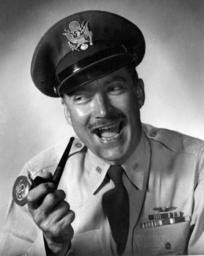
MacKinlay Kantor
Personal Information
Description
There is no description yet, we will add it soon.
Books
Gettysburg
"On July 2, 1863, the second day of fighting at Gettysburg, Maj. Gen. Daniel E. Sickles, in an ill-conceived interpretation of his orders, advanced his men beyond the established Union line and exposed his flanks to a potentially devastating Confederate attack. Shortly after being reprimanded by his commander, Maj. Gen. George G. Meade, for endangering the entire Union Army. Sickles was hit by a cannonball. He returned to Washington with his leg amputated and his pride badly wounded." "A politician and lawyer prior to the war, Sickles was already notorious for being the first person in U.S. history acquitted of murder by pleading temporary insanity. During his recuperation in the nation's capital, Sickles defended his actions at Gettysburg to anyone who would listen, including President Lincoln, and criticized Meade before Congress's Committee on the Conduct of the War. He continued defending himself for years after the war, while Meade remained mostly silent on the subject." "Now, historian Richard A. Sauers destroys many commonly accepted myths about the controversy by examining the evidence in detail. In this fascinating analysis, he highlights the personality conflicts among military leaders that complicate combat. He also demonstrates that distortions, such as Sickles's version of Gettysburg, are frequently accepted as fact by historians and repeated for generations to come. Sauers shows that Sickles's unjust manipulations harmed Meade's reputation for years after the war."--Jacket.
Tantalizing locked room mysteries
Introduction: "No one done it" / Isaac Asimov The murders in the Rue Morgue / Edgar Allan Poe The adventure of the speckled band / Sir Arthur Conan Doyle The problem of Cell 13 / Jacques Futrelle The light at three o'clock / MacKinlay Kantor Murder at the automat / Cornell Woolrich The exact opposite / Erle Stanley Gardner The blind spot / Barry Perowne The operator / Jack Wodhams The Leopold locked room / Edward D. Hoch Vanishing act / Bill Pronzini and Michael Kurland
The work of Saint Francis
An orphan boy, fugitive from a Spanish reformatory run by monks, is brought back to grace through a "natural miracle".
Arouse and beware
Suspenseful and thrilling adventure set during the American Civil War, about two Confederate prison escapees.
The noise of their wings
A wealthy man's passion for restoring flocks of passenger pigeons to America.
Long remember
"Long Remember was the first realistic novel about the Civil War since The Red Badge of Courage. Originally published in 1934, this book received rave reviews from The New York Times Book Review, and was a main selection of the Literary Guild. It is the account of the Battle of Gettysburg, as viewed by a pacifist who comes to accept the nasty necessity of combat. Kantor has also interwoven love and lust into this remarkable tale of passion, heroes, and a bloody battle."--BOOK JACKET.
If the South had won the Civil War
if you have ever wondered what the consequences of a more conciliatory approach to slavery and the south might have been , particularly if you are a pacifist, this book gives a reasonable outcome to a non-violent solution to the problem. And it will appeal to all fans of alternate histories.
Signal thirty-two
A story about the police in 1950s New York. "A shocking novel of the New York streets - and the men who patrol them."
Sterling Point Books
MacKinlay Kantor gives us vivid pictures of the two generals and leads us, step by step, to the McLean house at Appommatox where Lee surrendered to Grant. They were no ordinary men, these two, yet they had habits of mind and action that make them seem very much like the people around us. Though this is an account of defeat and victory, animals play an important part in it, too. In the days when jeeps were unknown a good horse was a neccessary part of a general's equipment. But who could love a jeep as General Lee loved his Traveller, a hourse as proud and gray as the man who rode him? No less valiant was General Grant's Cincinnati - a stout-hearted animal, worthy of a great master. Readers everwhere will be stireed by this brillant portrayal of two American heroes who loved the causes for which they fought, but who loved peace and the welfare of their people still more. (dust jacket)
