James M. McPherson
Personal Information
Description
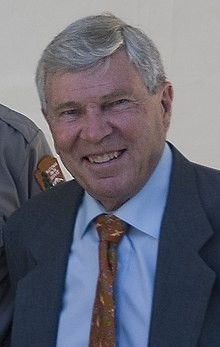
James M. McPherson (born October 11, 1936) is an American historian specializing in the Civil War; winner of the Pulitzer Prize for History in 1989 for Battle Cry of Freedom.
Books
Tried by War
James McPherson, a bestselling historian of the Civil War, illuminates how Lincoln worked with—and often against— his senior commanders to defeat the Confederacy and create the role of commander in chief as we know it. Though Abraham Lincoln arrived at the White House with no previous military experience (apart from a couple of months spent soldiering in 1832), he quickly established himself as the greatest commander in chief in American history. James McPherson illuminates this often misunderstood and profoundly influential aspect of Lincoln's legacy. In essence, Lincoln invented the idea of commander in chief, as neither the Constitution nor existing legislation specified how the president ought to declare war or dictate strategy. In fact, by assuming the powers we associate with the role of commander in chief, Lincoln often overstepped the narrow band of rights granted the president. Good thing too, because his strategic insight and will to fight changed the course of the war and saved the Union. For most of the conflict, he constantly had to goad his reluctant generals toward battle, and he oversaw strategy and planning for major engagements with the enemy. Lincoln was a self-taught military strategist (as he was a self-taught lawyer), which makes his adroit conduct of the war seem almost miraculous. To be sure, the Union's campaigns often went awry, sometimes horribly so, but McPherson makes clear how the missteps arose from the all-too-common moments when Lincoln could neither threaten nor cajole his commanders to follow his orders. Because Lincoln's war took place within our borders, the relationship between the front lines and the home front was especially close—and volatile. Here again, Lincoln faced enormous challenges in exemplary fashion. He was a masterly molder of public opinion, for instance, defining the war aims initially as preserving the Union and only later as ending slavery— when he sensed the public was at last ready to bear such a lofty burden. As we approach the bicentennial of Lincoln's birth in 2009, this book will be that rarest gift—a genuinely novel, even timely, view of the most-written-about figure in our history. Tried by War offers a revelatory portrait of leadership during the greatest crisis our nation has ever endured. How Lincoln overcame feckless generals, fickle public opinion, and his own paralyzing fears is a story at once suspenseful and inspiring.
Hallowed Ground
"[I]n a larger sense, we can not dedicate--we can not consecrate--we can not hallow--this ground. The brave men, living and dead, who struggled here, have consecrated it, far above our power to add or detract."--President Abraham LincolnJames M. McPherson, the Pulitzer Prize--winning author of Battle Cry of Freedom, and arguably the finest Civil War historian in the world, walks us through the site of the bloodiest and perhaps most consequential battle ever fought by Americans. The events that occurred at Gettysburg are etched into our collective memory, as they served to change the course of the Civil War and with it the course of history. More than any other place in the United States, Gettysburg is indeed hallowed ground. It's no surprise that it is one of the nation's most visited sites (nearly two million annual visitors), attracting tourists, military buffs, and students of American history. McPherson, who has led countless tours of Gettysburg over the years, makes stops at Seminary Ridge, the Peach Orchard, Cemetery Hill, and Little Round Top, among other key locations. He reflects on the meaning of the battle, describes the events of those terrible three days in July 1863, and places the struggle in the greater context of American and world history. Along the way, he intersperses stories of his own encounters with the place over several decades, as well as debunking several popular myths about the battle itself.What brought those 165,000 soldiers--75,000 Confederate, 90,000 Union--to Gettysburg? Why did they lock themselves in such a death grip across these once bucolic fields until 11,000 of them were killed or mortally wounded, another 29,000 were wounded and survived, and about 10,000 were "missing"--mostly captured? What was accomplished by all of this carnage? Join James M. McPherson on a walk across this hallowed ground as he be encompasses the depth of meaning and historical impact of a place that helped define the nation's character.From the Hardcover edition.
Gettysburg
"On July 2, 1863, the second day of fighting at Gettysburg, Maj. Gen. Daniel E. Sickles, in an ill-conceived interpretation of his orders, advanced his men beyond the established Union line and exposed his flanks to a potentially devastating Confederate attack. Shortly after being reprimanded by his commander, Maj. Gen. George G. Meade, for endangering the entire Union Army. Sickles was hit by a cannonball. He returned to Washington with his leg amputated and his pride badly wounded." "A politician and lawyer prior to the war, Sickles was already notorious for being the first person in U.S. history acquitted of murder by pleading temporary insanity. During his recuperation in the nation's capital, Sickles defended his actions at Gettysburg to anyone who would listen, including President Lincoln, and criticized Meade before Congress's Committee on the Conduct of the War. He continued defending himself for years after the war, while Meade remained mostly silent on the subject." "Now, historian Richard A. Sauers destroys many commonly accepted myths about the controversy by examining the evidence in detail. In this fascinating analysis, he highlights the personality conflicts among military leaders that complicate combat. He also demonstrates that distortions, such as Sickles's version of Gettysburg, are frequently accepted as fact by historians and repeated for generations to come. Sauers shows that Sickles's unjust manipulations harmed Meade's reputation for years after the war."--Jacket.
To the Best of My Ability
"In To the Best of My Ability: The American Presidents, members of the Society of American Historians deliver analyses of the forty-one men who have led this country - some, of course, more successfully than others.". "In this illustrated volume, edited by Pulitzer Prize-winner James M. McPherson, you will learn from Gordon S. Wood how George Washington, an extraordinary man, made it possible for ordinary men to govern; from Allen Weinstein how Theodore Roosevelt tested and extended the limits of the presidency; from Tom Wicker how Richard Nixon's hatreds and insecurities gripped him ever more tightly as he achieved his long-sought goal of power; and from Evan Thomas how much Bill Clinton cares about his place in the new presidential pecking order."--BOOK JACKET.
The American Journey
What they fought for, 1861-1865
From Google Books: "In Battle Cry Of Freedom, James M. McPherson presented a fascinating, concise general history of the defining American conflict. With What They Fought For, he focuses his considerable talents on what motivated the individual soldier to fight. In an exceptional and highly original Civil War analysis, McPherson draws on the letters and diaries of nearly one thousand Union and Confederate soldiers, giving voice to the very men who risked their lives in the conflict. His conclusion that most of them felt a keen sense of patriotic and ideological commitment counters the prevailing belief that Civil War soldiers had little or no idea of what they were lighting for. In their letters home and their diaries -- neither of which were subject to censorship -- these men were able to comment, in writing, on a wide variety of issues connected with their war experience. Their insights show how deeply felt and strongly held their convictions were and reveal far more careful thought on the ideological issues of the war than has previously been thought to be true."
Abraham Lincoln and the second American Revolution
James McPherson offers a series of thoughtful and engaging essays on aspects of Lincoln and the war that have rarely been discussed in depth. McPherson displays his keen insight and sterling prose as he examines several critical themes in American history. He looks closely at the President's role as Commander-in-Chief of the Union forces, showing how Lincoln forged a national military strategy for victory. He explores the importance of Lincoln's great rhetorical skills, uncovering how -- through parables and figurative language -- he was uniquely able to communicate both the purpose of the war and a new meaning of liberty to the people of the North. In another section, McPherson examines the Civil War as a second American Revolution, describing how the Republican Congress elected in 1860 passed an astonishing blitz of new laws (rivaling the first hundred days of the New Deal), and how the war not only destroyed the social structure of the Old South, but radically altered the balance of power in America, ending 70 years of Southern power in the national government. - Jacket flap.
Marching toward freedom
Using a wide variety of primary sources, examines the Afro-Americans' role in and contribution to the Union and Confederacy during the Civil War and the resulting change in their position as citizens.
This mighty scourge
This book offers fresh insight into many of the most enduring questions about one of the defining moments in our nation's history. McPherson sheds light on topics large and small, from the average soldier's avid love of newspapers to the postwar creation of the mystique of a Lost Cause in the South. Readers will find insightful pieces on such intriguing figures as Harriet Tubman, John Brown, Jesse James, and William Tecumseh Sherman, and on such vital issues such as Confederate military strategy, the failure of peace negotiations to end the war, and the realities and myths of the Confederacy. This Mighty Scourge includes several never-before-published essays--pieces on General Robert E. Lee's goals in the Gettysburg campaign, on Lincoln and Grant in the Vicksburg campaign, and on Lincoln as Commander-in-Chief. In that capacity, Lincoln invented the concept of presidential war powers that are again at the center of controversy today. All of the essays have been updated and revised to give the volume greater thematic coherence and continuity, so that it can be read in sequence as an interpretive history of the war and its meaning for America and the world. Combining the finest scholarship with luminous prose, and packed with new information and fresh ideas, this book brings together the most recent thinking by the nation's leading authority on the Civil War. It will be must reading for everyone interested in the war and American history.
Why the Confederacy Lost (Gettysburg Civil War Instutute Books)
After the Civil War, someone asked General Pickett why the Battle of Gettysburg had been lost: Was it Lee's error in taking the offensive, the tardiness of Ewell and Early, or Longstreet's hesitation in attacking? Pickett scratched his head and replied, "I've always thought the Yankees had something to do with it." This simple fact, writes James McPherson, has escaped a generation of historians who have looked to faulty morale, population, economics, and dissent as the causes of Confederate failure. These were all factors, he writes, but the Civil War was still a war--won by the Union army through key victories at key moments. With this brilliant review of how historians have explained the Southern defeat, McPherson opens a fascinating account by several leading historians of how the Union broke the Confederate rebellion. In every chapter, the military struggle takes center stage, as the authors reveal how battlefield decisions shaped the very forces that many scholars (putting the cart before the horse) claim determined the outcome of the war. Archer Jones examines the strategy of the two sides, showing how each had to match its military planning to political necessity. Lee raided north of the Potomac with one eye on European recognition and the other on Northern public opinion--but his inevitable retreats looked like failure to the Southern public. The North, however, developed a strategy of deep raids that was extremely effective because it served a valuable political as well as military purpose, shattering Southern morale by tearing up the interior. Gary Gallagher takes a hard look at the role of generals, narrowing his focus to the crucial triumvirate of Lee, Grant, and Sherman, who towered above the others. Lee's aggressiveness may have been costly, but he well knew the political impact of his spectacular victories; Grant and Sherman, meanwhile, were the first Union generals to fully harness Northern resources and carry out coordinated campaigns. Reid Mitchell shows how the Union's advantage in numbers was enhanced by a dedication and perseverance of federal troops that was not matched by the Confederates after their home front began to collapse. And Joseph Glatthaar examines black troops, whose role is entering the realm of national myth. In 1960, there appeared a collection of essays by major historians, entitled Why the North Won the Civil War, edited by David Donald; it is now in its twenty-sixth printing, having sold well over 100,000 copies. Why the Confederacy Lost provides a parallel volume, written by today's leading authorities. Provocatively argued and engagingly written, this work reminds us that the hard-won triumph of the North was far from inevitable. - Publisher.
Battle chronicles of the Civil War
Volumes 1 through 5 cover the major battles of the Civil War chronologically from 1861 to 1865. Volume 6 contains biographies of key figures in this conflict.
The Negro's Civil War
In this classic study, Pulitzer Prize-winning author James M. McPherson deftly narrates the experience of blacks--former slaves and soldiers, preachers, visionaries, doctors, intellectuals, and common people--during the Civil War. Drawing on contemporary journalism, speeches, books, and letters, he presents an eclectic chronicle of their fears and hopes as well as their essential contributions to their own freedom. Through the words of these extraordinary participants, both Northern and Southern, McPherson captures African-American responses to emancipation, the shifting attitudes toward Lincoln and the life of black soldiers in the Union army. Above all, we are allowed to witness the dreams of a disenfranchised people eager to embrace the rights and the equality offered to them, finally, as citizens. From the Trade Paperback edition.
Is blood thicker than water?
From James M. McPherson, here is a brilliant and passionate examination of nationalism in today's world and yesterday's. McPherson focuses on the current crisis in Canada ignited by Quebec's bid for independence and draws startling parallels between that stalemate and the schism between North and South that launched the American Civil War. From the former Soviet Union, Czechoslovakia, and Yugoslavia to Rwanda and Burundi, nationalism, both ethnic and civic, remains one of the most dangerous and inflammatory of human sentiments. McPherson persuasively demonstrates that an understanding of the past can help us see the present more clearly.
Civil War (1860-1865), Volume 1
Provides historical documents related to the American Civil War, and analysis of each document, including journals, letters, speeches, government (volume 1/2). Edited in two volumes by James M. McPherson, a preeminent civil war scholar and historian, George Henry Davis 1886 Professor Emeritus of United States History, Princeton University and Pulitzer Prize winner in History for Battle Cry Freedom, Civil War (1860-1865) surveys key documents produced during the Civil War with special attention devoted to the war-time policies of President Abraham Lincoln and the 37th US Congress. A special feature of the volumes is the inclusion of letters and diaries by soldiers and civilians writing about their experiences. The two volumes are organized into several chapters that cover the progress of the war beginning with early debates on secession, through wartime events on the political and battle fronts and concludes with a look toward the issues of race and reconstruction.
Copperheads
"A brief introduction to copperheads, including their habitat, food, and life cycle"--Provided by publisher.
