Discover

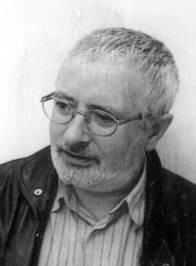
Terry Eagleton

Personal Information

Born January 1, 1943 (83 years old)
Salford, United Kingdom
Also known as: Eagleton Terry, T. Eagleton
61 books
3.5 (14)
179 readers

Description

Widely regarded as England's most influential living literary critic & theorist, Dr Eagleton currently serves as Distinguished Prof. of English Literature at the Univ. of Lancaster & as Visiting Prof. at the Nat'l Univ. of Ireland, Galway. He was Thomas Warton Prof. of English Literature at the Univ. of Oxford ('92-01) & John Edward Taylor Prof. of English Literature at the Univ. of Manchester 'til '08. He returned to The Univ. of Notre Dame in the Fall '09 semester as Distinguished Visitor in the English Dep't. He's written over 40 books, including Literary Theory: An Introduction ('83); The Ideology of the Aesthetic ('90) & The Illusions of Postmodernism ('96). He delivered Yale's '08 Terry Lectures & gave a Gifford Lecture in 3/10, titled The God Debate.

Books

Newest First

Jesus Christ

5.0 (1)
3

A series of meditations on Christ as the image of the invisible God, as a man living in history, and as lord of the universe. Though explicitly Thomistic in their orientation, these meditations are richly Biblical as well. Not only does this book bear the stamp of a deep understanding of the best in scholastic thought and in Biblical research, but it also reflects the mature piety of one of the great spiritual writers of the present age of the Church; because above all else this is a book of meditations which are aimed at moving the minds and hearts.

Ideology

0.0 (0)
20

In a book designed both for newcomers to the topic and for those already familiar with the debates, Terry Eagleton unravels the many different meanings of ideology, and charts the history of the concept from the Enlightenment to postmodernism.

Sweet Violence

0.0 (0)
2

In this dazzling book Terry Eagleton provides a comprehensive study of tragedy, all the way from Aeschylus to Edward Albee, dealing with both theory and practice, and moving between ideas of tragedy and analyses of particular works and authors. This amazing tour de force steps out beyond the stage to reflect not only on tragic art but also on real-life tragedy. It explores the idea of the tragic in the novel, examining such writers as Melville, Hawthorne, Stendhal, Tolstoy, Flaubert, Dostoevsky, Kafka, Manzoni, Goethe and Mann, as well as English novelists. -- from back cover.

Saint Oscar and other plays

0.0 (0)
0

Terry Eagleton's plays in this the first collection of his work for the theatre - Saint Oscar, The White, the Gold and the Gangrene, Disappearances, and God's Locusts - transgress what he terms 'the jealously patrolled frontiers between "art" and "ideas"'. In spirit they owe at least as much to Oscar Wilde, the Irish Oxfordian socialist and proto-deconstructionist, as, for example in their use of prose and ballad forms, they do to Bertolt Brecht. Saint Oscar, about Oscar Wilde, and The White, the Gold and the Gangrene, based on the life and tragic death of James Connolly, originally toured Ireland respectively in productions by Field Day of Derry and Dubbeljoint of Belfast. God's Locusts, written to commemorate the Great Famine and broadcast on BBC Radio 3, excoriates British officialdom for its callous inhumanity in mismanaging the relief operation.

The event of literature

0.0 (0)
0

"In this characteristically concise, witty, and lucid book, Terry Eagleton turns his attention to the questions we should ask about literature, but rarely do. What is literature? Can we even speak of "literature" at all? What do different literary theories tell us about what texts mean and do? In throwing new light on these and other questions he has raised in previous best-sellers, Eagleton offers a new theory of what we mean by literature. He also shows what it is that a great many different literary theories have in common. In a highly unusual combination of critical theory and analytic philosophy, the author sees all literary work, from novels to poems, as a strategy to contain a reality that seeks to thwart that containment, and in doing so throws up new problems that the work tries to resolve. The "event" of literature, Eagleton argues, consists in this continual transformative encounter, unique and endlessly repeatable. Freewheeling through centuries of critical ideas, he sheds light on the place of literature in our culture, and in doing so reaffirms the value and validity of literary thought today"--

The illusions of postmodernism

0.0 (0)
2

In this brilliant new critique, Terry Eagleton explores the beginnings, ambivalences, histories, subjects, fallacies and contradictions of postmodernism. Concerned less with recherche formulations of postmodern philosophy than with the culture or milieu, or even the sensibility, of postmodernism as a whole, he has in his sights, above all, a particular kind of student, or consumer, of 'popular' brands of postmodern thought. Although Professor Eagleton's view of the topic is, as he says, generally a negative one, he draws attention equally to postmodernism's strengths as well as its failings. He sets out not just to expose the illusory, but, by subtly grounded argument, to show the students he has in mind that they never believed what they thought they believed in the first place. In the process his devastating gifts for irony and satire sharpen the reader's pleasure, just as his commitment to the ethical and the vision of a just society inspire engagement and 'a refusal to acquiesce in the appalling mess which is the contemporary world'.

Culture

0.0 (0)
0

Culture is a defining aspect of what it means to be human. Defining culture and pinpointing its role in our lives is not, however, so straightforward. Terry Eagleton, one of our foremost literary and cultural critics, is uniquely poised to take on the challenge. In this keenly analytical and acerbically funny book, he explores how culture and our conceptualisations of it have evolved over the last two centuries--from rarified sphere to humble practices, and from a bulwark against industrialism's encroaches to present-day capitalism's most profitable export. Ranging over art and literature as well as philosophy and anthropology, and major but somewhat 'unfashionable' thinkers like Johann Gottfried Herder and Edmund Burke aw well as T.S. Eliot, Matthew Arnold, Raymond Williams and Oscar Wilde, Eagleton provides a cogent overview of culture set firmly in its historical and theoretical contexts, illuminating its collusion with colonialism, nationalism, the decline of religion, and the rise of and rule of the 'uncultured' masses. Eagleton also examines culture today, lambasting the commodification and co-option of a force that, properly understood, is a vital means for us to cultivate and enrich our social lives, and can even provide the impetus to transform civil society. -- Inside jacket flap.

The Gatekeeper

0.0 (0)
0

"Oxford professor, bestselling author, preeminent literary critic, playwright, screenwriter, and novelist, Terry Eagleton knows all about the claims of competing worlds. One of his earliest roles growing up Catholic in Protestant England was as "the gatekeeper" - the altar boy who at reverend mother's nod literally closed the door on young women taking the veil, separating the sanctity of the convent from earthly temptations and family obligations.". "The Gatekeeper is Eagleton's memoirs, his deeply etched portraits of those who influenced him, either by example or by contrast: his father, headmasters, priests, and Cambridge dons. He was a shy, bookish, asthmatic boy keenly aware of social inferiority yet determined to make his intellectual way. "Our aim in life," he writes of his working-class, Irish-immigrant-descended family, "was to have the words 'We Were No Trouble' inscribed on our tombstones." But Eagleton knew trouble was the point of it all. Opening doors sometimes meant rattling the knobs. At both Cambridge and Oxford, he gravitated toward dialectics and mavericks, countering braying effeteness with withering if dogmatic dissections of the class system."--BOOK JACKET.
