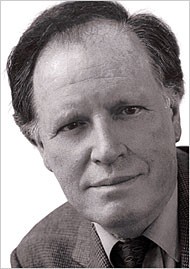
John Cornwell
Personal Information
Description
John Cornwell is a British journalist, author, and academic. Since 1990 he has directed the Science and Human Dimension Project at Jesus College, Cambridge, where he is also, since 2009, Founder and Director of the Rustat Conferences. He is a Fellow of the Royal Society of Literature and was awarded an Honorary Doctorate of Letters (University of Leicester) in 2011. He is best known for his investigative journalism; memoir; and his work in public understanding of science. In addition to his books on the relationship between science, ethics and the humanities, he has written widely on the Catholic Church and the modern papacy. - Wikipedia
Books
Darwin's Angel
Darwin's Angel is not so much a combative repudiation of Dawkins' arguments as a playful conversation with them, posing altermative view-points, exposing lapses in logic and errors of fact, from the vantage point of a friendly Guardian Angel.
The unknown God
Breaking Faith
"Breaking Faith addresses issues that range from the core concepts of everyday practice to the organization of the Church worldwide - the "graying" of the priesthood, the growing discontent among women religious, the determination of the hard-line conservative movement to close ranks against any hint of dissent - and finally, the power of Rome, the role of the Pope, and the lasting effects of John Paul II's autocratic rule."--BOOK JACKET.
Hitler's Scientists
For the first three decades of the twentieth century, Germany held the premier position for science throughout the world. German scientists were the most accomplished and honored in their fields, winning the lion's share of Nobel prizes. But in 1933 came Hitler. Jewish scientists were dismissed from their positions in laboratories and at universities, and the Nazi ideology began to dominate Germany's science communities. Some scientists enthusiastically collaborated with the Nazis; most merely acquiesced, arguing that science lies outside politics and morality. By the end of the Second World War, few German scientists remained untainted by a regime bent on genocide and racial conquest. - Jacket flap.
Seminary Boy
John Cornwell evokes a vanished time and way of life in this moving and, at times, troubling memoir of an adolescence spent in the isolated all-male world of the seminary. Born into a destitute family with a dominating Irish-Catholic mother and an absconding father during World War II in London, John Cornwell's childhood was deeply dysfunctional. When he was thirteen years old he was sent to Cotton College, a remote seminary for boys in the West Midlands countryside. For the next five years Cornwell lived under an austere monastic regime as he wrestled with his emotional and spiritual demons. In the hothouse atmosphere of the seminary he strove to find stable, loving friendships among his fellows and fatherly support from the priests, one of whom proved to be a sexual predator.The wild countryside around the seminary, the moving power of church ritual and music, and a charismatic priest enabled him to persevere. But while normal teenagers were being swept up by the rock 'n' roll era, Cornwell and his fellow seminarians continued to be emotionally and socially repressed. Secret romantic attachments between seminarians were not uncommon; on visits home they were overwhelmed by the powerful attractions of the emerging youth culture of the 1950s. But when they returned to Cotton College, the boys were once again governed by the age-old traditions and disciplines of seminary life. And like many young seminarians, Cornwell struggled with a natural adolescent rebelliousness, which in one crucial instance provoked a crisis that would eventually lead to his decision to abandon his dream of becoming a priest. Written with tremendous warmth and humor, Seminary Boy is a truly unforgettable memoir and a penetrating glimpse into the hidden world of seminary life.
The Dark Box
A bestselling journalist exposes the connection between the Catholic Church's sexual abuse crisis and the practice of confession. Confession is a crucial ritual of the Catholic Church, offering absolution of sin and spiritual guidance to the faithful. Yet this ancient sacrament has also been a source of controversy and oppression, culminating, as prize-winning historian John Cornwell reveals in The Dark Box, with the scandal of clerical child abuse. Drawing on extensive historical sources, contemporary reports, and first-hand accounts, Cornwell takes a hard look at the long evolution of confession. The papacy made annual, one-on-one confession obligatory for the first time in the 13th century. In the era that followed, confession was a source of spiritual consolation as well as sexual and mercenary scandal. During the 16th century, the Church introduced the confession box to prevent sexual solicitation of women, but this private space gave rise to new forms of temptation, both for penitents and confessors. Yet no phase in the story of the sacrament has had such drastic consequences as a historic decree by Pope Pius X in 1910. In reaction to the spiritual perils of the new century, Pius sought to safeguard the Catholic faithful by lowering the age at which children made their first confession from their early teens to seven, while exhorting all Catholics to confess frequently instead of annually. This sweeping, inappropriately early imposition of the sacrament gave priests an unprecedented and privileged role in the lives of young boys and girls -- a role that a significant number would exploit in the decades that followed. A much-needed account of confession's fraught history, The Dark Box explores the sources of the sacrament's harm and shame, while recognizing its continuing power to offer consolation and reconciliation. - Publisher.
Strange Gods
A history of religious conversion via selected converts.
Newman's Unquiet Grave
Newman was the most brilliant and controversial churchman of the Victorian Age. Cornwell explores the questions of Newman's emotional life, while drawing a complex warts-and-all portrait of "a literary workaholic."