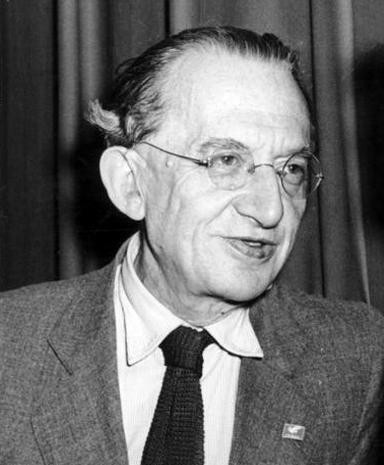
Thomas Mann
1967
Thomas Mann is a literary biography in the grand tradition by the acclaimed biographer of Proust, Sartre, and Kafka. Ronald Hayman offers the first complete portrait in English of the Nobel Prize-winning German novelist, and the first to draw on Mann's unexpurgated diaries.
Thomas Mann, author of Death in Venice, The Magic Mountain, Buddenbrooks, and Joseph and His Brothers, was a man with secrets. Ronald Hayman uncovers a brilliant writer's masks and brings to the fore the private man: his bisexuality, his obsession with "keeping up appearances," and the deep guilt feelings that plagued him for nearly fifty years.
Hayman is the first biographer to show the extent to which Mann presented a sanitized self-portrait in his novels, stories, essays, photographs, public appearances, broadcasts, and articles. The world took Mann to be a self-controlled, elegant, dignified, supremely self-assured, rather aloof man. Wanting this image to survive his death, Mann incinerated most of his diaries and stipulated that the five thousand manuscript pages he had spared should be kept under seal for twenty years after his death.
In reality, as these newly available diaries attest, Mann was subject to fits of nervous trembling, convulsive sobbing, and moments of sexual embarrassment. ("It can scarcely be impotence," he recorded in 1920. "How would it be if there were a young man at my disposal?") When his novels are reread in the perspective of the diaries, new meanings emerge, as do new interconnections between the problems of the characters and those of the author. As Hayman demonstrates in vivid and illuminating detail, Mann overcame literary inhibitions by speaking freely about his inner life through fictional characters apparently dissimilar to himself.
As Mann once wrote to a friend, his trick was to find "novelistic forms and masks which can be displayed in public as a means of relaying my love, my hatred, my sympathy, my contempt, my pride, my scorn and the accusations I want to make.".
Drawing on extensive research, including not only the as-yet-unpublished final volumes of Mann's diaries but also new interviews with Mann's children, Ronald Hayman moves behind Mann's public persona to bring forth startling reinterpretations of his novels, stories, and criticism, and to reveal an extraordinarily complex and often misunderstood genius.