Discover

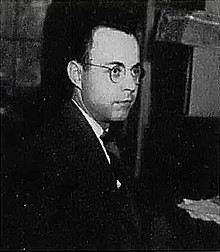
Richard N. Current

Personal Information

Born October 5, 1912
Died October 26, 2012 (100 years old)
Colorado City, United States
Also known as: Richard Nelson Current
38 books
5.0 (1)
28 readers

Description

Richard Nelson Current (October 5, 1912 – October 26, 2012) was an American historian

Books

Newest First

Loie Fuller, goddess of light

0.0 (0)
5

Loie Fuller (1862-1928) was once the most famous dancer in the world, though many, including Loie herself, wondered if what she did was really dancing. In her best-known innovation, the serpentine, she manipulated voluminous folds of silk through shimmering beams of colored lights. Loie broke the mold of traditional choreography and paved the way for other pioneers in modern dance, including Isadora Duncan and Josephine Baker. As a "magician of light," she made. long-lasting contributions to stage lighting, cinematic techniques, and costuming. Loie also beguiled her era with autobiographical details that suited her fancy more than the facts, leaving a sketchy and inaccurate portrait of her early years. Drawing on primary sources, the authors masterfully untangle the paradoxes of this exceptional woman. A tall and lovely sylph in posters and sculptures, she was in reality a rather plump woman with a plain face; a dance innovator, she had no training in choreography; a co-founder of art museums, she had never seen an art exhibit before arriving in Paris; a close and respected associate of the most learned men and women in the world, she had no formal education. Loie said that she was born in America but made in France, and this fascinating book also brings to life members of the circles in which she flourished, including Sarah Bernhardt, Alexandre Dumas fils, Pierre and Marie Curie, Anatole. France, Auguste Rodin, and Queen Marie of Romania. In a biography as distinctive as the woman it depicts, the authors reveal a remarkable artist whose dauntless will to get ahead, along with intelligence, resourcefulness, and ingenuity, enabled her to succeed despite repeated disappointments and financial disasters. This is the definitive work on Loie Fuller and her tremendous influence on the world of dance and Art Nouveau. Loie Fuller (1862-1928) was once the most famous dancer in the world, though many, including Loie herself, wondered if what she did was really dancing. In her best-known innovation, the serpentine, she manipulated voluminous folds of silk through shimmering beams of colored lights. Loie broke the mold of traditional choreography and paved the way for other pioneers in modern dance, including Isadora Duncan and Josephine Baker. As a "magician of light," she made long-lasting contributions to stage lighting, cinematic techniques, and costuming. Loie also beguiled her era with autobiographical details that suited her fancy more than the facts, leaving a sketchy and inaccurate portrait of her early years. Drawing on primary sources, the authors masterfully untangle the paradoxes of this exceptional woman. A tall and lovely sylph in posters and sculptures, she was in reality a rather plump woman with a plain face; a dance innovator, she had no training in choreography; a co-founder of art museums, she had never seen an art exhibit before arriving in Paris; a close and respected associate of the most learned men and women in the world, she had no formal education. Loie said that she was born in America but made in France, and this fascinating book also brings to life members of the circles in which she flourished, including Sarah Bernhardt, Alexandre Dumas fils, Pierre and Marie Curie, Anatole France, Auguste Rodin, and Queen Marie of Romania. In a biography as distinctive as the woman it depicts, the authors reveal a remarkable artist whose dauntless will to get ahead, along with intelligence, resourcefulness, and ingenuity, enabled her to succeed despite repeated disappointments and financial disasters. This is the definitive work on Loie Fuller and her tremendous influence on the world of dance and Art Nouveau.

Lincoln's loyalists

0.0 (0)
1

With this path-breaking book, Richard Nelson Current closes a major gap in our understanding of the important role of white southerners who fought for the Union during the Civil War. The ranks of the Union forces swelled by more than 100,000 of these men known to their friends as "loyalists" and to their enemies as "tories." They substantially strengthened the Union, weakened the Confederacy, and affected the outcome of the Civil War. Despite the assertions of southern governors that Lincoln would get no troops from the South to preserve the Union, every Confederate state except South Carolina provided at least a battalion of white troops for the Union Army. The role of black soldiers (including those from the South) continues to receive deserved attention. Curiously, little heed has been paid to the white southern supporters of the Union cause, and nothing has been published about the group as a whole. Relying almost entirely on primary sources, Current here opens the long-overdue investigation of these many Americans who, at great risk to themselves and their families, made a significant contribution to the Union's war effort. Current meticulously explores the history of the loyalists in each Confederate state during the war. Tennessee, Virginia, and West Virginia provided over 70 percent of the loyalist troops, but 10,000 from Arkansas, 7,000 from Louisiana, and thousands from North Carolina, Texas, and Alabama volunteered as well. The author weaves the separate state stories into an intriguing and detailed tapestry. The loyalists served in a variety of capacities--some performing mundane tasks, some fighting with valor. Whatever his individual role, each southerner joining the Union constituted a double loss to the Confederacy: a subtraction from its own ranks and an addition to the Union's. Undoubtedly, this played an important role in the Confederate defeat.

Those Terrible Carpetbaggers

0.0 (0)
2

Woodrow Wilson described them as men bent on "an expedition of profit," who used "the negroes as tools for their own selfish ends." Horance Greeley, while running for President, said they were "fellows who crawled down south in the track of our armies, generally at a very safe distance in the rear." And in the South they were hotly condemned as "the larvae of the North," "vulturous adventurers," and "vile, oily, odious." But how accurately does this describe the men from the North who came to be called "carpetbaggers"? Were they uneducated, penniless exploiters of the freed slave, jackals who plundered a devastated South? In this eye-opening account, the eminent Civil War historian Richard Nelson Current weaves together the biographies of ten of these men--all of whom are representative, if not the epitome, of the men called "carpetbaggers." The result is a provocative revisionist history of Reconstruction and what has long been considered its "most disgraceful" episode. Set within the larger context of Congressional politics and the history of individual Southern states, Current's narrative reveals a group of men who were often highly educated, almost all of whom had served with distinction in the Union Army (three were generals), and several of whom brought their own money down South to help rebuild a war-torn land. Daniel H. Chamberlain, for instance, was educated at Yale and Harvard Law School--he was described by the President of Yale as "a born leader of men"--Was governor of South Carolina, and later made a fortune as a Wall Street lawyer. Adelbert Ames, far from exploiting the black, was a leading exponent of black rights, the author of the main brief of the Supreme Court case Plessy v. Ferguson, a major court battle against segregation. And Albion W. Tourgee, author of the best-selling A Fool's Errand, was praised after his death by W.E.B. du Bois for his efforts on behalf of the freed slaves. Current's vivid narrative captures the passions of this tumultuous period as he documents the careers and private lives of these ten prominent men. But more important, he provides a major reinterpretation of the entire period, revealing Reconstruction as it was seen by ten of its leading exponents in the South. - Publisher.

United States history: a world power

0.0 (0)
0

Traces the history of the United States from the late nineteenth century to the present emphasizing social and political changes.

Lincoln and the first shot

0.0 (0)
0

Lincoln's dilemma over Fort Sumter, should he let it fall or send help?