
UNITED KINGDOM AUTHOR · FICTION · GENERAL
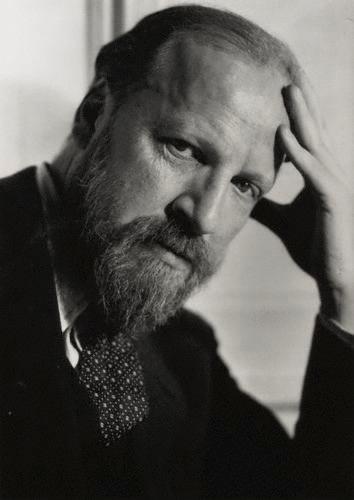
William Golding
Also known as: William Gerald Golding, Sir William Gerald Golding
The winner of the 1983 Nobel Prize in Literature, William Golding is among the most popular and influential British authors to have emerged in the second half of the twentieth century. Golding's reputation rests primarily upon his first novel, Lord of the Flies (1954), which is consistently regarded as an effective and disturbing portrayal of the fragility of civilization. Childhood and college years Golding was born in Saint Columb Minor in Cornwall, England, in 1911. His father, Alex, was a schoolmaster, while his mother, Mildred, was active in the Women's Suffrage Movement (the movement for women's right to vote). As a boy, his favorite authors included H. G. Wells (1866–1946), Jules Verne (1828–1905), and Edgar Rice Burroughs (1875–1950). Since the age of seven, Golding had been writing stories, and at the age of twelve he attempted to write a novel. Golding remained an enthusiastic writer and, upon entering Brasenose College of Oxford University, abandoned his plans to study science, preferring to read English literature. At twenty-two, a year before taking his degree in English, Golding saw his first literary work published—a poetry collection simply titled Poems. After graduating from Oxford in 1935, Golding continued the family tradition by becoming a schoolmaster in Salisbury, Wiltshire. His teaching career was interrupted in 1940, however, with the outbreak of World War II (1939–45). Lieutenant Golding served five years in the British Royal Navy and saw active duty in the North Atlantic, commanding a rocket launching craft. Lord of the Flies Golding had enhanced his knowledge of Greek history and mythology by reading while at sea, and when he returned to his post at Bishop Wordsworth's School in 1945, he began furthering his writing career. He wrote three novels, all of which went unpublished. But his frustration would not last long, when, in 1954, Golding created The Lord of the Flies. The novel was rejected by twenty-one publishers before Faber & Faber accepted the forty-three-year-old schoolmaster's book. Initially, the tale of a group of schoolboys stranded on an island during their escape from war received mixed reviews and sold only modestly in its hardcover edition. But when the paperback edition was published in 1959, thus making the book more accessible to students, the novel began to sell briskly. Teachers, aware of the student interest and impressed by the strong theme and symbolism of the work, began assigning Lord of the Flies to their literature classes. As the novel's reputation grew, critics reacted by drawing scholarly reviews out of what was previously dismissed as just another adventure story. The author's extremely productive output—five novels in ten years—and the high quality of his work established him as one of the late twentieth-century's most distinguished writers. This view of Golding was cemented in 1965, when the author was named a Commander of the British Empire. Later works After the success of Lord of the Flies, Golding enjoyed success with other novels, including Pincher Martin (1957), Free Fall (1959), and The Pyramid (1967). The author's creative output then dropped drastically. He produced no novels and only a handful of novellas (short novels), short stories, and other occasional pieces. In 1979 Golding returned with the publi cation of Darkness Visible which received mixed reviews. The author faced his harshest criticism to date with the publication of his 1984 novel The Paper Men, a drama about an aging, suc cessful novelist's conflicts with his pushy, over-bearing biographer. Departing briefly from fic tion, Golding wrote a book containing essays, reviews, and lectures. A Moving Target appeared in 1982, one year prior to the author's receipt of the Nobel Prize in Literature. William Golding died in England in 1993. A year after his death, The Double Tongue was released, published from a manu script Golding completed before he died. [Source]
The boy with fair hair lowered himself down the last few feet of rock and began to pick his way toward the lagoon.
— from Lord of the Flies
Most acclaimed

Scorpion God, the
1996
De Schorpioengod van Wiklliam Golding bevat drie verhalen - door de schrijver als 'short novels' aangeduid - die blijk geven van Goldings veelzijdig en ironisch vernuft. In het titelverhaal 'De Schorpioengod', dat zich afspeelt in het oude Egypte, poogt een in hofkringen verkerende buitenstaander de sinds eeuwen vaststaande riten te weerstreven; door zijn gedrag krijgen enkelen in deze gesloten gemeenschap de kans hun blik op de wereld te verruimen. Een andere wereldbeschouwing bezit ook een der hoofdpersonen in het tweede verhaal 'Klink, klink'. In de hier weergegeven prehistorische samenleving staat de individuele, relativerende kijk die de vrouw Palm eigen is, in scherpe tegenstelling tot de redeloze vlucht in de collectiviteit welke de mannenwereld kenschetst. Een aanvaardbare wijze van samenleven blijkt tenslotte toch mogelijk. In 'Buitengewoon Gezand' wordt de Romeinse keizertijd geschetst. Een buiten de maatschappij staande uitvinder biedt zijn wereldschokkende vindingen aan het keizerlijke hof aan en wenst ze daar te testen. De uitwerkingen van deze revolutionaire machinens worden hem niet in dank afgenomen. Zijn benoeming tot buitengewoon gezant in China brengt de keizer uitkomst. (flaptekst)
Lord of the Flies
Lord of the Flies is a 1954 novel by Nobel Prize–winning British author William Golding. The book focuses on a group of British boys stranded on an uninhabited island and their disastrous attempt to govern themselves. Themes include the tension between groupthink and individuality, between rational and emotional reactions, and between morality and immorality. The novel has been generally well received. It was named in the Modern Library 100 Best Novels, reaching number 41 on the editor's list, and 25 on the reader's list. In 2003 it was listed at number 70 on the BBC's The Big Read poll, and in 2005 Time magazine named it as one of the 100 best English-language novels from 1923 to 2005. Time also included the novel in its list of the 100 Best Young-Adult Books of All Time. Popular reading in schools, especially in the English-speaking world, a 2016 UK poll saw Lord of the Flies ranked third in the nation's favourite books from school (From ( (From )
Free Fall
2008
Sooner Or Later, The Sisterhood Always Gets Their Man…The loyal friends who make up the Sisterhood have gathered at Myra Rutledge’s beautiful Virginia home for the first time in a year, eager to talk, laugh, and share their joys and heartaches. For one of their number, it’s an evening filled with anticipation. Because tonight, over delicious food and in the company of those she trusts most, it will finally be time to tell her story—and for the Sisterhood to help plan her revenge. Yoko Akia’s mother was only fifteen when a wealthy man swept her off her feet with promises of love. Instead, he filled her brief life with horror and misery. The Sisterhood has helped each other exact vengeance on rotten men before, but this time it’s different. Their target is none other than America’s favorite movie star—a brute who has conned the world into believing he’s Mister Perfect. But he’s about to learn that nobody—not even a powerful superstar—is above the Sisterhood’s special brand of payback...