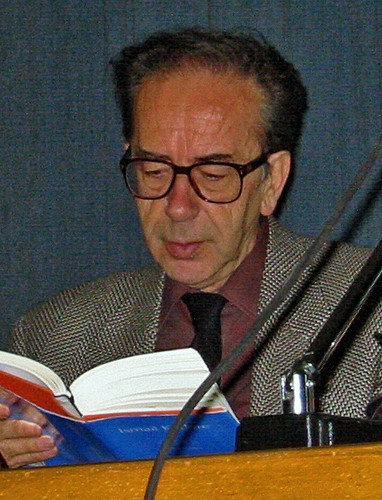
Ismail Kadare
Personal Information
Description
There is no description yet, we will add it soon.
Books
Doruntine
The brother that has been dead for years brought his sister home from a faraway land.
The General of the Dead Army
This sweeping epic of post-war Albania was Kadare’s first novel. Twenty years after the end of the Second World War, an Italian general is dispatched to Albania to recover his country’s dead. Once there he meets a German general who is engaged upon an identical mission and their conversations bring out into the open the extent of their horror and guilt, newly exacerbated by their present task. As they descend from the callous trivialities of their gruesome business, past and present, to suffering self-disgust, the author gives us glimpses of the lives of the people whose graves they are unearthing.
The Siege
In the early fifteenth century, as winter falls away, the people of Albania know that their fate is sealed. They have refused to negotiate with the Ottoman Empire, and war is now inevitable. Soon enough dust kicked up by Turkish horses is spotted from a citadel. Brightly coloured banners, hastily constructed minarets and tens of thousands of men fill the plain below. From this moment on, the world is waiting to hear that the fortress has fallen. The Siege tells the enthralling story of the weeks and months that follow – of the exhilaration and despair of the battlefield, the constantly shifting strategies of war, and those whose lives are held in balance, from the Pasha himself to the technicians, artillerymen, astrologer, blind poet and harem of women that accompany him. Brilliantly vivid, as insightful as it is compelling, The Siege is an unforgettable account of the clash of two great civilisations. As a portrait of war, it resonates across the centuries and confirms Ismail Kadare as one of our most significant writers.
Spring Flowers, Spring Frost
"In a small town at the foot of the northern highlands, life appears to go on as it always has, but people are in a state of shock. The robbery of a local bank is seen as a sign of modern times and of westernization in this backward Balkan land. At the same moment, the harsh blood-for-blood law of the mountain folk, the fearsome Kanun, like everything else forbidden under the fifty years of Communist rule, is emerging from hibernation.". "Other strange things occur. Mysterious events that are two thousand years, two centuries, or even two years old reemerge in daily life. The marriage of a girl and a snake is not just a legend but a news item - a cyclical event recurring every few hundred years that is as much a part of the modern as of the ancient world.". "In a desolate spot on the outskirts of the town, some people search for the entrance to a tunnel that is said to lead to the secret archives of the State. They're looking for evidence of their own crimes - or of hypothetical crimes they might have committed. People say that the ghostly likenesses of Hoxha, Brezhnev, Ulbricht, Thorez - and even Oedipus - have been seen lurking there."--BOOK JACKET.
The Palace of Dreams
At the heart of the Sultan's vast empire stands the mysterious Palace of Dreams. Inside, the dreams of every citizen are collected, sorted and interpreted in order to identify the 'master-dreams' that will provide the clues to the Empire's destiny and that of its Monarch. An entire nation's consciousness is thus meticulously laid bare and at the mercy of its government... The Palace of Dreams is Kadare's macabre vision of tyranny and oppression, and was banned upon publication in Albania in 1981.
The Three-Arched Bridge
When the construction of a bridge built to link the Balkans to Europe is repeatedly and mysteriously sabotaged, an old ballad starts making the rounds at local taverns. The bards sing of a legend – a woman immured in a castle wall to prevent it from falling. Some say the bridge is being damaged by local ferrymen, others blame the vengeful water spirits. But this is a town where terror and superstition reign and a solution must be reached. So it is decreed: a willing person must be plastered into the bridge…
The Accident
As dawn approaches in New York, literary agent Isabel Reed is turning the final pages of a mysterious, anonymous manuscript, racing through the explosive revelations about powerful people, as well as long-hidden secrets about her own past. In Copenhagen, veteran CIA operative Hayden Gray, determined that this sweeping story be buried, is suddenly staring down the barrel of an unexpected gun. And in Zurich, the author himself is hiding in a shadowy expat life, trying to atone for a lifetime’s worth of lies and betrayals with publication of The Accident, while always looking over his shoulder. Over the course of one long, desperate, increasingly perilous day, these lives collide as the book begins its dangerous march toward publication, toward saving or ruining careers and companies, placing everything at risk—and everyone in mortal peril. The rich cast of characters—in publishing and film, politics and espionage—are all forced to confront the consequences of their ambitions, the schisms between their ideal selves and the people they actually became. The action rockets around Europe and across America, with an intricate web of duplicities stretching back a quarter-century to a dark winding road in upstate New York, where the shocking truth about the accident itself is buried. Gripping, sophisticated, layered, and impossible to put down, The Accident proves once again that Chris Pavone is a true master of suspense.
Dialog me Alain Bosquet
Çdo dialog nuk është i plotë. Çdo rrëfim i një shkrimtari nuk do të kishte vlerë nëse nuk do të pyetej përfytyrimi i tij, pra, aftësia e tij për të fantazuar. Letërsia përbëhet prej hovesh, megjithëse të kontrolluara e të ruajtura, por jo prej bravash apo çelësash. Libri juaj i parë, “Gjenerali i ushtrisë së vdekur”, shkruar më 1960, kur ju ishit njëzet e katër vjeç, u botua në frëngjisht më 1970. Ai tregon shumë më tepër, sesa ajo që lexohet. U poq në mijëra ndërgjegje dhe është tërësia e vazhdimësive të tyre psikike, estetike e, ndoshta, sociale. Në këtë bisedë nuk kemi ndër mend që të gjejmë një të vërtetë të vetme, por të pohojmë se të vërtetat e tij janë të shumta, madje kontradiktore. Nuk besoj se biografia apo gjeografia do t’i mjaftonin atij për të dhënë një bazë shpjeguese. Në çdo parabolë një vend të rëndësishëm zë dykuptimshmëria. Ç’do të ishte, në fund të fundit një libër pa dykuptimshmëri? E hasim atë tek “Hamleti”, te “Berenisa” e Rasinit, te “Fausti” i Gëtes e më vonë te “Procesi” i Kafkës, apo në veprat e Bulgakovit... Le të hidhemi, nëse dëshironi, në morinë e pyetjeve që do të marrin përgjigje, gjithë duke pranuar njëkohësisht që përgjigje të tjera janë ose të dëshiruara, ose po aq mashtru-ese. Në një anketë, tradita kërkon t’i drejtohemi fëmijërisë së atij për të cilin bëhet fjalë. Është një metodë si të tjerat për të arritur një lloj objektivizmi... Kam folur gjerësisht për fëmijërinë time në librin “Kronikë në gur”. Megjithatë, diçka mund të shtoj. Jam nga një familje e vjetër e Gjirokastrës, dhe një nga gjërat e para që më ka habitur në fëmijëri ishte kundërtia midis shtëpisë sonë të madhe trekatëshe dhe jetës tepër modeste që bënim. Im atë ishte një nëpunës fare i thjeshtë, postier gjyqi (në vendin tonë kjo nuk kishte kuptimin e huissier), megjithatë, duke qenë djalë i vetëm i një dere të vjetër (tek ne, si kudo, i jepnin rëndësi kësaj), ai u martua me një vajzë të pasur. Nëna ime ishte vajza e një gjykatësi, që ishte njëkohësisht pronar tokash dhe i disa dyqaneve në qytet. Megjithatë, edhe pas martesës, im atë mbeti postier, madje me kalimin e viteve, jeta jonë keqësohej vazhdimisht. Në këtë kohë të turbullt (fillimi i viteve ’40), kur në Shqipëri frynin erëra fashiste e komuniste, ku ndihej se lufta civile do bënte kërdinë dhe ku ndihej fillimi i epokës komuniste, fjalët “i pasur” e “i varfër” merrnin një ngarkesë të rëndë, që shpesh përcaktonin në mënyrë fatale fatin e njeriut, skajimin e tij në jetë dhe, pa dyshim, karakterin e tij. Unë u rrita në një familje ku ishin thyer të gjitha klishetë e njohura. Kjo vinte sepse im atë, ndonëse i varfër, nuk e donte komunizmin, kurse familja e nënës, ndonëse e pasur, ishte e lidhur me të...
Twilight of the Eastern Gods
In 1958, Kadare was selected to pursue his writing and literary studies as a graduate student in Moscow at the prestigious Gorky Institute for World Literature. Twilight of the Eastern Gods is Kadare’s fictionalized re-creation of his time spent at this “factory of the intellect,” a place created to produce a new generation of poets, novelists, and playwrights, all adhering to the state-sanctioned “socialist realist” aesthetic. During his time at the Gorky Institute, a kind of miniature Soviet Union where writers from deepest Siberia, Kazakhstan, and the Caucasus all came to study, Kadare was caught up in the furor over Boris Pasternak’s Nobel Prize win, when the Soviet Union demanded that Pasternak refuse the foreign, bourgeois award or be sentenced to exile. Kadare’s time at the Institute, the drunken nights, corrupt professors, and enforced aesthetics are fictionalized in a novel that entwines Russian and Albanian myth with Soviet history. Twilight of the Eastern Gods is a portrait of a city and a story of youth, disenchantment, and the incredible importance of the written word.
Palace of Dreams
The familiars Aldwyn, Skylar, and Gilbert have defeated the evil Paksahara, but when Queen Loranella falls victim to a terrible curse, the familiars who are prime suspects must set out on a quest to prove their innocence and find a cure for the queen. Aldwyn, Skylar, and Gilbert must embark on a journey to clear their names and save a Vastia after a necklace they give to Queen Loranella puts her under a dangerous curse. The coauthor is Andrew Jacobson. Book #4
