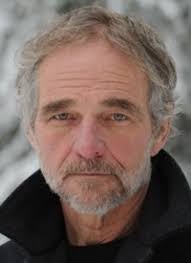
Richard Manning
Personal Information
Description
Richard "Dick" Manning is an environmental author and journalist, with particular interest in the history and future of the American prairie, agriculture and poverty. - Wikipedia
Books
Last Stand
In the last three decades of the nineteenth century, an American buffalo herd once numbering 30 million animals was reduced to twelve. It was the era of Manifest Destiny, a Gilded Age that treated the West as nothing more than a treasure chest of resources to be dug up or shot down. The buffalo in this world was a commodity, hounded by legions of swashbucklers and unemployed veterans seeking to make their fortunes. Supporting these hide hunters, even buying their ammunition, was the U.S. Army, which considered the eradication of the buffalo essential to victory in its ongoing war on Native Americans.Into that maelstrom rode young George Bird Grinnell. A scientist and a journalist, a hunter and a conservationist, Grinnell would lead the battle to save the buffalo from extinction. Fighting in the pages of magazines, in Washington's halls of power, and in the frozen valleys of Yellowstone, Grinnell and his allies sought to preserve an icon from the grinding appetite of Robber Baron America. Grinnell shared his adventures with some of the greatest and most infamous characters of the American West — from John James Audubon and Buffalo Bill to George Armstrong Custer and Theodore Roosevelt (Grinnell's friend and ally). A strikingly contemporary story, the saga of Grinnell and the buffalo was the first national battle over the environment. In Grinnell's legacy is the birth of the conservation movement as a potent political force.
Inside Passage
Brings new insights to the to the Pacific Northwest's most pressing environmental issues and concerns--suburban sprawl, the salmon crisis, deforestation, hydro-electric dams--and show us various innovative ways they are being addressed.
One round river
So much of the tortured ecological history of the American West has been played out in microcosm along the banks of the Blackfoot River in western Montana. Generations of abuse - from logging, grazing, mining, and now overdevelopment - have left this once vibrant waterway choked and gasping. And today a new threat looms: a massive gold mine hard by the river's edge. Here is the biography of a river, and like the best of that genre, it resonates far beyond the life of its particular central character. In telling the river's story, Richard Manning takes us as far back as the Salish tribe, who first settled its valley, on through the years of nation building and the influx of new Americans migrating west, to the new settlers of the nineties - the well-monied urban refugees who bring with them their own brand of waste and destruction. He carefully and eloquently chronicles the successive waves of cattle, of axes and chain saws, of bulldozers and dynamite that have bled the life from the river. This is also the story of gold, the lust for which is now the driving force toward what may be the river's ultimate demise. Finally, Manning offers a ground-level view of the battle currently raging in Montana to stop the mine and save the Blackfoot.
Against the grain
Development Co-operation: 2004 Report (Development Co-Operation Report: Efforts and Policies of the Members of the Development Assistance Committee)
Food's Frontier
"By now it is clear that the techniques of the first "Green Revolution," which averted mass starvation a generation ago - pesticides, chemical fertilizers, focusing on a few key crops - are threatening the food supply for future generations. This time, however, solutions to the dilemma seem most likely to come from the still-developing world, where the path to alternative methods and philosophies, based on indigenous knowledge and native crops as well as cutting-edge technology, is still open.". "Richard Manning reports on this new Green Revolution, assembling a mosaic portrait of the emerging face of agriculture and culture from pioneering research under way in Ethiopia, Zimbabwe, Uganda, India, China, Chile, Brazil, Mexico, and Peru. By bringing in the voices of scientists, farmers, and ordinary citizens and placing their stories in social and political context, Manning gives us an eye-opening look at how the world will feed itself in the decades to come. With particular attention to the perils and promise of bioengineering, he presents some surprising and controversial solutions to our most pressing environmental problem."--BOOK JACKET.