Discover

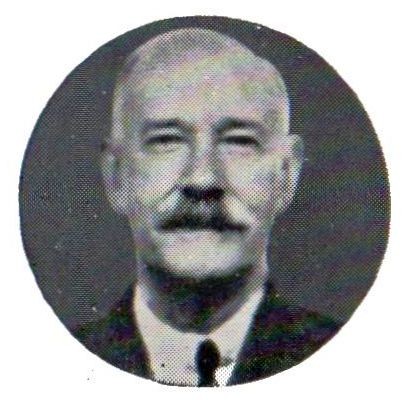
Richard H. Tawney

Personal Information

Born January 1, 1880
Died January 1, 1962 (82 years old)
Kolkata, United Kingdom of Great Britain and Ireland
Also known as: R. H. Tawney, Richard Henry Tawney
27 books
0.0 (0)
43 readers

Description

R. H. TAWNEY, English economist, was born in Calcutta, India, in 1880. He was educated at Rugby, and at Balliol College, Oxford. Shortly after leaving Oxford, he became a teacher of the classes for adult workers organized by the Workers Educational Association, of which he was president for sixteen years, and is now vice-president. From 1906 to 1908 he was an assistant in economics at Glasgow University, then for six years he was a teacher for tutorial classes of the Committee of Oxford University. He held a Chair of Economic History at the London School of Economics. Tawney was a member of the British Labour Party since 1906, and served on various public bodies, including the Coal Commission (1919), the Consultative Committee of the Board of Education (1913-1931), and the University Grants Committee (1943-1946). In 1942 he spent several months in Washington as economic and sociological adviser to the British Embassy. Tawney's three best-known books. Religion and the Rise of Capitalism, The Acquisitive Society, and Equality, gained for him an international reputation. Among his other books are: The Agrarian Problem in the Sixteenth Century; Land and Labour in China; and English Economic History. He died on 16th January 1962 at the age of 81.

Books

Newest First

Religion and the Rise of Capitalism

0.0 (0)
28

"In one of the classics of twentieth-century political economy, R.H. Tawney addresses the question of how religion has affected social and economic practices. He does this by a relentless tracking of the influence of religious thought on capitalist economy and ideology since the Middle Ages. In so doing he sheds light on why Christianity continues to exert a unique role in the marketplace. In so doing, the book offers an incisive analysis of the historical background of present morals and mores in Western culture."--Jacket.

The acquisitive society

0.0 (0)
7

“The faith upon which our economic civilization reposes, the faith that riches are not a means to an end but an end, implies that all economic activity is equally estimable whether it is subordinated to a social purpose or not.” So states R. H. Tawney in this treatise on the difference between an Acquisitive Society, one guided purely by profits, and a Functional Society, one guided by professional motives. In the former—which is largely the world we live in today—businesses are concerned only with making profit for their owners, who have little or no connection to the industry they own, and high-quality service and efficient use of labor is at best only a pleasant byproduct. Tawney contrasts this view of society with the latter society, in which businesses are run by professionals instead of owners. In this scenario, professional considerations not related to financial profit would lead to better service and higher efficiency, as well as happier workers. As an executive of the socialist Fabian Society, Tawney was considered one of the most influential historians of the early twentieth century, especially in politics, where he was a major contributor to the British Labour Party. His influence extended beyond Britain as well, and he has been credited with influencing the policies of Swedish Social Democrats.
