Discover

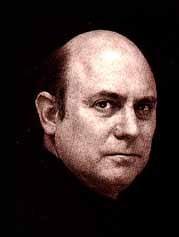
Peter Straub

Personal Information

Born March 2, 1943 (83 years old)
Milwaukee, United States
Also known as: PETER STRAUB
58 books
3.8 (84)
871 readers

Description

Peter Straub was born in Milwaukee, Wisconsin on 2 March, 1943, the first of three sons of a salesman and a nurse. The salesman wanted him to become an athlete, the nurse thought he would do well as either a doctor or a Lutheran minister, but all he wanted to do was to learn to read. When kindergarten turned out to be a stupefyingly banal disappointment devoted to cutting animal shapes out of heavy colored paper, he took matters into his own hands and taught himself to read by memorizing his comic books and reciting them over and over to other neighborhood children on the front steps until he could recognize the words. Therefore, when he finally got to first grade to find everyone else laboring over the imbecile adventures of Dick, Jane and Spot (“See Spot run. See, see, see,”), he ransacked the library in search of pirates, soldiers, detectives, spies, criminals, and other colorful souls, Soon he had earned a reputation as an ace storyteller, in demand around campfires and in back yards on summer evenings. This career as the John Buchan to the first grade was interrupted by a collision between himself and an automobile which resulted in a classic near-death experience, many broken bones, surgical operations, a year out of school, a lengthy tenure in a wheelchair, and certain emotional quirks. Once back on his feet, he quickly acquired a severe stutter which plagued him into his twenties and now and then still puts in a nostalgic appearance, usually to the amusement of telephone operators and shop clerks. Because he had learned prematurely that the world was dangerous, he was jumpy, restless, hugely garrulous in spite of his stutter, physically uncomfortable and, at least until he began writing horror three decades later, prone to nightmares. Books took him out of himself, so he read even more than earlier, a youthful habit immeasurably valuable to any writer. And his storytelling, for in spite of everything he was still a sociable child with a lot of friends, took a turn toward the dark and the garish, toward the ghoulish and the violent. He found his first “effect” when he discovered that he could make this kind of thing funny. As if scripted, the rest of life followed. He went on scholarship to Milwaukee Country Day School and was the darling of his English teachers. He discovered Thomas Wolfe and Jack Kerouac, patron saints of wounded and self-conscious adolescence, and also, blessedly, jazz music, which spoke of utterance beyond any constraint: passion and liberation in the form of speech on the far side of the verbal border. The alto saxophone player Paul Desmond, speaking in the voice of a witty and inspired angel, epitomized ideal expressiveness, Our boy still had no idea why inspired speech spoke best when it spoke in code, the simultaneous terror and ecstasy of his ancient trauma, as well as its lifelong (so far, anyhow) legacy of anger, being so deeply embedded in the self as to be imperceptible, Did he behave badly, now and then? Did he wish to shock, annoy, disturb, and provoke? Are you kidding? Did he also wish to excel, to keep panic and uncertainty at arm's length by good old main force effort? Make a guess. So here we have a pure but unsteady case of denial happily able to maintain itself through merciless effort. Booted along by invisible fears and horrors, this fellow was rewarded by wonderful grades and a vague sense of a mysterious but transcendent wholeness available through expression. He went to the University of Wisconsin and, after opening his eyes to the various joys of Henry James, William Carlos Williams, and the Texas blues-rocker Steve Miller, a great & joyous character who lived across the street, passed through essentially unchanged to emerge in 1965 with an honors degree in English, then an MA at Columbia a year later. He thought actual writing was probably beyond him even though actual writing was probably what he was best at - down crammed he many and many a book, stirred by

Books

Newest First

Black house

4.5 (4)
61

French Landing, Wisconsin - home of Kingsland Beer, the Piggly Wiggly supermarket, Goltz's farm implements, Maxton's old folk's home and Radio WDCU, the voice of the Coulee Country. A comfortable, solid middle-American town inhabited by comfortable, solid middle-Americans - and a serial killer. Ten-year-old Irma Freneau's mutilated body lies in the rotting ruins of Ed's Eats, Ice Cream & Dawgs in the woods close to the Black House. No one has discovered her yet; no one, that is, except for a host of flies and a wild dog. But her severed foot, complete with size 5 New Balance sneaker and an obscene note, is about to make its way home to French Landing, packed into a shoebox. Slippage is occurring in the Coulee Country. Three children have been lost to the world. Three children: slaughtered by a fiend with a taste for child's flesh. Linking the murders with those carried out by a previous century's serial killer, the local newspaper has dubbed the perpetrator 'The Fisherman', and if local police chief Dale Gilbertson doesn't catch the Fisherman soon, he'll lose his job and another French Landing mother will lose her child. If only Jack 'Hollywood' Sawyer - the ex-detective from LA who cracked their last case for them - would help, Dale might save his neck. But, plagued by visions of another world, Jack has retired to this pretty rural retreat at the early age of 35 precisely to avoid such horrors. And having recognized the touch of madness on this case, he has no wish to revisit the Territories whence such madness issues. Soon, he'll have no choice, for the Fisherman is about to select his fourth victim. Tyler Marshall, left behind one afternoon by his bullying friends, pedals past Maxton Elder Care and is accosted by a crow. 'Gorg,' it caws, and 'Ty.' It bobs and winks at him. What ten-year-old could resist a bird that speaks his name? Not Ty, that's for sure. And as he follows the crow towards the old folk's home, he is grabbed by the neck and dragged into a hedge. The Fisherman has made another catch... --front flap

Murder for Halloween

0.0 (0)
22

Monsters / Ed McBain -- The lemures / Steven Saylor -- The adventure of the dead cat / Ellery Queen -- The odstock curse / Peter Lovesey -- The theft of the Halloween pumpkin / Edward D. Hoch -- Hallowe'en for Mr. Faulkner / August Derleth -- Deceptions / Marcia Muller -- [Black Cat]( / Edgar Allan Poe -- Omjagod / James Grady -- The cloak / Robert Bloch -- What a woman wants / Michael Z. Lewin -- Yesterday's witch / Gahan Wilson -- Walpurgis night / Bram Stoker -- Trick or treat / Judith Garner -- One night at a time / Dorothy Cannell -- Night of the goblin / Talmage Powell -- Trick-or-treat / Anthony Boucher -- Pork pie hat / Peter Straub.

Houses without doors

0.0 (0)
17

This spectacular collection of 13 dark, haunting tales by bestselling author Straub exposes the terrors that hide beneath the surface of the ordinary world, behind the walls of houses without doors. "Straub at his spellbinding best".--Publishers Weekly.

Lost boy lost girl

4.0 (1)
15

A woman commits suicide for no apparent reason. A week later, her son--beautiful, troubled fifteen-year-old Mark Underhill--vanishes from the face of the earth. To his uncle, horror novelist Timothy Underhill, Mark's inexplicable absence feels like a second death. After his sister-in-law's funeral, Tim searches his hometown of Millhaven for clues that might help him unravel this mystery of death and disappearance. He soon learns that a pedophilic murderer is on the loose in the vicinity, and that shortly before his mother's suicide Mark had become obsessed with an abandoned house where he imagined the killer might have taken refuge. No mere empty building, the house on Michigan Street whispers from attic to basement with the echoes of a long-hidden true-life horror story, and Tim Underhill comes to fear that in investigating its unspeakable history, Mark stumbled across its last and greatest secret: a ghostly lost girl who may have coaxed the needy, suggestible boy into her mysterious domain.With lost boy lost girl, Peter Straub affirms once again that he is the master of literary horror.From the Hardcover edition.

Mrs. God

3.0 (1)
3

There was always talk of a hidden secret in Esswood's past, and the Seneschal children were often so pale and sickly, but don't all English manor houses have a few ghost stories to call their own? When Professor William Standish receives the rare honor of an Esswood Fellowship, he is thrilled beyond his wildest ambitions. But something seems slightly off at Esswood House. He hears faint laughter in the halls, the pitter-pattering of small feet in the night; strange faces appear in the windows of the library, and there are those giant dollhouses in the basement ...

A dark matter

3.0 (3)
3

In the 1960's campus guru, Spenser Mallon, demands sexual favors of his young acolytes. After he invites his most fervent followers to attend a secret ritual in a local meadow, the only thing that remains is a gruesomely dismembered body and the shattered souls of all who were present. Years later one man attempts to write a book to try to understand what happened.

Ghost story

3.6 (10)
3

When Jamal knocks over a dusty old book, he doesn't know it holds more than words. Ghostwriter has been let loose. What is that strange glowing light? And is it really possible that this ghost is lonely? There are a lot of unanswered questions. For now the kids will have to trust Ghostwriter. Something weird and scary is happening in the neighborhood, and they need his help. There are masked backpack thieves on the loose. Soon the team is on to the thieves, but what will happen when the thieves are on to the team?

Poe's Children

4.0 (2)
1

From the incomparable master of horror and suspense comes an electrifying collection of contemporary literary horror, with stories from twenty-five writers representing today's most talented voices in the genre.Horror writing is usually associated with formulaic gore, but New Wave horror writers have more in common with the wildly inventive, evocative spookiness of Edgar Allan Poe than with the sometimes-predictable hallmarks of their peers. Showcasing this cutting-edge talent, Poe's Children now brings the best of the genre's stories to a wider audience. Featuring tales from such writers as Neil Gaiman and Jonathan Carroll, Poe's Children is Peter Straub's tribute to the imaginative power of storytelling. Each previously published story has been selected by Straub to represent what he thinks is the most interesting development in our literature during the last two decades.Selections range from the early Stephen King psychological thriller "The Ballad of the Flexible Bullet," in which an editor confronts an author's belief that his typewriter is inhabited by supernatural creatures, to "The Man on the Ceiling," Melanie and Steve Rasnic Tem's award-winning surreal tale of night terrors, woven with daylight fears that haunt a family. Other selections include National Book Award finalist Dan Chaon's "The Bees"; Peter Straub's "Little Red's Tango," the legend of a music aficionado whose past is as mysterious as the ghostly visitors to his Manhattan apartment; Elizabeth Hand's visionary and shocking "Cleopatra Brimstone"; Thomas Ligotti's brilliant, mind-stretching "Notes on the Writing of Horror: A Story"; and "Body," Brian Evenson's disturbing twist on correctional facilities.Crossing boundaries and packed with imaginative chills, Poe's Children bears all the telltale signs of fearless, addictive fiction.From the Hardcover edition.
