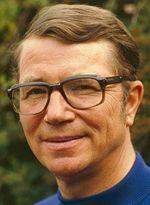
Colin Wilson
Description
Colin Henry Wilson was a British author who had written works on philosophy, true crime, and mysticism, as well as novels. He was born and raised in Leicester, England, the son of a factory worker. He attended school until he was 16, at which point he quit to work in a wool warehouse. He worked other odd jobs, including as a lab assistant and a civil servant, until he was called up to work as a clerk for the Royal Air Force. He worked there for six months until claiming that he was a homosexual in order to be dismissed. In 1956, his first book, The Outsider, was published.
Books
The encyclopedia of crime
A wide-ranging history of the world's most famous crimes and criminals. Includes: portraits of true crime's most extraordinary characters, from serial rapists to glamorous gangsters, from ruthless killers to train robbers; criminal activities and techniques--from safecracking to blackmail, from bodysnatching to cannibalism--and a range of weapons: lawnmowers, champagne, snakes, and even rolling pins; the science of crime, from footprints to genetic fingerprinting; methods to bring justice to convicted criminals, including prison, the guillotine, lethal injection, and the electric chair. And, throughout history, a lucky few make the break, leaving as their legacy tales of famous escapes, from Alcatraz or Dartmoor, San Quentin, or Aspen.--From publisher description.
The Black Room
Robert has come back from a horrible ordeal in a strange parallel world. Now he can't stop thinking about the people he left behind to face a winter that most won't survive. When Robert sees a chance to save his friend Lorn, he is desperate to succeed. But is he prepared for the realities of her world? Meanwhile, Lorn struggles to lead the little band of survivors, even as she feels herself drawn to a secret tunnel where an unknown menace lurks.Seamlessly blending fantasy with a hard-hitting survival tale, Gillian Cross has created a completely original psychological thriller.Praise for The Dark Ground: "Stark but rich, this novel offers readers an unusual and vivid experience." —The Bulletin of the Center for Children's Books
Amistad
Point Blank
"The members of the Sisterhood always stand together, and that includes aiding and protecting the men in their lives. Yoko's partner Harry Wong has received a phone call from his old schoolmate Jun Yu. Jun Yu resided at the same temple where Harry's daughter Lily was training, but they were all forced to evacuate. Jun Yu's managed to get his son out, but Lily is missing. And now Jun is trusting Harry to guard the most precious things in his life-- his wife Ling and their two children, whom he has smuggled to America. While long-time ally Pearl Barnes whisks Ling and her children to safety via her underground railroad, the Sisters and their allies head to the war room to make plans. Finding Lily is a top priority, and Kathryn's partner, Bert Navarro, comes up with a way for the group to travel to China. They'll go to Macau, nicknamed "the Monte Carlo of the Orient," on the pretext of opening a casino there. The odds are stacked against them, but when the Sisterhood is involved, you can always bet on the underdog..."--Amazon.com.
Rudolf Steiner
Rudolf Steiner, weltweit bekannt durch seine Weiterentwicklung von Goethes Weltanschauung auf den verschiedenen Gebieten des Kulturlebens, u.a. als Begründer der Waldorfpädagogik, eines erweiterten Heilwesens und der biologisch-dynamischen Landwirtschaft, ist als engagierter Historiker bisher kaum beachtet worden. Doch hat er als solcher in zahlreichen Vorträgen während des Ersten Weltkrieges die für die Beurteilung der Zeitgeschichte entscheidende Frage nach den Hintergründen dieses Geschehens in überraschender Weise beantwortet. Sein Hinweis auf dei bereits seit 1889 vorliegende Absicht einer Zerschlagung Deutschlands und Neuordnung Europas wirkt angesichts der Tatsache, daß diese Pläne inzwischen verwirklicht wurden, sensationell. Sind Kaiser Wilhelm II. und Adolf Hitler und durch sie das deutsche Volk Kriegsverursacher oder Kriegsopfer? Wer gestaltet Geschichte? Rudolf Steiners leidenschaftliche Stellungnahme gegen eine Unterzeichnung des Diktats von Versailles, das er bereits als Ursache eines neuen Krieges durchschaute, gewinnt 70 Jahre danach für den sogenannten Historikerstreit unserer Tage erstaunliche Aktualität. Darüber hinaus aber eröffnet Steiner eine Art dreidimensionaler Geschichtsbetrachtung, die weit über die Darstellung von Haupt- und Staatsaktionen hinausgeht. Aus solcher Sicht erhalten die Schicksale der Völker – und hier insbesondere des deutschen Volkes – einen tieferen und zukunftsweisenden Sinn. Der seit mehr als vier Jahrzehnten mit dem Lebenswerk Rudolf Steiners verbundene Verfasser ist bemüht, Steiner anhand einer Fülle von Aussagen möglichst selber sprechen zu lassen und diese in den jeweiligen historischen Zusammenhang zu stellen.
The Misfits
Kids who get called the worst names oftentimes find each other. That's how it was with us. Skeezie Tookis and Addie Carle and Joe Bunch and me. We call ourselves the Gang of Five, but there are only four of us. We do it to keep people on their toes. Make 'em wonder. Or maybe we do it because we figure that there's one more kid out there who's going to need a gang to be a part of. A misfit, like us. Skeezie, Addie, Joe, and Bobby—they've been friends forever. They laugh together, have lunch together, and get together once a week at the Candy Kitchen to eat ice cream and talk about important issues. Life isn't always fair, but at least they have each other—and all they really want to do is survive the seventh grade. That turns out to be more of a challenge than any of them had anticipated. Starting with Addie's refusal to say the Pledge of Allegiance and her insistence on creating a new political party to run for student council, the Gang of Five is in for the ride of their lives. Along the way they will learn about politics and popularity, love and loss, and what it means to be a misfit. After years of getting by, they are given the chance to stand up and be seen—not as the one-word jokes their classmates have tried to reduce them to, but as the full, complicated human beings they are just beginning to discover they truly are.
Introduction to The faces of evil
In the mid-1970s A&W Publishers of New York planned to publish a book by Colin Wilson entitled: The faces of evil. The publisher’s blurb read: "One of Britain’s foremost authors re-examines man’s haunting fear of evil, in mythology and history. Witches, the supernatural—Hitler, Stalin, Rasputin, and Richard the Third are re-appraised in an informative, fast-moving essay strikingly illustrated with historical reproductions and 30 original paintings." The book did not appear in print and all that remains is the substantial Introduction—over 80 pages in manuscript—written by Wilson and recently retrieved from an archive by Wilson scholar Vaughan Rapatahana.