
REPUBLIC OF VENICE AUTHOR · DESCRIPTION AND TRAVEL · HISTORY
Marco Polo
Also known as: Polo, Marco, MARCO POLO
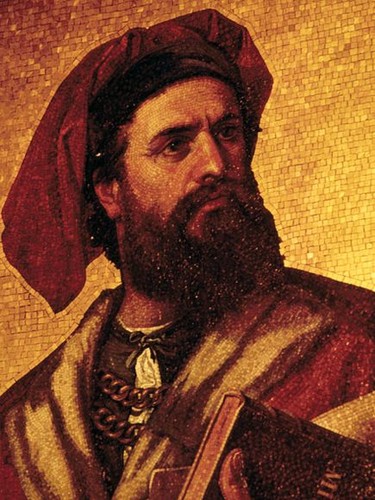
The Travels of Marco Polo, also known as The Book of the Marvels of the World (French: Livres des Merveilles du Monde) and by its Italian name Il Milione ("The Million"), is a 13th-century travelogue written down by Rustichello da Pisa from stories told by the Venetian explorer Marco Polo. It describes Polo's travels through Asia between 1271 and 1295, and his experiences at the court of Kublai Khan. The book was written by the romance writer Rustichello da Pisa, who worked from accounts which he had heard from Marco Polo when they were imprisoned together in Genoa. Rustichello wrote it in Franco-Venetian, a literary language widespread in northern Italy between the subalpine belt and the lower Po between the 13th and 15th centuries. It was originally known as Livre des Merveilles du Monde or Devisement du Monde ("Description of the World").
Florence has always been a popular destination for suicides.
— from Florence
Most acclaimed

Florence
From Goodreads: David Leavitt brings the wonders and mysteries of Florence alive, illuminating why it is, and always has been, one of the most popular tourist destinations in the world. The third in the critically-acclaimed Writer and the City Series-in which some of the world's finest novelists reveal the secrets of the cities they know best-Florence is a lively account of expatriate life in the 'city of the lily'. Why has Florence always drawn so many English and American visitors? (At the turn of the century, the Anglo-American population numbered more than thirty thousand.) Why have men and women fleeing sex scandals traditionally settled here? What is it about Florence that has made it so fascinating-and so repellent-to artists and writers over the years? Moving fleetly between present and past and exploring characters both real and fictional, Leavitt's narrative limns the history of the foreign colony from its origins in the middle of the nineteenth century until its demise under Mussolini, and considers the appeal of Florence to figures as diverse as Tchaikovsky, E.M. Forster, Ronald Firbank, and Mary McCarthy. Lesser-known episodes in Florentine history-the moving of Michelangelo's David, and the construction of temporary bridges by black American soldiers in the wake of the Second World War-are contrasted with images of Florence today (its vast pizza parlors and tourist culture). Leavitt also examines the city's portrayal in such novels and films as A Room with a View, The Portrait of a Lady and Tea with Mussolini.
New York
The bestselling master of historical fiction weaves a grand, sweeping drama of New York from the city's founding to the present day.Rutherfurd celebrates America's greatest city in a rich, engrossing saga that showcases his extraordinary ability to combine impeccable historical research and storytelling flair. As in his earlier, bestselling novels, he illuminates cultural, social, and political upheavals through the lives of a remarkably diverse set of families. As he recounts the intertwining fates of characters rich and poor, black and white, native born and immigrant, Rutherfurd brings to life the momentous events that shaped New York and America: the Revolutionary War, the emergence of the city as a great trading and financial center, the excesses of the Gilded Age, the explosion of immigration in the late nineteenth and early twentieth centuries, the trials of World War II, the near-demise of New York in the 1970s and its roaring rebirth in the '90s, and the attacks on the World Trade Center. Sprinkled throughout are captivating cameo appearances by historical figures ranging from George Washington to Abraham Lincoln to Babe Ruth.New York is the book that millions of Rutherfurd's American fans have been waiting for. A brilliant mix of romance, war, family drama, and personal triumphs, it gloriously captures the search for freedom and prosperity at the heart of our nation's history.From the Hardcover edition.
Istanbul
2003
A shimmering evocation, by turns intimate and panoramic, of one of the world’s great cities, by its foremost writer. Orhan Pamuk was born in Istanbul and still lives in the family apartment building where his mother first held him in her arms. His portrait of his city is thus also a self-portrait, refracted by memory and the melancholy—or hüzün—that all Istanbullus share. With cinematic fluidity, Pamuk moves from his glamorous, unhappy parents to the gorgeous, decrepit mansions overlooking the Bosphorus; from the dawning of his self-consciousness to the writers and painters—both Turkish and foreign—who would shape his consciousness of his city. Like Joyce’s Dublin and Borges’ Buenos Aires, Pamuk’s Istanbul is a triumphant encounter of place and sensibility, beautifully written and immensely moving.