Discover

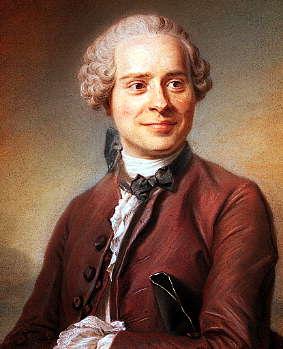
Jean Le Rond d'Alembert

Personal Information

Born January 1, 1717
Died January 1, 1783 (66 years old)
Paris, Kingdom of France
Also known as: Jean Le Rond d ' Alembert, Jean Le Rond d' Alembert
14 books
4.0 (1)
12 readers

Description

There is no description yet, we will add it soon.

Books

Newest First

Sermons

Henry Melvill, Frederick William Robertson, William Paley, William Nevins, Caesarius of Arles, Saint, Adolphe Monod, Robert Smith Candlish, Thomas De Witt Talmage, Henry Martyn, Phillips Brooks, Henry Edward Manning, George J. Mountain, John L. Girardeau, Mark Pattison, Peter Chrysologus, Saint, Archbishop of Ravenna, William Bernard Ullathorne, Jay, William, Laurence Sterne, Davies, Samuel, William Whiting, William Morley Punshon, Gregory T. Bedell, Henry Norman Hudson, Jean Le Rond d'Alembert, Samuel Cooper Thacher, Hugh Mackintosh, Lowell, Charles, Thomas Thellusson Carter, Archibald Alison, Charles Robert Maturin, Howard Crosby, John Guyse, Alfred Gatty, Augustine of Hippo, Henri-Dominique Lacordaire, Edward Dorr Griffin, Chapman, George T., Thomas Bradbury, Artom, Benjamin, Richard Winter Hamilton, John Donne, Logan, John, Jacques Bénigne Bossuet, Arnold, Thomas, Hedge, Frederic Henry, C. H. Spurgeon, Abiel Abbot, Henry Grattan Guinness, Thomas Chalmers, Charles Churchill, Patrick Augustine Sheehan, Charles Pettit McIlvaine, Hugh Blair, Thomas Gisborne, James Richards, Matthew Simpson, Thomas Binney, Samuel Stanhope Smith, John Owen, Rose Burghley, Bruce, Robert, Hugh Latimer, Charles Haddon Spurgeon, Joseph Butler, Samuel Horsley, George W. Bethune, Joseph Addison Alexander, Reginald Heber, Jean-Baptiste Massillon, Oscar A. Romero, Joseph Barber Lightfoot, Samuel Wilberforce, Erskine, Ralph, Clement Clarke Moore, John Caird, Thomas Somerville, Fuller, Richard, Ephraim Peabody, Henry Scott Holland
0.0 (0)
0

Œuvres de Crébillon: avec les notes de tous les commentateurs

0.0 (0)
0

Book digitized by Google from the library of Harvard University and uploaded to the Internet Archive by user tpb.

Encyclopaedic Liberty

0.0 (0)
1

Often described as the culmination of the French Enlightenment, the Encyclopédie was collected to not only serve as a comprehensive reference work, but to "change the way men think" about every aspect of the human and natural worlds. In his celebrated “Preliminary Discourse” to the compilation, d’Alembert traced an entire history of modern philosophy and science designed to chart the way toward a sweeping Baconian project of improving the world through usable knowledge. This anthology is the first endeavor to bring together the most significant political writing from the entire twenty-million-word compendium. It includes eighty-one of the most original, controversial and representative articles on political ideas, practices, and institutions, many translated into English for the first time.^ The articles cover such topics as the foundations of political order, the relationship between natural and civil liberty, the different types of constitutional regimes, the role of the state in economic and religious affairs, and the boundaries between manners, morals, and laws. In addition to Diderot’s early and important articles “Political Authority,” the “Citizen,” and “Natural Right” and the substantial treatments of subjects such as the “Legislator” (by Saint-Lambert), "Representation" (by d’Holbach), "Population" (by Damilaville), and "Political Economy" (by Quesnay), the anthology will also introduce to many English-language readers the tireless figure of Chevalier Louis de Jaucourt (1704–80), who wrote about 18,000 articles, or about 25 percent of the Encyclopédie.^ Jaucourt’s numerous articles on political topics did much to solidify the new political teachings of the natural-law tradition, the English Whig writers, the Huguenot diaspora, and particularly Montesquieu, whose Spirit of the Laws had appeared shortly before the first volume of the Encyclopédie itself. --

L'esprit de l'Encyclopédie, ou choix des articles les plus curieux, les plus agréables, les plus ...

0.0 (0)
0

Book digitized by Google from the library of Oxford University and uploaded to the Internet Archive by user tpb.
