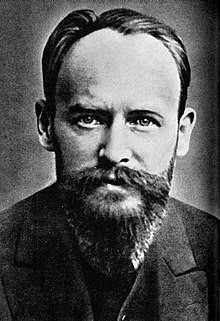
Christian Morgenstern
Personal Information
Description
Christian Otto Josef Wolfgang Morgenstern (6 May 1871 – 31 March 1914) was a German author and poet from Munich. Morgenstern married Margareta Gosebruch von Liechtenstern on 7 March 1910. He worked for a while as a journalist in Berlin, but spent much of his life traveling through Germany, Switzerland, and Italy, primarily in a vain attempt to recover his health. His travels, though they failed to restore him to health, allowed him to meet many of the foremost literary and philosophical figures of his time in central Europe. Source. [Christian Morgenstern]( on Wikipedia
Books
The great lalula and other nonsense rhymes
Twenty-seven nonsense rhymes by a German satirist include "The Snail's Monologue," "The Knee," and "The Stone Ox."
The three sparrows, and other nursery poems
Twenty-one nursery poems about animals, the seasons, trains, giants and other traditional themes, translated from the German.
Galgenlieder
"Christian Morgenstern (1871-1914) was a German poet, theosophist, and translator whose nonsense poems have been among the best-known and best-loved works in Germany throughout this century. Often compared to the drolleries of Lewis Carroll and Edward Lear, Morgenstern's poems are whimsical yet haunting, a rare blend of humor and odd metaphysical intimations." "Morgenstern wrote the first of his Golgenlieder after he and some friends had returned from a carefree outing past Gallows Hill near Potsdam and formed a "fraternal order of the gallows." His collection, published in Germany between 1905 and 1916, eventually comprised 286 poems. This new edition is a bilingual selection of some 90 poems from the original work. The reader is introduced to inventions like the clock that moves slowly or quickly as its sympathy for the clock watcher dictates; the luncheon newspaper that, when read, also satisfies one's hunger, the mail that is sent from a vacation retreat on the antlers or tails of bucks." "To translate Morgenstern is a daunting task, and Walter Arndt has succeeded brilliantly, following the poet's verbal acrobatics, his phonetic, semantic, and syntactic play with words and clauses, and, where possible, his trick of stripping discourse of conventions and pretensions by a bizarre literal interpretation of conventional phrases and metaphors. His translation of Morgenstern's poems of nonsense, or "supersense," will be treasured by scholars of the German lyric and by children of all ages."--Jacket.
La ratonera
Palmström and his friend Von Korf come up with a plan to get rid of a mouse who has taken over Palmström's house. "En esta historia fabulada, Palmström ve indefenso cómo un ratón se ha instalado en su casa. Gracias a su ingenioso amigo Von Korf, que lo ayuda con una brillante idea, al final todos acaban contentos, los amigos y el ratón"--p. of cover.
Nimm's leicht
Plutarch: Die Haubenlerche Aus dem altindischen Pantschatantra: Der zerbrochene Topf Aus dem 13. Jahrhundert: Das Gänslein Hans Folz: Drei listige Frauen Aus dem Hitopadesa: Vom Hund, dem Esel und dem Dieb Christian Hofmann von Hofmannswaldau: Drei Rätsel Unbekannt: Die Schildbürger und der Maushund Unbekannt: Till Eulenspiegel führt die Milchfrauen an der Nase herum Christian Weise: Olla Podrida Gotthold Ephraim Lessing: Die Haushaltung Liselotte von der Pfalz: Das Wunder Abraham a Santa Clara: Aus der Großen Totenbrüderschaft Magnus Gottfried Lichtwer: Der Vogel Platea und die Reiher Johann Wolfgang von Goethe: Vanitas! Vanitatum vanitas! Wolfgang Amadeus Mozart: Brief an die Cousine Maria Anna Thekla Mozart Heinrich Heine: Kleines Volk Ludwig Aurbacher: Seltsame Jagdpacht Johann Peter Hebel: Der Zahnarzt Johann Peter Hebel: Drei Worte Johann Gottfried Seume: Trotz kommt teuer zu stehen Valentin Schumann: Von einem Edelmann und einem Maler Volkstümliches aus Sachsen: Finster war's, der Mond schien helle Christian Morgenstern: Die Probe Heinrich Zschokke: Wahrheit gilt nichts Heinrich von Kleist: Charité-Vorfall Clemens Brentano: Der Meister vom Stuhle Ludwig Aurbacher: Der Korbmacher und seine Frau Des Knaben Wunderhorn: Selbstgefühl Ludwig Aurbacher: Soll ich? Oder soll ich nicht? Gebrüder Grimm: Kürdchen Bingeling Johann Ludwig Gericke: Wahrsagung der Zigeunerin Gebrüder Grimm: Doktor Allwissend Friedrich Rückert: Das Männlein in der Gans Ludwig Bechstein: Schwan, kleb an Musenklänge aus Deutschlands Leierkasten: Eduard und Kunigunde Hans Christian Andersen: Tölpelhans Franz von Pocci: Der Staatshämorrhoidarius Friedrich Hebbel: Die Mutprobe Wilhelb Busch: Die Täuschung Otto Julius Bierbaum: Die Haare der heiligen Fringilla Unbekannt: Doktor Eisenbart Carl Reinhardt: Thema mit Variationen Marie von Ebner-Eschenbach: Die Anhänger Ludwig Thoma: Der Kohlenwagen Wilhelm Busch: Eine unruhige Nacht Ludwig Thoma: Amalie Mettenleitner Gustav Hansen: Die Wassernot in Leipzig Frank Wedekind: Die Schutzimpfung Ludwig Thoma: Der Meineid Wilhelm Busch: Die wunderbare Bärenjagd August Gottlieb Meißner: Der Esel, der zu Markte geführt wird