Discover

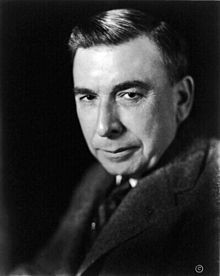
Booth Tarkington

Personal Information

Born January 1, 1869
Died January 1, 1946 (77 years old)
Indianapolis, United States
Also known as: Booth tarkington, Tarkington, Booth, 1869-1946.
53 books
3.8 (15)
130 readers

Description

There is no description yet, we will add it soon.

Books

Newest First

Cherry

3.7 (3)
17

"In this sequel, Karr dashes down the trail of the teen years with customary sass, only to run up against the paralyzing self-doubt of a girl in bloom. She flees the thrills and terrors of her sexual awakening by butting up against authority in all its forms - from the school principal to various Texas law officers. Looking for a lover or heart's companion who'll make her feel whole, she hooks up with an outrageous band of surfers and heads, wannable yogis and bone fide geniuses. There's Meredith, who tempers Karr's penchant for rock and roll with literary wit. And Donnie is the wild-man beach aficionado who crawls into her life "on his hands and knees like a reptile.""--BOOK JACKET.

Penrod Jashber

0.0 (0)
1

Continuing the adventures of Penrod Schofield begun by Tarkington in 1914, this book is a crowning achievment of American boyhood for the ages, centering around a fantasy by Penrod and his pals that they are super sleuths and private eyes extraordinaire. A background in the previous two novels will help; this is the least stand alone work in the trilogy; and an understanding of temporal context and attitudes is a must, but this inexplicably obscure work of th American canon is a pure and simple joy as well as an indispensable volume of turn of the 20th century Americana and a keystone of the genre alongside Frank Merriwell and Tom Sawyer.

The midlander

0.0 (0)
4

National Avenue, originally titled The Midlander, is Booth Tarkington’s final entry in his Growth Trilogy. Like the previous entries in the series, National Avenue addresses the rapid industrialization of small-town America at the turn of the century, and the socioeconomic changes that such change brings with it. Dan Oliphant and his brother Harlan are the children of a wealthy small-town businessman. Harlan is a traditional upper-class man—affecting an accent, dressing for dinner, and contemplating beauty and culture—while Dan is boisterous and lively, eager to do big things. Dan sees the rise of industry in America’s east as a harbinger for his own Midwestern town, and sets his mind on building an industrial suburb, Ornaby Addition, next to his city’s downtown. Dan’s idea is met with scorn and mockery from not only his family, but also his fellow townspeople. Dan persists nonetheless, and soon the town must contend with his dream becoming a reality: noisy cars, smoky factories, huge, unappealing buildings, and the destruction of nature and the environment become the new normal as Dan’s industrial dream is realized. Where The Turmoil focuses on industrialization’s effect on art and culture, and The Magnificent Ambersons focuses on industry’s destruction of family and of small-town life, National Avenue focuses on the men and women who actually bring that change about. Dan is portrayed sympathetically, but Tarkington makes it clear that his dreams and choices lead to a deeply unhappy family life and the ruination of the land around him. But can Dan really be faulted for his dream, or is industry inevitable, and inevitably destructive?

The turmoil, a novel

0.0 (0)
1

Booth Tarkington grew up in Indianapolis, and attended Princeton University. He set much of his fiction in Indiana. Tarkington was one of the more popular novelists of his time, and in 1921 booksellers rated him in a poll as the most significant contemporary American author. -Wikipedia entry for Tarkington

The Conquest of Canaan

0.0 (0)
1

A dry snow had fallen steadily throughout the still night, so that when a cold, upper wind cleared the sky gloriously in the morning the incongruous Indiana town shone in a white harmony - roof, ledge, and earth as evenly covered as by moonlight. There was no thaw; only where the line of factories followed the big bend of the frozen river, their distant chimneys like exclamation points on a blank page, was there a first threat against the supreme whiteness.

The man from home

0.0 (0)
1

SCENE: The terrace of the Hotel Regina Margherita, on the cliff at Sorrento, overlooking the Bay of Naples.There is a view of the bay and its semi-circular coast-line, dotted with villages; Vesuvius gray in the distance. Across the stage at the rear runs a marble balustrade about three feet high, guarding the edge of the cliff. Upon the left is seen part of one wing of the hotel, entrance to which is afforded by wide-open double doors approached by four or five marble steps with a railing and small stoop. The hotel is of pink and white stucco, and striped awnings shield the windows. Upon the right is a lemon grove and shrubberies. There are two or three small white wicker tea-tables and a number of wicker chairs upon the left, and a square table laid with white cloth on the right.As the curtain rises mandolins and guitars are heard, and the "Fisherman's Song," the time very rapid and gay, the musicians being unseen.

Ramsey Milholland

0.0 (0)
0

The old man and the little boy, his grandson, sat together in the shade of the big walnut tree in the front yard, watching the Decoration Day Parade, as it passed up the long street; and when the last of the veterans was out of sight the grandfather murmured the words of the tune that came drifting back from the now distant band at the head of the procession.

Rumbin galleries

0.0 (0)
0

Mr. Rumbin, art dealer, and his young assistant are honest with clients but sharp with other dealers.

Penrod

0.0 (0)
0

Saga of an American boyhood.

Booth Tarkington : Novels & Stories : The Magnificent Ambersons / Alice Adams / In the Arena

0.0 (0)
0

Here are three indispensable works from the Pulitzer Prize-winning laureate of the American heartland, including the novels that inspired a classic film by Orson Welles and an Oscar-nominated performance by Katharine Hepburn. The Magnificent Ambersons depicts the fall from grace of George Minafer, scion of the once-unassailable Amberson family whose wealth and grandeur are in precipitous decline. Alice Adams, perhaps Booth Tarkington's greatest work, offers a psychologically nuanced portrait of a self-aware young woman whose social prospects are rapidly diminishing. Tarkington's gifts as a story writer are displayed in the collection In the Arena: Stories of Political Life, published not long after he served as an Indiana state representative and drawing unforgettable from his firsthand encounter with the rough-and-tumble of real-world politics. With original illustrations from the first editions, helpful annotation, and a newly researched chronology of Tarkington's life and career.
