Discover

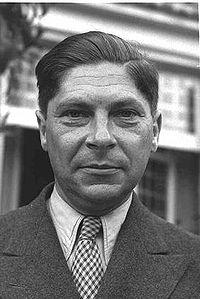
Arthur Koestler

Personal Information

Born September 5, 1905
Died March 1, 1983 (77 years old)
Budapest, Austria–Hungary
Also known as: Kösztler Artúr, A. Koestler
42 books
4.1 (35)
498 readers

Description

Arthur Koestler CBE was a prolific writer of essays, novels and autobiographies. He was born into a Hungarian Jewish family in Budapest but, apart from his early school years, was educated in Austria. His early career was in journalism. In 1931 he joined the Communist Party of Germany but, disillusioned, he resigned from it in 1938 and in 1940 published a devastating anti-Communist novel, Darkness at Noon, which propelled him to instant international fame.

Books

Newest First

Spartacus

4.0 (2)
17

Spartacus, a fictionalization of a slave revolt in ancient Rome in 71 B.C., is well known today partly because of the 1960 movie starring Kirk Douglas and Laurence Olivier. It was originally published in 1951 by the author himself, after being turned down by every mainstream publisher of the day because of Fast's blacklisting for his Communist Party sympathies. The story of Spartacus, born a slave, trained as a gladiator, who led a slave revolt that was eventually put down by Crassus, was immensely popular, has sold millions of copies, and has gone through nearly a hundred editions. The appearance of this title in the North Castle series brings back into print a book that many regard as a classic, and is enhanced with a new Introduction by the author.

Croisade sans croix

0.0 (0)
0

I read the book around 1964 in French. I cannot remember any thing but 1/ it was set in the Spanish Civil War, 2/ a story right at the first pages as fallows: A young guy, probably the main character in further development, wished to join the Resistance in deep jungle. He was discouraged by people who told him about feral animals, snakes...government police... But he takes the adventure successfully. Then he got the idea that people just talked about what they didn't really encounter. Later the guy was arrested, tortured and broke down, revealed his cell members' identities. The same people laughed at him, made fun with his "cowardice". He told himself, they've never been tortured to know that because of the torture one is no more one, unable to control the mind. In both case, they just talked, without live experience. In the real life, Arthur Koestler was tortured by Gestapo but he didn't break down.

The Yogi and the Commissar

0.0 (0)
16

The Yogi and the Commissar (1945) is a collection of essays of Arthur Koestler, divided in three parts: Meanderings, Exhortations and Explorations. In the first two parts he has collected essays written from 1942 to 1945 and the third part was written especially for this book. In the title essay, Koestler proposes a continuum of philosophies for achieving "heaven on earth", from the Commissar at the materialist, scientific end of the spectrum, to the Yogi at the spiritual, metaphysical end. The Commissar wants to change society using any means necessary, while the Yogi wants to change the individual, with an emphasis on ethical purity instead of on results. (Source: [Wikipedia](

The lotus and the robot

0.0 (0)
25

A collection of essays about Koestler's experiences in India and Japan, especially his observation of religion and cultural practices.

The ghost in the machine

4.7 (3)
61

The Ghost in the Machine is a work in philosophical psychology published in 1967. The title is a phrase coined by the Oxford philosopher Gilbert Ryle to describe the Cartesian dualist account of the mind–body relationship. Koestler shares with Ryle the view that the mind of a person is not an independent non-material entity, temporarily inhabiting and governing the body. One of the book's central concepts is that as the human brain evolved, it retained and built upon earlier, more primitive brain structures. The work attempts to explain humanity's tendency towards self-destruction in terms of brain structure, philosophies, and its overarching, cyclical political–historical dynamics, reaching the height of its potential in the nuclear arms arena. Note: Although he appropriated Ryle's phrase for his title and shared some of his views, Koestler had a pretty low opinion of Ryle himself -- he dismissed him as a 'snickering' Oxford don with no knowledge of any of the sciences that would have given his ideas more weight. Ryle nevertheless had the philosopher's gift for analogy, and used a number of metaphors for the mind-body problem, all of which could have supplied titles: they included 'the sealed signal box', 'the two parallel theatres' and 'the horse in the locomotive'.

Sonnenfinsternis

4.2 (15)
120

Darkness at Noon (German: Sonnenfinsternis) is a novel by Hungarian-born British novelist Arthur Koestler, first published in 1940. His best known work, it is the tale of Rubashov, an Old Bolshevik who is arrested, imprisoned, and tried for treason against the government that he helped to create. The novel is set in 1939 during the Stalinist Great Purge and Moscow show trials. Despite being based on real events, the novel does not name either Russia or the Soviets, and tends to use generic terms to describe people and organizations: for example the Soviet government is referred to as "the Party" and Nazi Germany is referred to as "the Dictatorship". Joseph Stalin is represented by "Number One", a menacing dictator. The novel expresses the author's disillusionment with the Bolshevik ideology of the Soviet Union at the outset of World War II. In 1998, the Modern Library ranked Darkness at Noon number eight on its list of the 100 best English-language novels of the 20th century, even though Koestler wrote it in German. (Source: [Wikipedia](

The Roots of Coincidence

0.0 (0)
29

The Roots of Coincidence is a 1972 book by Arthur Koestler. It is an introduction to theories of parapsychology, including extrasensory perception and psychokinesis. Koestler postulates links between modern physics, their interaction with time and paranormal phenomena. It is influenced by Carl Jung's concept of synchronicity and the seriality of Paul Kammerer. In the book Koestler argues that science needs to take the possibility of the occurrence of phenomena that are outside our common sense view of the world more seriously and study them. He concludes that paranormal events are rare, unpredictable and capricious and need a paradoxical combination of skillful scientific experiment with a childlike excitement to be seen and recorded. The psychologist David Marks criticized the book for endorsing pseudoscience. Marks noted that Koestler uncritically accepted ESP experiments and ignored evidence that did not fit his hypothesis. In The Psychology of the Psychic Marks coined the term "Koestler's Fallacy" as the assumption that odd matches of random events cannot arise by chance. Marks illustrates the fact that such odd matches do regularly occur with examples from his own experience. John Beloff gave the book a mixed review, describing it as "a typical Koestlerian performance" but noting that some of his claims about psychical research were inaccurate. (Source: [Wikipedia](

The God that failed

4.0 (1)
27

The God That Failed is a classic work and crucial document of the Cold War that brings together essays by six of the most important writers of the twentieth century on their conversion to and subsequent disillusionment with communism. In describing their own experiences, the authors illustrate the fate of leftism around the world. André Gide (France), Richard Wright (the United States), Ignazio Silone (Italy), Stephen Spender (England), Arthur Koestler (Germany), and Louis Fischer, an American foreign correspondent, all tell how their search for the betterment of humanity led them to communism, and the personal agony and revulsion which then caused them to reject it. This central work of the time recounts the tumultuous events of the era, providing essential background.

Spanish Testament

0.0 (0)
2

Arrested by Franco's troops in 1937 while he was in Malaga as a foreign correspondent covering the civil war, and sentenced to death for espionage, Arthur Koestler awaited his execution in Seville prison for three months. A Spanish Testament’, first published in England in 1937, recounts in the form of a prison dialogue this waiting, this dialogue with himself, this meditation on life and death from which Koestler, a man of action, could not escape. The circumstances in which these pages were published at the time forced Koestler to silence certain essential facts, in particular his membership of the Communist Party, his links with the Komintern and his relations with the Spanish Republicans. In 1966, Koestler decided to correct his memoirs and present the reader with a complete version of the events, renamed Dialogue with Death*.
