Discover

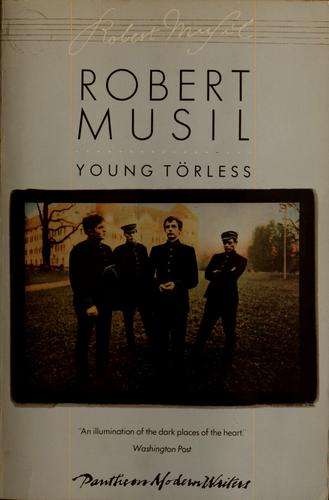
Die Verwirrungen des Zöglings Törless

Minsik readers
0.0
0 ratings
Other platforms
4.0
1 ratings
192
PAGES
~3h 12min
READING TIME
English
LANGUAGE
Penguin Books 12 views
ISBN
3498092863, 9783498092863
Editions
Paperback
Hardcover
12 views
Minsik want to read: 0
Minsik reading: 0
Minsik read: 0
Open Library want to read: 0
Open Library reading: 0
Open Library read: 0

About Author

Robert Musil

Robert Musil ( 6. November 1880 in St. Ruprecht bei Klagenfurt; † 15. April 1942 in Genf) war ein österreichischer Schriftsteller und Theaterkritiker. Für sein literarisches Schaffen waren der Erste Weltkrieg sowie die Errichtung der nationalsozialistischen Herrschaft in Deutschland und Österreich bedeutsame Einschnitte. Musils Werk umfasst Novellen, Dramen, Essays, Kritiken und zwei Romane: 1906 erschien Die Verwirrungen des Zöglings Törleß, ein vielfach auch als Schullektüre genutztes Werkbeispiel der literarischen Moderne. An seinem zur Weltliteratur zählenden Hauptwerk Der Mann ohne Eigenschaften, das von autobiographischen Aspekten mitbestimmt ist, hat Musil seit den 1920er Jahren bis zu seinem Tode fortlaufend gearbeitet, ohne es abschließen zu können.

First sentence

A little station on the stretch leading towards Russia...

Description

The Confusions of Young Törless (German: Die Verwirrungen des Zöglings Törleß), or Young Törless, is the literary debut of the Austrian philosophical novelist and essayist Robert Musil, first published in 1906. Musil's novel is ostensibly a Bildungsroman, a story of a young disoriented man searching for moral values in society and their meaning for him. The expressionistic novel, based on Musil's personal experiences at a boarding school in Hranice (in Austria-Hungary, now in the Czech Republic) was written according to Musil "because of boredom". In later life, however, Musil denied that the novel was about youthful experiences of his own. Due to its explicit sexual content, the novel at first caused a scandal among the reading public and the authorities of Austria-Hungary. Later, various prefigurings of Fascism were identified in the text, including the characters of Beineberg and Reiting, who seem to be orderly pupils by day but shamelessly abuse their classmate psychologically, physically and sexually by night.

Detailed Ratings

0.0Emotional Impact
No ratings yet
0.0Intellectual Depth
No ratings yet
0.0Writing Quality
No ratings yet
0.0Rereadability
No ratings yet
0.0Pacing
No ratings yet
0.0Readability
No ratings yet
0.0Plot Complexity
No ratings yet
0.0Humor
No ratings yet