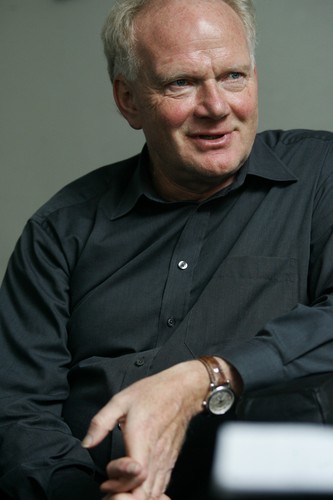
Ulrich Beck
Personal Information
Description
German sociologist & scholar
Books
Gegengifte
Ecological Politics in and Age of Risk by Ulrich Beck is an original analysis of ecological politics as one part of a renewed engagement with the domain of sub-politics. (Source: [Wiley-VCH](
Risikogesellschaft
"Underpinning the analysis is the notion of the 'risk society'. The changing nature of society's relation to production and distribution is related to the environmental impact as a totalizing, globalizing economy based on scientific and technical knowledge becomes more central to social organization and social conflict." -- Publisher's description.
Science fiction
Kinder der Freiheit
Die Kinder der Freiheit praktizieren eine suchende, eine versuchende Moral, die verbindet, was sich auszuschließen scheint: Selbstverwirklichung und Dasein für andere. Am Ende läuft dies darauf hinaus, den Gemeinwohl-Verwaltern das Monopol der Gemeinwohl-Definition streitig zu machen. Die Menschen sind zukunftsfähiger als die gesellschaftlichen Institutionen und Repräsentanten. Es gilt zu entdecken und zu erkennen, daß der säkulare Wandel die Voraussetzungen zu seiner Bewältigung miterzeugt - Voraussetzungen, nicht die Gewähr, und auch dies nur teilweise.
World at Risk
'World at Risk' is a timely and far-reaching analysis of the structural dynamics of the modern world, the global nature of risk and the future of global politics by one of the most original and exciting social thinkers writing today.
Power in the Global Age
"This new book throws light on the global power games being played out between global business, nation-states and movements rooted in civil society. Ulrich Beck offers an account of the changing nature of power in the global age and assesses the influence of the ever-expanding counter-powers." "The author puts forward the provocative thesis that, in an age of global crises and risks, a politics of 'golden handcuffs' - the creation of a dense network of transnational interdependencies - is exactly what is needed in order to regain national autonomy, not least in relation to a highly mobile world economy. It is imperative that the maxim of nation-based realpolitik - that national interests have necessarily to be pursued by national means - be replaced by the maxim of cosmopolitan realpolitik. The more cosmopolitan our political structures and activities. Beck suggests, the more successful they will be in promoting national interests, and the greater our individual power in this global age will be."--BOOK JACKET.
A God of One's Own: Religion's Capacity for Peace and Potential for Violence
Religion posits one characteristic as an absolute: faith. Compared to faith, all other social distinctions and sources of conflict are insignificant. The New Testament says: 'We are all equal in the sight of God'. To be sure, this equality applies only to those who acknowledge God's existence. What this means is that alongside the abolition of class and nation within the community of believers, religion introduces a new fundamental distinction into the world the distinction between the right kind of believers and the wrong kind. Thus overtly or tacitly, religion brings with it the demonization of believers in other faiths. The central question that will decide the continued existence of humanity is this: How can we conceive of a type of inter-religious tolerance in which loving one's neighbor does not imply war to the death, a type of tolerance whose goal is not truth but peace? Is what we are experiencing at present a regression of monotheistic religion to a polytheism of the religious spirit under the heading of 'a God of one's own'? In Western societies, where the autonomy of the individual has been internalized, individual human beings tend to feel increasingly at liberty to tell themselves little faith stories that fit their own lives to appoint 'Gods of their own'. However, this God of their own is no longer the one and only God who presides over salvation by seizing control of history and empowering his followers to be intolerant and use naked force. -- Publisher description.
CONVERSATIONS WITH ULRICH BECK; TRANS. BY MICHAEL POLLAK
"Ulrich Beck is widely recognized as one of the most important and influential contemporary social thinkers. His work on risk society and his more recent writings on globalization and individualization have put him at the forefront of contemporary debates. These conversations succeed in shedding new light on these major themes as well as providing as insight into some of the commitments and beliefs that underlie them." "This new book presents Beck's ideas in an extremely clear and lucid manner, and is thus ideal for anyone seeking to come to grips with Beck's work."--Jacket.
COSMOPOLITAN VISION; TRANS. BY CIARAN CRONIN
"In this new book, Ulrich Beck develops his now widely used concepts of second modernity, risk society and reflexive sociology into a radical new sociological analysis of the cosmopolitan implications of globalization. Beck draws extensively on empirical and theoretical analyses of such phenomena as migration, war and terror, as well as a range of literary and historical works, to weave a rich discursive web in which analytical, critical and methodological themes intertwine effortlessly. Contrasting a 'cosmopolitan vision' or 'outlook' sharpened by awareness of the transformative and transgressive impacts of globalization with the 'national outlook' neurotically fixated on the familiar reference points of a world of nations-states-borders, sovereignty, exclusive identities-Beck shows how even opponents of globalization and cosmopolitanism are trapped by the logic of reflexive modernization into promoting the very processes they are opposing. A persistent theme running through the book is the attempt to recover an authentically European tradition of cosmopolitan openness to otherness and tolerance of difference. What Europe needs, Beck argues, is the courage to unite forms of life which have grown out of language, skin colour, nationality or religion with awareness that, in a radically insecure world, all are equal and everyone is different." -- from book cover.
