Discover

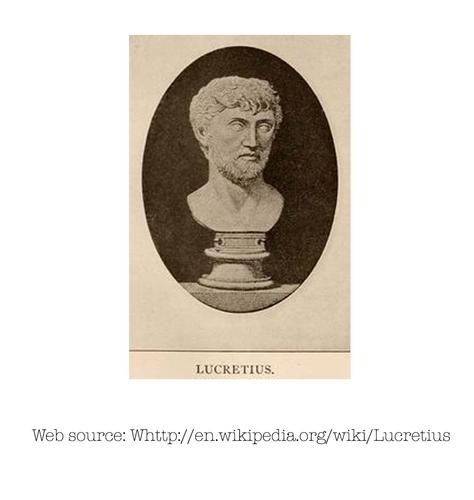
Titus Lucretius Carus

Personal Information

Born March 7, 1999
Died March 7, 2055 (56 years old)
Pompeii, Ancient Rome
Also known as: Tito Lucretio Caro, Tito Lucrecio Caro
17 books
3.8 (15)
445 readers

Description

There is no description yet, we will add it soon.

Books

Newest First

De rerum natura

3.8 (15)
434

This is regarded as a seminal text of Epicurean science and philosophy. Epicurians discarded both the idea of immortality and the superstitious worship of wilful gods for a life of serene contentment in the available pleasures of nature. Lucretius (c100-c55BC), in elucidating this belief, steers the reader through an extraordinary breadth of subject matter, ranging from the indestructibility of atoms and the discovery of fire to the folly of romantic love and the phenomena of clouds and rainstorms.

NATURE OF THINGS; TRANS. BY A.E. STALLINGS

0.0 (0)
0

"Lucretius was a Roman philosopher and poet of the first century BC whose only known work is The Nature of Things (c.50 BC), a didactic poem in six books that expounds his philosophical beliefs. He followed Epicurean ideas, believing the world to be made up of tiny atoms moving in a void and viewing life in terms of pleasure and pain, representing good and bad. The Nature of Things was to have a huge influence on poets such as Virgil (whose Georgics was written only a generation later) and was to affect the course of western literature as a whole.". "A. E. Stalling's new translation is in rhyming couplets and uses modern terminology to reflect the impact of the original poem. Richard Jenkyns's introduction explores Lucretius' beliefs and his influence on subsequent literature. This edition also includes a preface, suggestions for further reading and notes."--BOOK JACKET.
