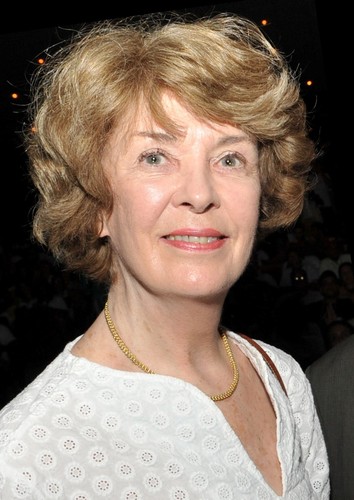
Susan George
Personal Information
Description
American and French political and social scientist, activist and writer
Books
Hijacking America
"George Bush leaves the White House in January 2009 and the United States goes back to "normal", right? Wrong, argues Susan George in this fascinating, thorough and often chilling account of the decades-long transformation of American society and political culture. Using the four "Ms"--Money, media, marketing, management--but above all with a keen sense of mission, the American secular and religious right has made its "long march through the institutions" and changed the way Americans think. As the left went about its business in blissful ignorance, convinced that its policies, programmes and projects spoke for themselves and would always prevail; the right's well-oiled machine of foundations, lobbies, think-tanks, publications, political cadres, lawyers and activist organisations slowly and strategically took over. A broad alliance of neo-liberals, neo-conservatives and the religious right successfully manufactured a new common sense, assaulted Enlightenment values and targeted the top of society where culture is created and legitimized, because they knew that ideas have consequences--and not just in the United States. Hijacking America is that rarity of a book, a thoroughly researched page-turner. Clearly and gracefully written, it will enthral the general reader while providing plenty of factual nourishment for the student of politics, culture, religion or international relations. And for all those who hope for a different America in the future, the first step is to hold the present one up to the light and understand how it got that way."-- Publisher description.
Religion And Technology in the 21st Century
"This book examines the unique synergy between religion and technology, and explores the many ways that technology is shaping religious expression, as well as ways that religion is coming to influence technology"--Provided by publisher.
Another World Is Possible If
"Whether you are a seasoned campaigner and confirmed "world-changer," someone who wonders how you can join in the movement, or someone who simply wants to know what it is all about, this book is for you. You will discover that we are not condemned to glaring North-South inequalities, obscene wealth gaps, environmental destruction or inordinate power remaining in the hands of a small minority."--Jacket.
Faith and credit
In its fifty years of existence, the World Bank has influenced more lives in the Third World than any other institution, yet it remains largely unknown, even enigmatic. Although it claims to be a purely economic institution, the Bank wields enormous political power and has succeeded in making its own view of development appear to be the norm. In this richly illuminating and lively overview, Susan George and Fabrizio Sabelli examine the Bank's policies, its internal culture, and the interests it serves. They reveal a supranational, non-democratic, and extremely powerful institution that functions much like the medieval church or a monolithic political party, relying on rigid doctrine, hierarchy, and a rejection of dissenting ideas to perpetuate its influence. Its faith in orthodox economics, the idea of perpetual growth, and the capacity of the market to solve development problems is incompatible with its professed goals of helping the poor and protecting the environment. Faced with these contradictions, the Bank is increasingly struggling to reconcile the roles of commercial lender, policymaker, and great humanitarian. This book is crucial reading for any one interested in development and economy of the Third World, especially for international, political, and development economists.
Shadow Sovereigns
"Lobbying has long been part of the political landscape. But in recent years links between big business and government have become stronger and more far-reaching than ever. Global corporations now demand control over decisions affecting labour laws, finance, public health, food and agriculture, safety regulations, taxes and international trade and investment. They even claim the right to private tribunals where they can sue governments for passing laws that could harm their present or future profits.These business elites don t want to govern directly. They operate behind the scenes - directing planning, setting standards and fashioning government to maximise their own profits. Thanks to the UN Global Compact they have extended their influence to the highest levels of multilateral decision-making and now, via the Davos-inspired Global Redesign Initiative, they are setting their sights on managing world-wide public policy. Elected by and accountable to no one, secretive and highly organized, these shadow sovereigns are destroying the very notion of the common good and making a mockery of democracy. It is high time we challenged this assault on our rights and our institutions. In this incisive and clear-sighted book Susan George provides us with the practical knowledge to do just that"--Publisher description.
La pensée enchaînée
L'auteure part du constat que dans différents pays occidentaux il y a eu glissement vers la droite de l'ensemble du paysage politique. Elle explique ces évolutions en décrivant ce qui se passe aux Etats-Unis : d'après elle, la prise de pouvoir de la droite est la conséquence d'un mouvement de fond démarré dès la fin de la Seconde Guerre mondiale.
Eine andere Welt ist möglich! Dokumentation des Attac-Kongresses vom 19.–21.10.2001 in Berlin
Die Dokumentation der ersten deutschlandweiten Konferenz von Attac spannt einen Bogen über das beeindruckende Themenspektrum dieses globalisierungskritischen Bündnisses und zeigt Wege des erfolgreichen Engagements für eine »andere Welt« auf. »Globalisierung ist kein Schicksal – eine andere Welt ist möglich!« – unter diesem Motto diskutierten im Oktober 2001 die mehr als 3.000 TeilnehmerInnen des ersten deutschlandweiten Attac-Kongresses in Berlin über die Folgen neoliberaler Globalisierung und Alternativen zu ihr. Neben den Podiumsdiskussionen bestand für die TeilnehmerInnen in über 70 Arbeitsgruppen viel Raum zu spannender und auch kontroverser Diskussion. »Dieser Kongress«, so Susan George, »hat gezeigt, dass es auch zu schwierigen Themen wie der neoliberalen Globalisierung Massenbewegungen geben kann. Die Kritiker sind nicht mehr in der Defensive, sondern haben die Offensive ergriffen.« Der Attac-Kongress gab wichtige Impulse für die weitere Vernetzung und Profilschärfung dieses Bündnisses, das – erst 1998 in Frankreich gegründet – inzwischen weltweit über 55.000 Mitglieder umfasst und auch in der Bundesrepublik rasant wächst (auf derzeit mehr als 4.000). Mit seinen vielfältigen und kreativen Aktionsformen erlaubt es TeilnehmerInnen aus unterschiedlichen sozialen Bewegungen und Institutionen – von Gewerkschaften über Friedens- und Menschenrechtsinitiativen bis zu kapitalismuskritischen Gruppen – sich in die breite Bewegung gegen die Allmacht des Marktes einzubringen. Der Tagungsband »Eine andere Welt ist möglich« dokumentiert die Reden und Diskussionsbeiträge. Außerdem werden die Ergebnisse einzelner Arbeitsgruppen präsentiert. (Quelle: [VSA: Verlag](