
UNITED STATES AUTHOR · INDIANS OF NORTH AMERICA · RACE
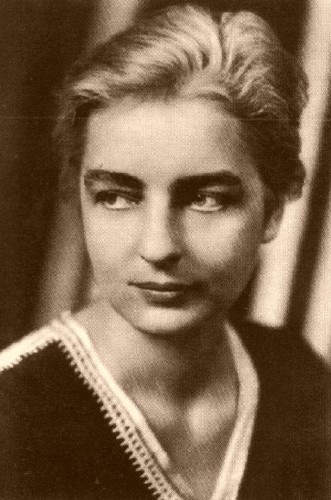
Ruth Benedict
Also known as: Ruth Fulton Benedict, Benedict, Ruth
Ruth Benedict (born June 5, 1887, New York, N.Y., U.S.—died Sept. 17, 1948, New York City) was an American anthropologist whose theories had a profound influence on cultural anthropology, especially in the area of culture and personality. Benedict graduated from Vassar College in 1909, lived in Europe for a year, and then settled in California, where she taught in girls’ schools. In 1914 she returned to New York City. For some years Benedict sought vainly for an occupation. In 1919 she enrolled at the New School for Social Research, where the influence of Elsie Clews Parsons and Alexander Goldenweiser led her to study anthropology under Franz Boas at Columbia University. She approached the field of anthropology from a strong humanistic background, and even after she became involved in the field in the 1920s, she continued to write poetry under the pseudonym Anne Singleton until the early 1930s. From the outset of her career in social science she conceived of cultures as total constructs of intellectual, religious, and aesthetic elements. She received her Ph.D. in 1923 for her thesis on a pervasive theme among North American Indians, The Concept of the Guardian Spirit in North America (1923). In 1924 she began teaching at Columbia. Benedict’s first book, Tales of the Cochiti Indians (1931), and her two-volume Zuñi Mythology (1935) were based on 11 years of fieldwork among and research into the religion and folklore of Native Americans, predominantly the Pueblo, Apache, Blackfoot, and Serrano peoples. Patterns of Culture (1934), Benedict’s major contribution to anthropology, compares Zuñi, Dobu, and Kwakiutl cultures in order to demonstrate how small a portion of the possible range of human behaviour is incorporated into any one culture; she argues that it is the "personality," the particular complex of traits and attitudes, of a culture that defines the individuals within it as successes, misfits, or outcasts. Six years later, with the publication of Race: Science and Politics, she refuted racist theory. From 1925 to 1940 she edited the Journal of American Folklore. During 1943–45 Benedict was a special adviser to the Office of War Information on dealing with the peoples of occupied territories and enemy lands. Her long-standing interest in Japanese culture bore fruit in The Chrysanthemum and the Sword (1946). She returned to Columbia in 1946, and in 1947 she was president of the American Anthropological Association. By that time she was acknowledged as the outstanding anthropologist in the United States. Benedict became a full professor at Columbia in 1948, and that summer she began her most comprehensive research undertaking as director of a study of contemporary European and Asian cultures. Upon her return from a trip to Europe, however, she fell ill and died (Britannica). Ruth Fulton Benedict was an American anthropologist and folklorist. Benedict held the post of President of the American Anthropological Association and was also a prominent member of the American Folklore Society (Wikipedia). Ruth Benedict (1887-1948) was one of the most eminent anthropologists of the twentieth century. Her profoundly influential books Patterns of Culture and The Chrysanthemum and the Sword: Patterns of Japanese Culture were bestsellers when they were first published, and they have remained indispensable works for the study of culture in the many decades since (Amazon).
THE JAPANESE were the most alien enemy the United States had ever fought in an all-out struggle.
Most acclaimed

The Chrysanthemum and the Sword
Anthropologist Ruth Benedict prepared this study of Japanese culture towards the end of World War II to explain Japan to Americans. It's become a classic. Published in 1946.
Patterns of culture
"Unique and important . . . Patterns of Culture is a signpost on the road to a freer and more tolerant life." -- New York Times A remarkable introduction to cultural studies, Patterns of Culture is an eloquent declaration of the role of culture in shaping human life. In this fascinating work, the renowned anthropologist Ruth Benedict compares three societies -- the Zuni of the southwestern United States, the Kwakiutl of western Canada, and the Dobuans of Melanesia -- and demonstrates the diversity of behaviors in them. Benedict's groundbreaking study shows that a unique configuration of traits defines each human culture and she examines the relationship between culture and the individual. Featuring prefatory remarks by Franz Boas, Margaret Mead, and Louise Lamphere, this provocative work ultimately explores what it means to be human. "That today the modern world is on such easy terms with the concept of culture . . . is in very great part due to this book." -- Margaret Mead "Benedict's Patterns of Culture is a foundational text in teaching us the value of diversity. Her hope for the future still has resonance in the twenty-first century: that recognition of cultural relativity will create an appreciation for 'the coexisting and equally valid patterns of life which mankind has created for itself from the raw materials of existence.'" -- from the new foreword by Louise Lamphere, past president of the American Anthrolopological Association
Race and racism
"In her newest book, anthropologist Carolyn Fluchr-Lobban examines the foundations of race in American society. She demonstrates how race and racism are not openly confronted or challenged in American communities or educational settings. Many families still live in segregated areas, especially ethnic subcommunities, and attend largely segregated public and private schools. The author offers a simple and accessible explanation of the biology of race and a cross-cultural perspective on the social context of race, color-coding, ethnicity, and ethnocentrism. There are few places in the world where race is not a factor in society and politics, but the author finds abundant evidence that it is a dynamic and pliable concept, as soon in the overturning of the slave system in Haiti and in the American civil rights movement. Fluehr-Lobban's book is a fascinating and thoughtful assessment of the nature of race and racism. It will be valuable to readers and instructors in anthropology, sociology, education, and race and ethnic studies."--Jacket.