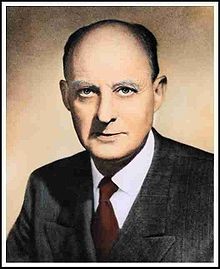
Reinhold Niebuhr
Personal Information
Description
Karl Paul Reinhold Niebuhr (June 21, 1892 – June 1, 1971) was an American Reformed theologian, ethicist, commentator on politics and public affairs, and professor at Union Theological Seminary for more than 30 years. Niebuhr was one of America's leading public intellectuals for several decades of the 20th century and received the Presidential Medal of Freedom in 1964. A public theologian, he wrote and spoke frequently about the intersection of religion, politics, and public policy, with his most influential books including Moral Man and Immoral Society and The Nature and Destiny of Man. Starting as a minister with working-class sympathies in the 1920s and sharing with many other ministers a commitment to pacifism and socialism, his thinking evolved during the 1930s to neo-orthodox realist theology as he developed the philosophical perspective known as Christian realism. He attacked utopianism as ineffectual for dealing with reality.
Books
The irony of American history
"[Niebuhr] is one of my favorite philosophers. I take away [from his works] the compelling idea that there's serious evil in the world, and hardship and pain. And we should be humble and modest in our belief we can eliminate those things. But we shouldn't use that as an excuse for cynicism and inaction. I take away . . . the sense we have to make these efforts knowing they are hard."—President Barack Obama Forged during the tumultuous but triumphant postwar years when America came of age as a world power, The Irony of American History is more relevant now than ever before. Cited by politicians as diverse as Hillary Clinton and John McCain, Niebuhr's masterpiece on the incongruity between personal ideals and political reality is both an indictment of American moral complacency and a warning against the arrogance of virtue. Impassioned, eloquent, and deeply perceptive, Niebuhr's wisdom will cause readers to rethink their assumptions about right and wrong, war and peace.
