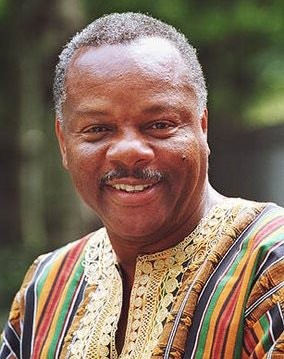
Molefi K. Asante
Personal Information
Description
There is no description yet, we will add it soon.
Books
The African-American atlas
The African-American Atlas is a revised edition of the 1991 Historical and Cultural Atlas of African Americans. Significantly revised and updated, this definitive work is a visual and narrative portrait of the African-American culture, heritage, and people. Comprehensive in scope, this Atlas chronicles important periods in African-American history that have shaped the outlook, lives, and hopes of African Americans today. From the origins in Africa to the transatlantic journey, from slavery to the Civil Rights Movement, this highly illustrated reference work presents a well-balanced account of the diverse African-American culture and its people who struggled and continue to struggle to overcome obstacles and achieve success.
An Afrocentric Manifesto
"Molefi Kete Asante's Afrocentric philosophy has become one of the most persistent influences in the social sciences and humanities over the past three decades. It strives to create new forms of discourse about Africa and the African Diaspora, impact on education through expanding curricula to be more inclusive, change the language of social institutions to reflect a more holistic universe, and revitalize conversations in Africa, Europe, and America, about an African renaissance based on commitment to fundamental ideas of agency, centeredness, and cultural location. In this book, An Afrocentric Manifesto: Toward an African Renaissance, Molefi Kete Asante examines and explores the cultural perspective closest to the existential reality of African people in order to present an innovative interpretation on the modern issues confronting contemporary society. Thus, this book engages the major critiques of Afrocentricity, defends the necessity for African people to view themselves as agents instead of as objects on the fringes of Europe, and proposes a more democratic framework for human relationships." "An Afrocentric Manifesto will be essential reading for urban studies, philosophy, African and African American Studies, social work, sociology, political science, and communication."--book jacket.
Culture and Customs of Egypt (Culture and Customs of Africa)
"Modern Egypt blends African history and geography with Arab culture and religion. With its position at the crossroads of Africa, its status as a major Islamic nation, and continuing interest in its ancient monuments, Egypt makes for fascinating study. This volume provides an accessible, up-to-date overview of a society that greatly evolved, yet retains traces of attitudes and behaviors from the days of the Pharaohs.". "This volume's insights into everyday life, sociopolitical structures, and cultural institutions transcend ordinary guide books. Asante, a noted Africanist, presents the richness of Egypt from the Nile to the Nubian influence, to Cairo congestion and carpet schools. Chapters describe the land, people, history, education, tourism, religion, art and architecture, food, social customs and lifestyles, literature, media, cinema, and performing arts. A chronology, glossary, and numerous photos enhance the text."--BOOK JACKET.
Black Truths White Lies Defining Hope Among Black Student Achievers
"In SigHT, Dr. Amanishakete Ani takes an introspective look at the thought and behavioral processes of African American students who apparently have many of the answers to what must be done to end achievement problems in the community, and restore success and dignity back to the Pan African community. In addition to intensive interviews of six junior high school achievers, historical analyses that relate to contemporary problems in education and society are provided. It is conclued that hope for the future depends on cultural and social awareness, not better school districts or even teacher quality.--P. of cover.
The Egyptian Philosophers
Traditional Eurocentric thought assumes that Greece was the origin of civilization. This book dispels this and other myths by showing that there is a body of knowledge that preceded Greek philosophy. The author documents how the great pyramids were built in 2800 B.C., 2,100 years before Greek civilization. The popular myth of Hippocrates being the father of medicine is dispelled by the fact that Hippocrates studied the works of Imhotep, the true father of medicine, and mentioned his name in his Hippocratic oath. Eleven famous African scholars who preceded Greek philosophers are profiled: Ptahhotep, Kagemni, Duauf, Amenhotep, Amenemope, Imhotep, Amenemhat, Merikare, Sehotepibre, Khunanup, and Akhenaten. These scholars' ideas on a variety of topics are discussed, including the emergence of science and reason, the moral order, books and education, and the clash of classes.
