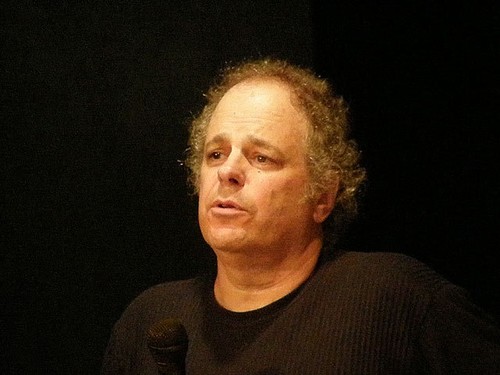
Michael Albert
Personal Information
Description
There is no description yet, we will add it soon.
Books
Realizing hope
"Something is profoundly wrong with capitalism. Vast inequalities of wealth and power will not take the world to a better future. 'What is the alternative?' is a question echoing all around the globe. Michael Albert has wrestled with this question for many years, and his answer regarding economics has captured the imagination of many. 'Participatory Economics' - 'Parecon' for short - Albert's proposed economic system to replace capitalism, rejects competitive anti-sociality, individualist greed, commercial homogenization, and corporate hierarchy, and in their place elevates solidarity, equity, diversity, and self-management." "In Realizing Hope, Albert goes further to offer insights about how whole areas of life might be desirably transformed in a new society. Whether exploring the way we work, our relationship to the earth, the transformation of global financial institutions, science, technology, the family, culture, sport, art, or education, people rather than profit always take centre stage."--Jacket.
Moving forward
Self-help expert Dave Pelzer teaches readers how to let go of the past and use negative experiences to make them stronger when tackling the future. "Learning from our prior experiences, we can, and should, aspire to fulfill our dreams, making life better not only for ourselves but for others around us," Dave writes in the introduction. "I am of the belief that you do not have to be a mayor of a major metropolis or CEO of a Fortune 500 company in order to take a stand for your convictions; to lead, rally, or educate others for your cause; or to maintain a vision that will pave the way for other generations to come. The everyday, hardworking folks, God bless 'em, have and always will continue to, day in and day out, truly make an impact on their families, communities, jobs, America, and the world as a whole."Dave Pelzer walks readers through the process of learning how to turn the experience gained from past hurts into the power to live a better life and help others do the same with his trademark wisdom, support, and tough love.
Looking forward
Parecon
"What do you want? is a constant query put to economic and globalization activitists decrying current poverty, alienation, and degradation. In this highly praised new work, destined to atract worldwide attention and support, Michael Albert provides an answer : participatory economics, "parecon" for short - a new economy, an alternative to capitalism, built on familiar values including solidarity, equity, diversity, and people democratically controlling their own lives, but utilizing original institutions fully described and defended in this book." --From publisher description.
The political economy of participatory economics
With the near bankruptcy of centrally planned economies now apparent and with capitalism seemingly incapable of generating egalitarian outcomes in the first world and economic development in the third world, alternative approaches to managing economic affairs are an urgent necessity. Until now, however, descriptions of alternatives have been unconvincing. Here Michael Albert and Robin Hahnel support the libertarian socialist tradition by presenting a rigorous, well-defined model of how producers and consumers could democratically plan their interconnected activities. After explaining why hierarchical production, inegalitarian consumption, central planning, and market allocations are incompatible with "classlessness," the authors present an alternative model of democratic workers' and consumers' councils operating in a decentralized, social planning procedure. They show how egalitarian consumption and job complexes in which all engage in conceptual as well as executionary labor can be efficient. They demonstrate the ability of their planning procedure to yield equitable and efficient outcomes even in the context of externalities and public goods and its power to stimulate rather than subvert participatory impulses. Also included is a discussion of information management and how simulation experiments can substantiate the feasibility of their model. Source: Publisher