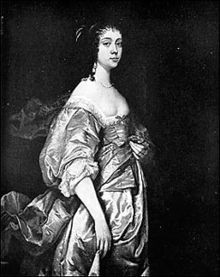
Margaret Cavendish, Duchess of Newcastle
Personal Information
Description
There is no description yet, we will add it soon.
Books
Observations upon experimental philosophy
Margaret Cavendish's 1668 edition of Observations upon Experimental Philosophy, presented here in its first modern edition, holds a unique position in early modern philosophy. Cavendish rejects the Aristotelianism that was taught in the universities in the seventeenth century, and the picture of nature as a grand machine which was propounded by Hobbes, Descartes, and members of the Royal Society of London, such as Boyle. She also rejects the views of nature that make reference to immaterial spirits. Instead she develops an original system of organicist materialism, and draws on the doctrines of ancient Stoicism to attack the tenets of seventeenth-century mechanical philosophy. Her treatise is a document of major importance in the history of women's contributions to philosophy and science.
Sociable letters
"The writings of Margaret Cavendish, Duchess of Newcastle, are remarkable for their vivid depiction of the mores and mentality of seventeenth-century England. This edition includes all of Cavendish's Sociable Letters (1664), a collection of writings that comments on a wide range of aspects of seventeenth-century society, such as war and peace, science and medicine, English and Classical literatures, and social issues such as choosing a spouse, married life, infidelity, divorce, and the option of women not to marry." "This Broadview edition contains a critical introduction and a valuable selection of primary documents, including the letters Cavendish wrote during her courtship with William Cavendish; letters by two female family members; letters written by Aphra Behn, Dorothy Osborne, and Angel Day; and an essay by Francis Bacon."--Jacket.
Bell in Campo and The Sociable Companions (Broadview Literary Texts)
Observations upon Experimental Philosophy, Abridged
Bell in Campo
"Written during the English Civil War and Interregnum when the public theatres were closed and Margaret Cavendish was living away from England in exile, Bell in Campo and The Sociable Companions are scathing satires that speak to the role of women's agency amidst this cultural tumult. In Bell in Campo, a group of virtuous women follow their husbands to war and, refusing to remain docilely out of harm's way, form an army of their own. The Sociable Companions details the struggles of four women from impoverished Royalist families trying to survive in a rapacious marriage market at the war's end." "The Broadview Literary Texts edition presents these two complementary plays together, along with supplementary materials on Cavendish's life, the participation of women in the combat of the English Civil War, the conduct of the Royalist military forces, and seventeenth-century social and marriage conventions."--BOOK JACKET.
Political writings / Margaret Cavendish, Duchess of New Castle ; edited by Susan James
"Margaret Cavendish, Duchess of Newcastle, published a wide variety of works including poems, plays, letters, and treatises of natural philosophy, but her significance as a political writer has only recently been recognised. This major contribution to the series of Cambridge Texts includes the first ever modern edition of her Divers Orations on English social and political life, together with a new student-friendly rendition of her imaginary voyage, A New World called the Blazing World. Susan James explains the allusions made in this classic text, and directs readers to the many intellectual debates with which Cavendish engages. Together these two works reveal the character and scope of Margaret Cavendish's political thought. She emerges as a singular and probing writer, who simultaneously upholds a conservative social and political order and destabilises it through her critical and unresolved observations about natural philosophy, scientific institutions, religion, and the relations between men and women."--Jacket.
