
GOD · CHRISTIANITY
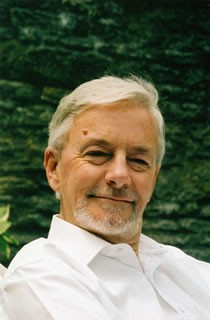
Keith Ward
Also known as: Keith Ward, KEITH WARD
Keith Ward is an English Anglican priest, philosopher, and theologian. He is a fellow of the British Academy and a priest of the Church of England. He was a canon of Christ Church, Oxford, until 2003. Comparative theology and the relationship between science and religion are two of his main topics of interest. He was Regius Professor of Divinity at the University of Oxford from 1991 to 2004.
In the tribal societies in which all religions arose it would be difficult to separate out at religious belief component from the social practices of the tribe.
— from Religion and Community, 2000
Most acclaimed

The living God
1957
War had engulfed the whole world. The imposter Imperor ruling in Hub was the tool of the paranoid and almighty sorcerer Xinixo, who wielded the combined power of thousands of sorcerer slaves. And yet, despite his seeming omnipotence, the pathetic few who resisted him were still at liberty, even making a little progress. Xinixo's prime foe, Rap of Krasnegar, had rallied troll sorcerers to the cause and was about to try enlisting the incomprehensible elves. Fortunately for his sanity, he did not know that his daughter Kadie had been carried off by goblin invaders, or that his son Gath was heading for stark Nordland to deal with the fearsome jotnar. Or that his wife, Inos, was in Guwash, negotiating with gnomes. Shandie, the rightful Imperor, was with her, unaware that his wife, Impress Eshiala, believed him dead and had fled with Signifer Ylo, that notorious rake. And none of them knew about the sorcerers of Thume, especially the rebel pixie girl, Thaïle, who chafed against the secret binding of a thousand years. But the odds were still impossible and Longday was fast approaching. The sorcerers of the world foretold blood on Longday.
Religion and creation
1996
In Religion and Creation, the author explores the idea of a creator God in the work of twentieth-century writers from Judaism, Islam, Hinduism, and Christianity. He develops a positive concept of God which stresses God's dynamic and responsive relation to the temporal structure of the universe, and the importance of that structure to the self-expression of the divine being. Professor Ward goes on to present a Trinitarian doctrine of creation, drawing inspiration from a wider set of theistic traditions and recent discussions in physics in the realm of cosmology.
The Promise
In his work as a priest and commentator for FOX News, Father Jonathan Morris has traveled to the troubled spots of the world, meeting with Muslim youth during the rioting in Paris, sitting down with populists at odds with the Church in Venezuela, and investigating human trafficking in Germany. Now Father Jonathan peels back the layers of questions that arise when someone asks, "Why me?" in response to human suffering. With an accessible voice and calming pastoral guidance, Father Jonathan leads readers through each step of suffering—from doubt and anger to healing and acceptance.The Promise comprises three parts, each addressing a step in the process of healing. Part 1, "God on Trial," speaks to doubts and anger that arise when we suffer and poses tough questions such as "Does God even care?" and "Why should we trust a God who allows innocent suffering?" Part 2 takes the reader on a journey of finding emotional and spiritual healing from suffering. In part 3 Father Jonathan introduces the five "Principles for Freedom-Living." From living your personal vocation to a step-by-step guide for sketching a plan for your spiritual life, the freedom principles are practical and easily applied to everyday life. Together these five principles have the power to transform what would otherwise be useless suffering into a means of great sanctification and personal fulfillment. While pulling back the layers of philosophy and theology that surround human suffering, Father Jonathan offers not only a deeply spiritual answer but also a practical one to this most fundamental of human questions: Why do we suffer?The Promise not only addresses how to understand and live with suffering, but also poses the toughest question regarding our relationship to God: Why do we suffer under a benevolent God? Father Jonathan delves into how we can heal from the spiritual, emotional, and even physical scars left behind by suffering. The Promise offers five principles for living a free life, or a life free of the fear that God is not there for us, and offers comfort and hope to those experiencing hard times.