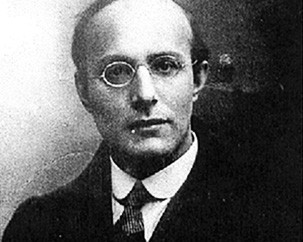
Karl Polanyi
Personal Information
Description
Karl Paul Polanyi was an Austro-Hungarian economic historian, economic anthropologist, economic sociologist, political economist, historical sociologist and social philosopher.
Books
Karl Polanyi
Karl Polanyi (1886-1964), a Hungarian-born thinker, is renowned for his seminal text, The Great Transformation, and his writings on political economy. This is the first work to offer a collection of Polanyi's texts never before published in English. The book presents articles, papers, lectures, speeches, notes, and draft manuscripts, mostly written between 1907 and 1923, with the exception of a few later texts. Organized thematically around religion, ethics, ideology, world politics, and Hungarian politics, the topics include contemporary thinkers, the Galilei Circle (an influential youth organization), the Tisza government, the Aster and the Bolshevik Revolutions, the Councils Republic, the Radical Citizens' Party, Hungarian democracy, the national question, political conviction, fatalism, British socialism, political theory and violence, and more. Each section includes a discussion of the political and intellectual contexts in which the texts were written.
For a new West
At a recent meeting of the World Economic Forum in Davos, it was reported that a ghost was haunting the deliberations of the assembled global elite - that of the renowned social scientist and economic historian, Karl Polanyi. In his classic work, The Great Transformation, Polanyi documented the impact of the rise of market society on western civilization and captured better than anyone else the destructive effects of the economic, political and social crisis of the 1930s. Today, in the throes of another Great Recession, Polanyi's work has gained a new significance. To understand the profound challenges faced by our democracies today, we need to revisit history and revisit his work. In this new collection of unpublished texts - lectures, draft essays and reports written between 1919 and 1958 - Polanyi examines the collapse of the liberal economic order and the demise of democracies in the inter-war years. He takes up again the fundamental question that preoccupied him throughout his work - the place of the economy in society - and aims to show how we might return to an economy anchored in society and its cultural, religious and political institutions. For anyone concerned about the danger to democracy and social life posed by the unleashing of capital from regulatory control and the dominance of the neoliberal ideologies of market fundamentalism, this important new volume by one of the great thinkers of the twentieth century is a must-read.--