Discover

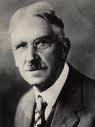
John Dewey

Personal Information

Born January 1, 1859
Died January 1, 1952 (93 years old)
Burlington, United States
Also known as: John Dewey, John DEWEY
139 books
4.5 (20)
532 readers

Description

There is no description yet, we will add it soon.

Books

Newest First

The school and society

0.0 (0)
1

Abandon the notion of subject-matter as something fixed and ready-made in itself, outside the child's experience; cease thinking of the child's experience as also something hard and fast; see it as something fluent, embryonic, vital; and we realize that the child and the curriculum are simply two limits which define a single process. -from The Child and the Curriculum In this single volume, readers will find two of John Dewey's insightful essays on education in America. He considered proper education to be fundamental to a functioning democracy. The problem, according to Dewey in The School and Society, with the old education model was that elementary schools did not encourage exploration and curiosity in their students. In The Child and the Curriculum, Dewey expands upon his definition of the ideal teaching method. A child's life, he says, is an integrated whole. A child will flow from one topic to another, taking a natural interest in subjects and dealing with a world of direct experience. School, on the other hand, addresses a world disconnected from a child's life. A more reasonable approach would be to strive to integrate their experience with the vast body of knowledge that society wishes them to know. By honoring the individual, both the student and the subject matter will come together in a process that produces a mature adult.

Democracy and Education

4.0 (2)
85

Publisher description: John Dewey (1859-1952) believed that learning was active and schooling unnecessarily long and restrictive. His idea was that children came to school to do things and live in a community which gave them real, guided experiences which fostered their capacity to contribute to society. For example, Dewey believed that students should be involved in real-life tasks and challenges: maths could be learnt via learning proportions in cooking or figuring out how long it would take to get from one place to another by mule history could be learnt by experiencing how people lived, geography, what the climate was like, and how plants and animals grew, were important subjects Dewey had a gift for suggesting activities that captured the center of what his classes were studying. Dewey's education philosophy helped forward the "progressive education" movement, and spawned the development of "experiential education" programs and experiments.
