Discover

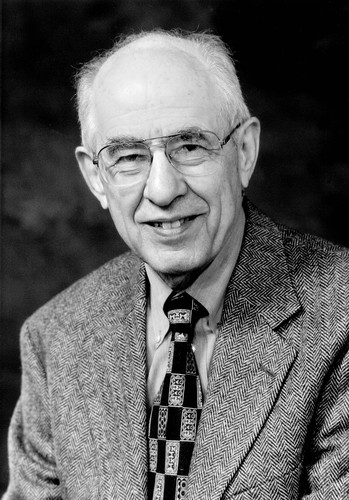
Hilary Putnam

Personal Information

Chicago, United States
Also known as: Putnam/Hilary, Hilary PUTNAM
32 books
3.3 (8)
44 readers

Description

There is no description yet, we will add it soon.

Books

Newest First

Ethics without Ontology

3.0 (1)
2

"Hilary Putnam traces the ways in which ethical problems arise in a historical context. Putnam's central concern is ontology - indeed, the very idea of ontology as the division of philosophy concerned with what (ultimately) exists. Reviewing what he deems the disastrous consequences of ontology's influence on analytic philosophy - in particular, the contortions it imposes upon debates about the objective of ethical judgments - Putnam proposes abandoning the very idea of ontology. He argues persuasively that the attempt to provide an ontological explanation of the objectivity of either mathematics or ethics is, in fact, an attempt to provide justifications that are extraneous to mathematics and ethics - and thus is deeply misguided."--Jacket.

The Collapse of the Fact/Value Dichotomy and Other Essays

0.0 (0)
3

"If philosophy has any business in the world, it is the clarification of our thinking and the clearing away of ideas that cloud the mind. In this book, one of the world's pre-eminent philosophers takes issue with an idea that has found an all-too-prominent place in popular culture and philosophical thought: the idea that while factual claims can be rationally established or refuted, claims about value are wholly subjective, not capable of being rationally argued for or against. Although it is on occasion important and useful to distinguish between factual claims and value judgments, the distinction becomes, Hilary Putnam argues, positively harmful when identified with a dichotomy between the objective and the purely "subjective."". "Putnam explores the arguments that led so much of the analytic philosophy of language, metaphysics and epistemology to become openly hostile to the idea that talk of value and human flourishing can be right or wrong, rational or irrational; and by which, following philosophy, social sciences such as economics have fallen victim to the bankrupt metaphysics of logical positivism. Tracing the problem back to Hume's conception of a "matter of fact" as well as to Kant's distinction between "analytic" and "synthetic" judgments, Putnam identifies a path forward in the work of Amartya Sen. Lively, concise, and wise, his book prepares the way for a renewed mutual fruition of philosophy and the social sciences."--BOOK JACKET.

The Threefold Cord

0.0 (0)
0

"What is the relationship between our perceptions and reality? What is the relationship between the mind and the body? These are questions with which philosophers have grappled for centuries, and they are topics of considerable contemporary debate as well. Hilary Putnam expounds upon these issues, elucidating both the strengths and weaknesses of current schools of thought. With his characteristic wit and acuity. Putnam offers refreshing solutions to some of philosophy's most vexing problems."--BOOK JACKET.

Words and life

0.0 (0)
2

Hilary Putnam has been convinced for some time that the present situation in philosophy calls for revitalization and renewal; in this latest book he shows us what shape he would like that renewal to take. Words and Life offers a sweeping account of the sources of several of the central problems of philosophy, past and present, and of why some of those problems are not going to go away. As the first four part titles in the volume - "The Return of Aristotle," "The Legacy of Logical Positivism," "The Inheritance of Pragmatism," and "Essays after Wittgenstein" - suggest, many of the essays are concerned with tracing the recent, and the not so recent, history of these problems. The goal is to bring out what is coercive and arbitrary about some of our present ways of posing the problems and what is of continuing interest in certain past approaches to them. Various supposedly timeless philosophical problems appear, on closer inspection, to change with altered historical circumstances, while there turns out to be much of permanent value in Aristotle's, Peirce's, Dewey's, and Reichenbach's work on some of the problems that continue to exercise us. A unifying theme of the volume as a whole is that reductionism, scientism, and old-style disenchanted naturalism tend to be obstacles to philosophical progress. The titles of the final three parts of the volume - "Truth and Reference," "Mind and Language," and "The Diversity of the Sciences" - indicate that the sweep of the problems considered here comprehends all the fundamental areas of contemporary analytic philosophy. Rich in detail, the book is also grand in scope, allowing us to trace the ongoing intellectual evolution of one of the most significant philosophers of the century.