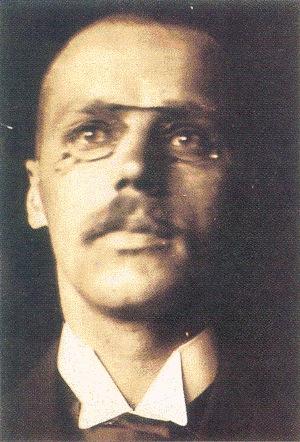
Herman Gorter
Personal Information
Description
Dutch poet and socialist
Books
Liedjes
Tussen 1910 en 1924 geschreven gedichten, waarin het communistische ideaal en de geliefde vrouw een synthese aangaan.
Non-Leninist Marxism
The recent collapse of the Soviet Union made clear the weaknesses and deficiencies in Leninist theory and practice. In the period between the World Wars, however, an entirely different trend of socialist thought had briefly flowered in Europe, a trend which rejected the Leninist model of centralized party and state, and instead affirmed the democratic self-emancipation of the working class. This movement was "council communism". "Non-Leninist Marxism" presents a selection of the most influential writings from the council communists, including Hermann Gorter, Anton Pannekoek, Sylvia Pankhurst, and Otto Ruhl.
Poems of 1890
Commonly viewed as a revolutionary and propagandist Herman Gorter (1864–1927) is often overlooked despite his lasting contribution to Dutch poetry. This selection of thirty-one poems, translated by Paul Vincent, focuses on Gorter’s experimental love and nature lyrics in Poems of 1890, and the Introductionsets the poems in the context of his earlier seminal work 'Mei' (May) as well as his often neglected Socialist verse. The lyrical expansiveness, consistent use of rhyme and vivid imagery of the Dutch landscape that characterises 'Mei' evolves into more fragmentary verse in Poems of 1890, and the joyful celebratory tone of Gorter’s poetry increasingly co-exists with a sense of isolation and introspection. This can be viewed in the context of a rapidly changing political scene in Europe in the prelude to the First World War and the Russian Revolution. This is a valuable collection that revisits Gorter’s literary and political legacy, and introduces English-speaking readers to a selection of his most accessible and lyrical poems.