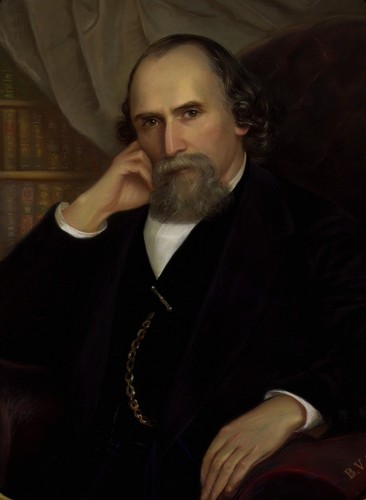
Henri Frédéric Amiel
Personal Information
Description
Henri Frédéric Amiel (September 27, 1821 in Geneva – May 11, 1881 in Geneva) was a Swiss moral philosopher, poet, and critic. Amiel's ("Private Journal"), which, published after his death, obtained a European reputation. It was translated into English by British writer Mary Augusta Ward at the suggestion of academic Mark Pattison. Although modest in volume of output, Amiel's mind was of no inferior quality, and his Journal gained a sympathy that the author had failed to obtain in his life. In addition to the Journal, he produced several volumes of poetry and wrote studies on Erasmus, Madame de Stael and other writers. His extensive correspondence with Égérie, his muse name for Louise Wyder, was preserved and published in 2004.
Books
Essais critiques
Amiel's Journal
It was in the last days of December, 1882, that the first volume of Henri Frédéric Amiel's "Journal Intime" was published at Geneva. The book, of which the general literary world knew nothing prior to its appearance, contained a long and remarkable Introduction from the pen of M. Edmond Scherer, the well-known French critic, who had been for many years one of Amiel's most valued friends, and it was prefaced also by a little Avertissement, in which the "Editors"—that is to say, the Genevese friends to whom the care and publication of the Journal had been in the first instance entrusted—described in a few reserved and sober words the genesis and objects of the publication. Some thousands of sheets of Journal, covering a period of more than thirty years, had come into the hands of Amiel's literary heirs. "They were written," said the Avertissement, "with several ends in view. Amiel recorded in them his various occupations, and the incidents of each day. He preserved in them his psychological observations, and the impressions produced on him by books. But his Journal was, above all, the confidant of his most private and intimate thoughts; a means whereby the thinker became conscious of his own inner life; a safe shelter wherein his questionings of fate and the future, the voice of grief, of self-examination and confession, the soul's cry for inward peace, might make themselves freely heard.
Journal intime
Journal intime du poète henri frédéric amiel