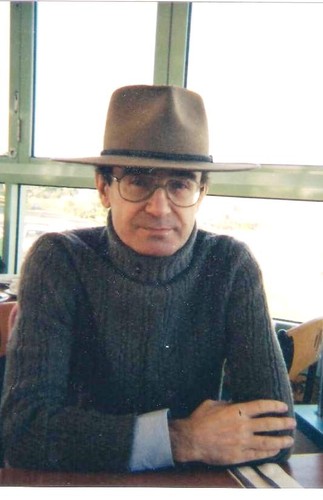
Danilo Peshikan
Personal Information
Description
Danilo Peshikan is the author of short stories, which have been published in the literary magazines of his home country and anthologised. A collection of his novellas saw the light of day in the 90’s. Filiad is his first novel chiseled out of most unmalleable, unyielding material, some super hard meteorite metal, and made from it a composition of two figures, as flexible and gracious as if kneaded of some spiritual substance. Filiad shares a similar subject matter with Lolita. It is a story of incestuous obsession, a Sisyphean attempt at love confession that cannot be. An explosive subject matter and explosively treated. He is an author free of doctrines, writing about a class forgotten and abandoned of our society, about unsolved problems and difficult subject matter. He looks at the moral problems without pressing his view or trying to solve them. He uses a psychological associative beginning and philosophical understandings of the “I” and he looks for an answer of the damn questions of our existence. He impresses in his books not the social characteristics but the human psyche, the most intimate secret recesses of the heart, the maze of the subconsciousness that is under the pressure of the life’s moral degradation.
Books
Stranger
Stranger (2017 Edition) Bulgarian Language
“Атмосферата в тези разкази напомня най-вече Патрик Модиано – мъгла, в която всеки детайл е чист и кристален, но ние не знаем къде сме, блуждаем и се блъскаме един в друг като в претъпкан аквариум и полагаме героични екзистенциални усилия да разберем откъде и защо сме тук, кой ни гледа отвън?” – “Литературен Форум” Странникът, “какво бе той за мене, забуления от видения, потъващ с годините все повече в реалност, която можех само да ненавиждам? И какво ли вещаеха неговите появявания и изчезвания? Още не зная… От тогава трябваше да го срещам много пъти и при различни обстоятелства И всички тези срещи съпровождаха някакво събитие в живота ми, макар че повечето съм забравил вече, и единствено неговото “явление” на призрак, минаване и отминаване осветяват сега тези мигове. Беше ли той просто добрият пророк? Или лошият. Даже подобно разграничение бе не по силите ми да измъдря от сложните нощни кривулици, с които бе оплел пътя ми.”
Сенките на Невидимите Кучета
В тази селекция от разкази, героите са странни и необичайни. Образите им са уникални и изникват от дълбочините на спомените. Сенките от техния “собствен, объркан живот” остават единствено в “някой щастлив следобед”. (Сенките на невидимите кучета) Дадено е предимство на общочовешките, универсални въпроси: “каква е тази власт, която в безумната си лакомия унищожава онези над които властвува?” (От горе до долу) Или: “Свободата… За колко от нас, сукали мимантично при честите й ала мними патетични разголвания, бъдещето не е вече каквото беше, нито пък миналото ще става по-добро… Но в очакването на новото Годò, защо пък да не пораснем? Тихо да затворим цитатния речник и обърнем душите си, тези огрубели ръкавици, към живото слово – само живото слово долавя менливия пулс на нашата, човешката, ситуация... Че тази, сегашната, ситуация в която вярваме не е задължително истина, че което харесваме не е задължително хубаво, че всички въпроси, от началото на света, все още чакат своя отговор.” (Вариации на тема свобода)
Strannik
The Author talks about his dreams and unsolved problems. He is trying to find the answer of our existence, the subconsciousness that is under the pressure of the life’s moral degradation. When he speaks, it is to say something essential--his hopes, his feelings...--themes that have rarely been spoken about by one human to another.
Shadows of Invisible Dogs
Peshikan’s characters in Shadows of invisible dogs are strange and unconventional. The shadows of their ‘own muddled life’ remain simply in some ‘happy afternoon’ (Shadows of invisible dogs). The questions put forward are global, universally human questions: ‘What is that power which, in its mindless greed destroys those over whom it rules?’ (From top to bottom) Or:‘For how many of us, who semantically suckled at the freedom’s frequent yet feigned arousing disrobements, the future is no longer what it once was, nor will the past gets any better?... While we are waiting for the new Godot, however, why do we not finally grow up? ... Let us quietly shut our book of quotes and turn our souls, those weather-beaten gloves, to the living word, the only one that senses the irregular pulse of our human situation… It does not matter that the present situation in which we believe is not always genuine, that what we delight in is not necessarily good and that all these questions, from the beginning of time, are still awaiting their answer’ (Variation on the subject of Freedom).
Filiad
[FILIAD]is literary fiction, a book that shares a similar explosive subject matter with Nabokov's Lolita; a heart drilling novel about unsolved problems and difficult subject matter, incest. The book is a confession, Besovsky's story of incestuous obsession, passion, ravening jealousy. The story has been told from the perpetrator's angle, not from a view point of the victim. In the aftermath of an uneventful African fête, Blanche gives her father a good-night kiss that goes astray and shatters their life. Michael gets obsessed with his 11-year-old-daughter. What has malignantly sprung from a neglected love, swells monstrous all the time but the narrator calls it nothing but—love. Will Besovsky find the answer to the damn questions of our existence, the most intimate secret recesses of the heart, the maze of the subconsciousness that is under the pressure of life's moral degradation?